
Rockville Centre district pilots AI tools from kindergarten to high school; students, teachers show classroom uses
Get AI-powered insights, summaries, and transcripts
Subscribe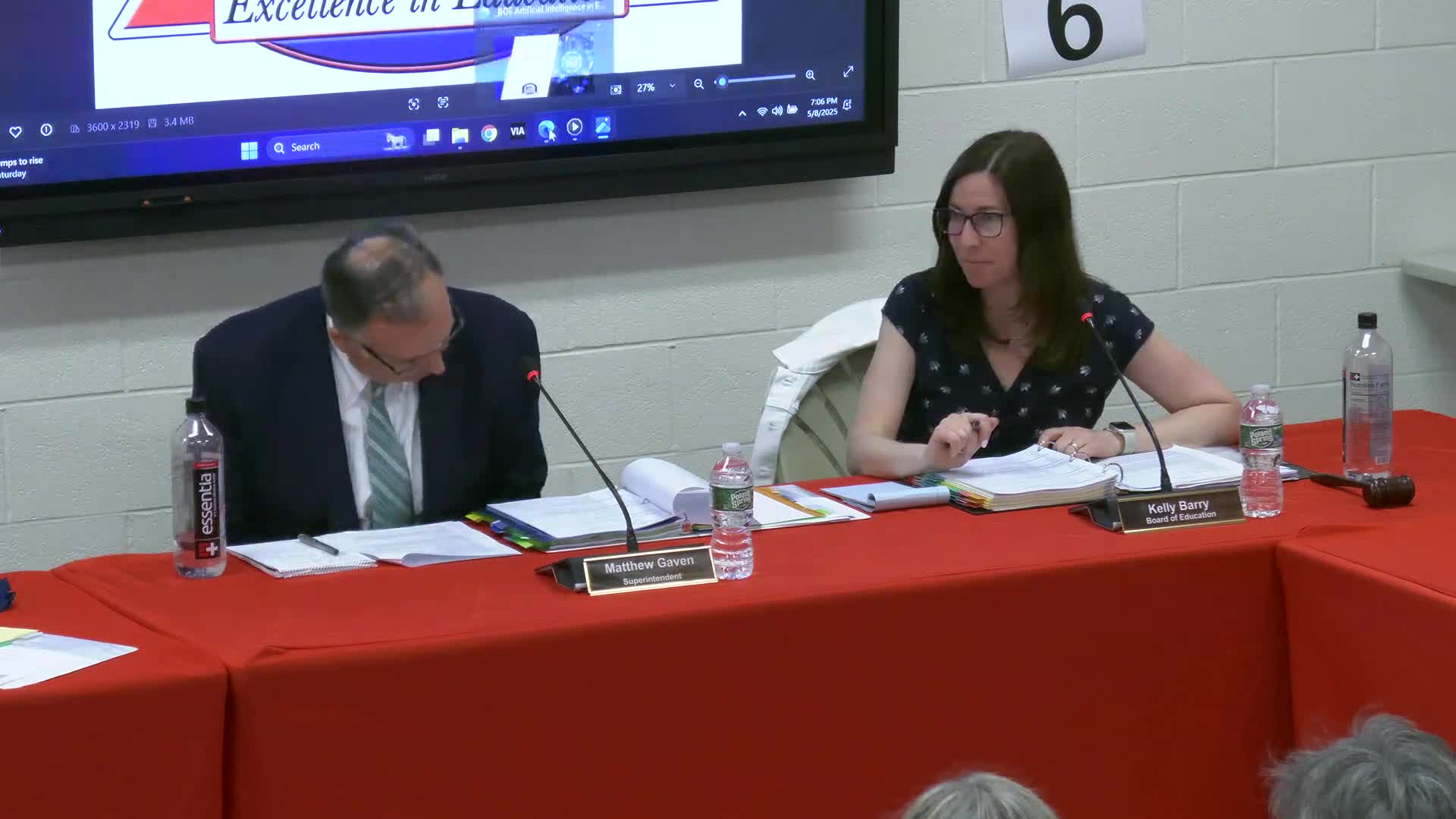
Summary
Teachers and students at the Rockville Centre Union Free School District demonstrated district pilots using generative AI across grades K–12, from controlled, closed systems for elementary coding to prompt engineering and agent-building in high school; presenters emphasized ethical guardrails, student-facing prompt work and teacher oversight.
At a May 8 Rockville Centre Board of Education meeting, district staff and teachers presented a yearlong pilot of generative artificial intelligence tools being used across elementary, middle and high school classrooms and described guardrails the district is using to protect student data and learning.
The presentation featured Superintendent Gavin (the superintendent), classroom teachers and students who demonstrated projects ranging from kindergarten story generation to high school prompt-engineering tutors and AP exam study aids. "AI should be used as a tool to enhance student learning," Gavin said in his opening remarks, adding the district is working to ensure student data security and age-appropriate use.
The presentations and student demonstrations explained how the district is using different platforms for different purposes: closed, teacher-controlled systems at the elementary level to prevent students from relying on AI to produce finished work; DATs (custom AI assistants) and Canvas DreamLab image generation in middle-school language and social-studies work; and prompt-engineering, agent-building and ethics modules in high school computer science and visual-arts classes.
Elementary teacher Joseph Palusio described one tool, NotebookLM, as tightly configured to classroom content. "I would have to say this is probably one of the most valuable resources I've ever used in my class," Palusio said, adding NotebookLM can turn curated materials into study guides and podcasts aligned to classroom lessons. Two students who worked with Palusio, Sadie Sharon and Jack Kaphar, told the board the tool helped them organize study material and made classroom content more engaging. "NotebookLM is a great way to learn at a whole new level," Sharon said. "It helps me remember what Mister Palusio has taught me," Kaphar said.
Middle-school staff described DATs and language exercises that adapt rigor to student progress. Patrick Duggan, a social-studies teacher at Southside Middle School, said teachers and a library-media specialist used AI to create targeted vocabulary quizzes and DreamLab visual projects for Spanish and French. Eighth-grade student Aviana Milzer summarized ethical instruction in an inquiry course: "I personally think that AI should be used as a walking stick instead of a shortcut," she said, explaining students were taught to use AI for idea generation and iterative research rather than as a substitute for original thinking.
High school teachers described more advanced, project-based uses. Christopher Bennett, a mathematics and computer-science teacher, said his prompt-engineering unit covers machine learning basics and ethics. "Just because we can do it, doesn't mean we should do it," Bennett told the board, recounting student projects that used AI-generated images and code as prototypes rather than final, publishable products. Visual-arts teacher Keith Gamache said some students initially expressed anxiety about AI displacing traditional skills; he described classroom workflows that use AI-generated images as starting points for student-directed artistic development and refinement. "I really became overwhelmed by this feeling that I'm obsolete at this point," Gamache said, then added that the work pushed students to refine prompts and build artistic judgment.
Presenters emphasized guardrails: district use of closed systems (KidOyo and teacher‑curated NotebookLM pages) where teachers can view students' prompts and AI responses; teacher-set limits that can disable AI for assignments; and regular teacher review of outputs to correct inaccuracies. Staff also described professional-development work with vendors and inter-district pilots, and said the district plans state-level presentations and additional teacher training.
Board members and administrators framed the effort as experimental. They praised student speakers and teachers and asked about scalability, assessment and parental outreach. Gavin said the district is documenting pilot results and planning parent-facing materials explaining what tools are used at each grade level. He added the district views the year as a broad experiment meant to inform a longer-term strategy and potential K–12 competency framework.
The presentation did not include any board votes or policy changes; presenters said the work is part of classroom pilots and professional development. The board thanked students and teachers and moved on to the evening's budget hearing and other agenda items.