Get Full Government Meeting Transcripts, Videos, & Alerts Forever!
Get email alerts on the Land Use Design Review topic
No spam. Unsubscribe anytime.
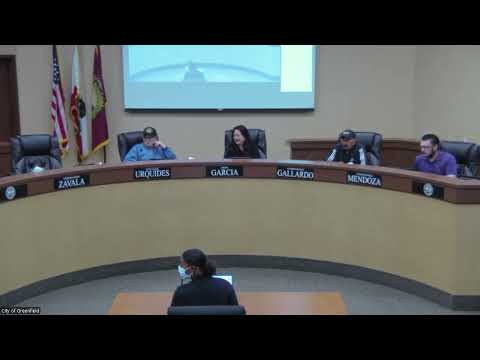
Greenfield planning commission continues review of proposed mixed‑use project at 201 El Camino Real amid parking, design and CEQA concerns
Summary
After staff recommended denial, the City of Greenfield Planning Commission voted 4–1 to continue the public hearing and ask staff to report on whether a traffic/CEQA study is needed before the commission can make required findings on a mixed‑use proposal at 201 El Camino Real.
The City of Greenfield Planning Commission on the evening of the meeting continued a public hearing on a design‑review application for 201 El Camino Real and asked staff to report back on whether a traffic study or initial CEQA analysis is necessary before the commission can make required findings.
Imani Harrigan, community development staff, told commissioners the proposal would reintroduce a 3,789‑square‑foot first‑floor market and four residential units in about 3,770 square feet above. Harrigan said the building has been vacant and uninhabitable since at least January 2018 and that, under the city’s municipal code, uses vacated for more than six months are treated as abandoned and extinguished. “The question for this item is if by approving the proposal as is without changes, would it be considered expanding and reestablishing a legal nonconforming use within the city?” Harrigan said.
Why it matters: commissioners heard competing public testimony and legal opinion that the application asks for multiple exceptions to the city’s zoning rules — parking, residential density, mixed‑use overlay rules and possible reestablishment of a nonconforming use — and that the record currently lacks analysis to support such exceptions. A follow‑up from staff on traffic/CEQA and other outstanding items will determine whether the hearing can move to a final decision.
Most of the public and a legal representative for local merchants urged denial. Attorney Jason Rederer, speaking for several downtown merchants, said the application “can’t find that the application complies with the applicable general plan and zoning requirements” and argued the project is underparked and lacks supporting analysis for an off‑site parking reduction. Rederer also said the project is not exempt from the California Environmental Quality Act and that the city needs CEQA review to analyze “potentially significant traffic safety issues” tied to truck deliveries and pedestrian/bicycle conflicts.
The staff report and subsequent commissioner discussion focused on four central technical issues:
Parking: Harrigan said the zoning code requires 18 total spaces for the proposed uses but the applicant proposes only eight residential spaces, leaving the project short by about 11 spaces. Harrigan summarized the code formula: one space per one‑bedroom, two per two‑bedroom, one guest space for the four units, plus commercial parking calculated at three spaces per 1,000 square feet. Commissioners repeatedly returned to the parking shortfall as a practical impediment to approving the project as presented.
Legal nonconforming use and vacancy: Staff advised that because the building has been uninhabited since 2018, the market and residential uses may be considered abandoned under municipal rules; reestablishing them could constitute an expansion of a legal nonconforming use and would require the commission to find specific exceptions.
Design and historic status: Harrigan said the proposal does not meet the city’s downtown design guidelines for landscaping, awnings and facade treatment, and that the building has not been confirmed as historic in any official register. The applicant described the building as “iconic to Greenfield” and urged the commission to use the alternative approval path in the staff packet, but staff emphasized that “historical” in lay terms is not the same as an official historic designation that confers exemptions.
Traffic and CEQA: Rederer and several commissioners urged a traffic study or initial CEQA review. Rederer said letters from merchants raised safety and circulation concerns and that the city has not been provided evidence to show the market and deliveries can operate safely. Commissioners asked staff to report whether a focused traffic study is required and, if so, to obtain it before making final findings.
Other technical and safety points: Commissioners asked about fire protection; the applicant (architect Ed Reinhardt and the property owner) stated they are “in favor of putting fire sprinklers in this building” and that sprinklers would be installed. Commissioners also discussed the possibility of reducing the number of residential units or converting upstairs kitchens to non‑residential use to address density and parking concerns; the owner said the kitchens could be removed and spaces used as offices if needed.
Public comment and local merchants: Merchants opposed approval without studies. Jason Rederer argued development agreements are not a mechanism to waive zoning standards, saying those agreements generally preserve entitlements consistent with code rather than grant waivers. Several commissioners acknowledged sympathy for rehabilitating the long‑vacant building but said allowing the multiple exceptions requested without supporting analysis would set an undesirable precedent.
Commission action and next steps: A motion to continue the hearing and ask staff to report on whether a traffic study or initial CEQA review is necessary passed on a 4–1 vote. The commission did not approve or deny the design review; the hearing remains open pending staff’s supplemental report and any required studies.
The commission also discussed enforcement/cleanup options for the vacant building and confirmed that denial would not itself dictate demolition; future actions by the owner or an appeal to the city council would determine next steps.
For now, the commission left the record open and requested staff follow up with a written recommendation on the need for traffic/CEQA analysis and any additional materials needed to evaluate parking, mixed‑use overlay consistency, compliance with downtown design guidelines and the legal nonconforming‑use question.