Get Full Government Meeting Transcripts, Videos, & Alerts Forever!
Get email alerts on the Short Term Rentals topic
No spam. Unsubscribe anytime.
Lexington planning commission weighs tighter rules, inspections and reporting for short‑term rentals
Summary
Planning staff reported 3 spot inspections found multiple zoning violations; commissioners directed staff to draft clearer logbook rules, an annual reporting requirement tied to registration, a logbook template and a legal review of enforcement and penalty options.
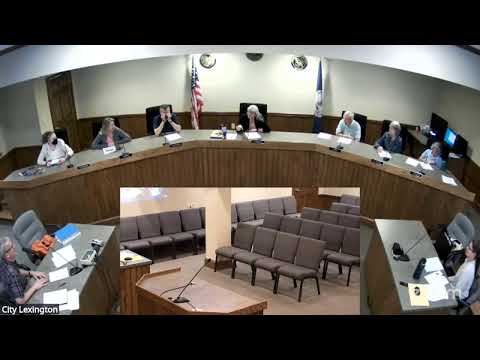
The Lexington Planning Commission spent the bulk of its May 8 meeting discussing proposed amendments to the city's short‑term residential rental rules, focusing on logbook requirements, inspections, suspension and penalty authority, and how hosting platforms such as Airbnb factor into enforcement.
Planning staff told commissioners that three short‑term rental operations inspected as part of an enforcement review displayed multiple violations, including missing logbooks, posted host contact information and trash‑collection dates, and exceeding local limits on nights rented. "The logbook is a requirement to be maintained for 1 year and made available for the city's review upon request, and it was not maintained for any of the 3 that we inspected," planning staff member Arnie said.
Why it matters: commissioners and staff said better documentation and clearer reporting could help the city enforce zoning limits meant to protect neighborhoods, while legal constraints at the state level and changes in tax reporting affect how the city can collect data.
What staff reported and recommended - Staff inspected three short‑term rental operations and found they had: not maintained required logbooks; exceeded the city's maximum nightly limits for certain residential zoning districts; failed to post required host contact information and trash collection dates; and appeared to misunderstand distinctions between "type A" and "type B" rentals. - Staff summarized the current rules as applied to R‑1, R‑2 and R‑LC residential zoning: a primary resident host requirement, a stated maximum of "104 nights" total in some cases, a 45‑night allowance in a subset of circumstances when hosts are absent, and limits on the number of bedrooms that can be rented at one time. (Those numeric limits were as described by staff in the meeting record.) - Staff proposed a menu of options to strengthen compliance: (1) add explicit, columned logbook content requirements (who rented, dates, type A vs. B counts); (2) require monthly reporting of type A/type B nights to the planning department (staff noted this would be onerous); (3) require monthly reporting on the commissioner's lodging tax form (staff later said a change at the commissioner of revenues means that option is not available starting in July); and (4) require an annual report at reregistration plus stronger logbook detail and a template.
Legal constraints and enforcement questions - Staff and commissioners discussed state code limits and exemptions. The transcript cites state law "15.2‑983" (short‑term rental rules) and notes language in that section that exempts persons licensed by the real estate board or owners represented by a real estate licensee from the local registration requirement. Staff flagged that exemption as a potential gap for suspensions or cancellations of registration: if a property is exempt from registration under state law, the city's registration‑based suspension authority may not apply to that operator. - Staff also described limits on data sharing from the commissioner of revenue after a change the commissioner notified staff would take effect in July; that change affects relying on the revenue office for third‑party hosting platform data. - Current penalty framework discussed in the meeting: state code allows up to $500 for operating without required registration; the local zoning ordinance currently sets the first violation at $200 and the second at $500. Staff noted the administrative and legal costs of enforcement and said they are seeking attorney guidance on whether penalties can be increased under other statutory provisions referenced in the discussion.
Commission direction and next steps - Commissioners asked staff to draft clearer logbook rules, including a template or example the city would post for operators to use. Several commissioners voiced support for requiring an annual report to be submitted at reregistration that documents the previous year's type A and type B nights, and for using hosting platform annual reports "where possible" if those reports omit financial data. - Commissioners and staff asked the city attorney to review (1) whether penalties can be increased and by how much, (2) whether annual or semiannual reporting is most practical, and (3) how the state exemption for real estate licensees affects the city's ability to suspend or cancel operations. - Staff said it will return with revised ordinance language and a legal opinion before any public hearing. No ordinance amendments were adopted at the meeting.
Discussion vs. action: the commission's work on short‑term rentals at this meeting was primarily discussion and direction to staff; there was no formal vote to adopt changes. Commissioners asked staff to: prepare a logbook template and text clarifying that a logbook must be maintained for each calendar year and retained for at least one year after; propose wording for an annual registration report; prepare model language for inspection authority (annual inspections and follow‑ups); and obtain an attorney opinion on penalty increases and the effect of state exemptions.
Implementation and timeline: staff indicated the matter will return for further review and legal clearance; the commission signaled preference for an annual reporting approach tied to registration, with the possibility of modifying frequency (semiannual) after further consideration.