
East Hartford board hears draft rewrite of 'Vision of the Graduate' to stress competencies
Get AI-powered insights, summaries, and transcripts
Sign Up Free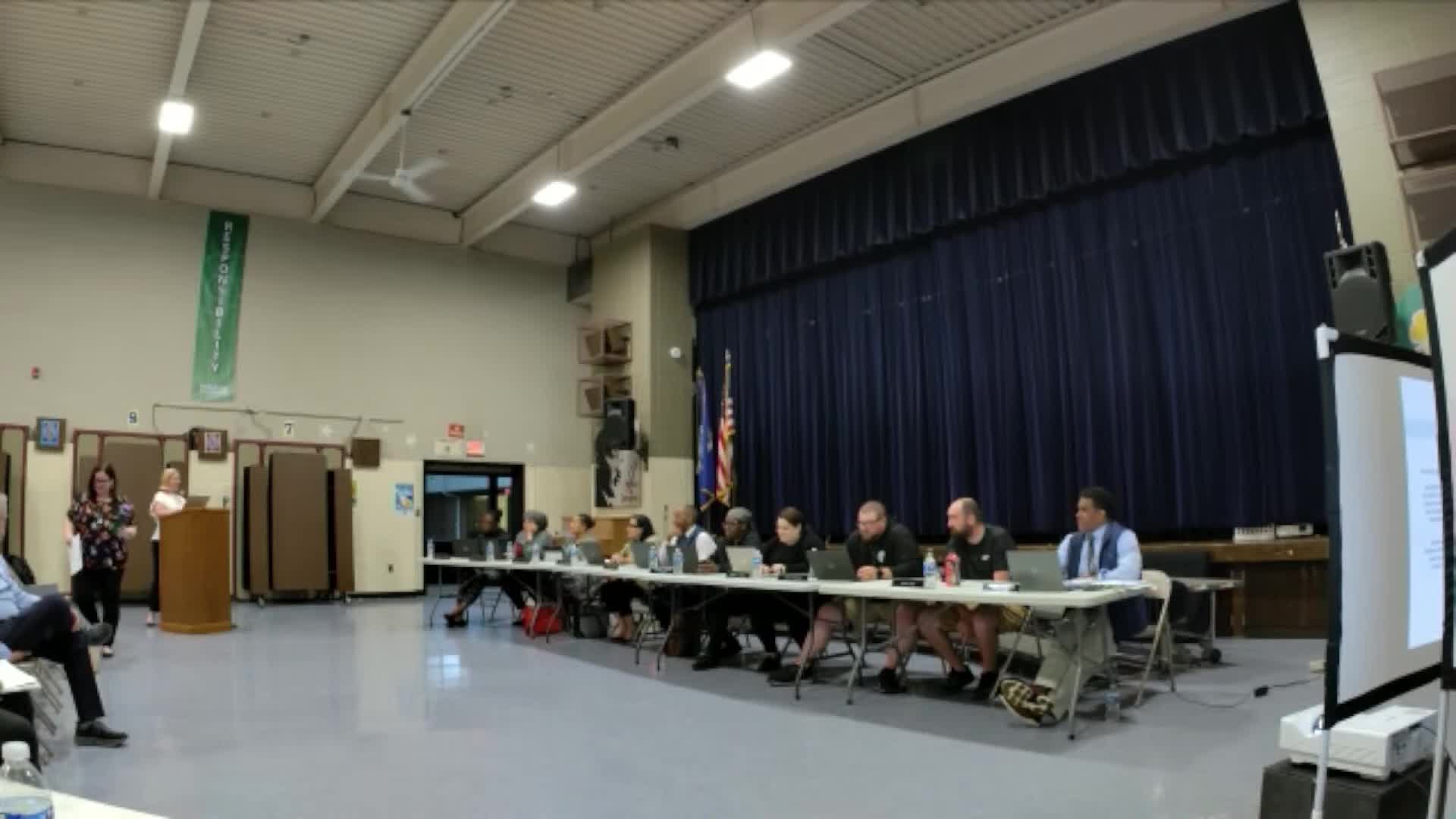
Summary
District staff presented a reworked Vision of the Graduate that replaces verb‑based statements with noun‑style competencies (navigator, innovator, humanitarian) and outlines next steps to align curriculum, assessments and communications; the draft remains under revision and will return for further feedback.
Anna Cababianco, supervisor of the districtVision of the Graduate, presented a revised draft framework the East Hartford Board of Education on the purpose and structure of a reworked Vision of the Graduate.
Cababianco told the board the prior vision was almost 10 years old and the committee sought to replace verb‑based language with nouns describing end‑of‑school competencies: for example, a —3navigator—4 who is a self‑motivated learner, an —3innovator—4 who applies creativity to real‑world problems, and a —3humanitarian—4 who contributes to community welfare. The draft lists skills and attributes under each competency and staff made clear the draft is not final.
The committee that drafted the document includes district administrators, principals, two student representatives, parents and other community members; Matthew Ryan, principal of East Hartford High School, co‑chairs the committee, Cababianco said. Cababianco said the work involved reviewing exemplars from other districts and research on future‑ready competencies and global citizenship, then generating and revising potential competencies through multiple rounds of feedback.
Cababianco outlined the next steps: finalize wording with the committee, format the document for public presentation, communicate the revised vision to students, families and staff, and align curriculum, instruction and assessments with the new competency framework so that classroom practice and testing support the stated graduate outcomes. She said additional committee meetings and another round of feedback were scheduled and that the draft would be refined before it is presented as a final recommendation.
Board members praised the participatory process and asked staff to ensure the language is clear for preK–12 audiences and that the vision not read as relevant only to high school. Cababianco said the committee intentionally added elementary and middle school representatives and will "work backwards" so students at all grade levels can see themselves in the vision.
The presentation was informational; the board did not take a formal action on the draft during the meeting. Staff said they will return with a further revised draft and a plan for communications and curriculum alignment.