Get Full Government Meeting Transcripts, Videos, & Alerts Forever!
Get email alerts on the Highway10 Industrial Feasibility topic
No spam. Unsubscribe anytime.
Consultants recommend industrial focus for Highway 10/County A corridor in Waupaca
Summary
Consultants from New Day Planning told the Waupaca Plan Commission Wednesday that the Highway 10/County A corridor south of Highway 10 is best positioned for industrial development to support existing manufacturers and the local supply chain.
Consultants from New Day Planning recommended at Wednesday's Plan Commission meeting that the Highway 10/County A corridor south of Highway 10 be considered chiefly for industrial development rather than for tourism or speculative retail.
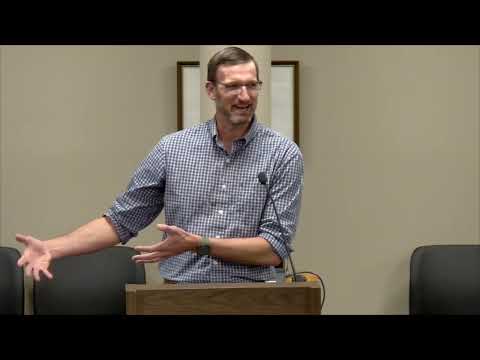
Trisha Brown of New Day Planning and consultant Peter Haney presented a feasibility and market analysis commissioned by the city. The team said Waupaca's strengths — existing manufacturing base (including Waupaca Foundry), a sizeable regional labor draw, and recently extended water and sewer service — make the corridor suitable for industrial users that would support existing producers and food‑and‑beverage or metal fabrication supply chains.
Trisha Brown summarized interviews with local firms, county economic development staff and regional partners: nearly all interviewees favored uses that reinforce the local supply chain (food and beverage processing, metal fabrication, related warehousing and distribution) rather than speculative tourism or big‑box retail. Consultant Peter Haney presented data benchmarking Waupaca against similar Midwestern MSAs, showing strong manufacturing earnings and education levels; he flagged a citywide low housing vacancy rate and noted housing supply as a constraint for workforce growth.
On utilities, the consultants reported that WPS (the regional electric utility) indicated the capability to deliver up to about 15 megawatts to the site within roughly 18 months; city water and sewer capacity was described as sufficient for industrial users based on recent extensions. Trisha Brown said that, while these conditions are favorable, the city should pursue targeted next steps: update the future land use map and zoning in the affected area, open conversations with landowners and the adjacent town regarding annexation or coordinated planning, and pursue 'shovel‑ready' site checklists (regional "gold shovel" or state certified site programs) as warranted.
Commissioners asked about statutory requirements and the need to engage neighboring towns; staff and the consultants confirmed the process will require statutory notifications and that annexation/land‑use changes could take months. No formal zoning action was taken; the presentation was informational. Commissioners directed staff to begin outreach to the town and local landowners and to return with suggested next steps as appropriate.
Consultants and staff emphasized this is a long‑range, market‑driven recommendation intended to position the city to compete for industrial opportunities while also identifying other sites in town suitable for higher‑density housing and commercial gaps that could support downtown investment.