Get Full Government Meeting Transcripts, Videos, & Alerts Forever!
Get email alerts on the Duplex Zoning Amendment topic
No spam. Unsubscribe anytime.
Plan commission tables proposed zoning change on duplexes in single‑family zones
Summary
City staff proposed Ordinance O3‑2025 to revert a recent change that allowed duplexes as conditional uses across numerous zoning districts. Commissioners debated housing and preservation impacts and voted to table the amendment for one month to gather more information and stakeholder input.
City planning staff brought forward Ordinance O3‑2025, an amendment to Chapter 17.104 that would roll back a recent code change allowing duplexes as a conditional use in multiple districts, and the Waupaca Plan Commission voted to table the proposal for one month.
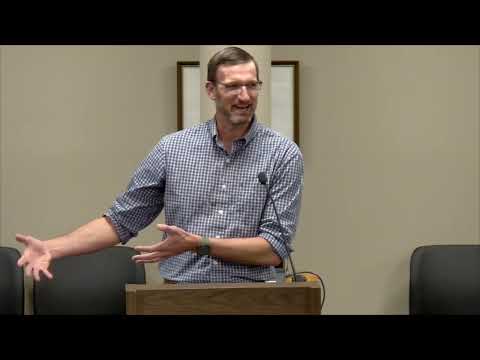
Aaron, a city staff member, told commissioners the change under consideration would remove duplexes as a conditional use in R‑1 single‑family districts and in several business districts. He said the earlier change — adopted pursuant to recommendations tied to the League of Wisconsin Municipalities housing toolkit — expanded where duplexes could be placed but that staff now believes the broader allowance may not be in the city's long‑term planning interest. "I feel like [that change] is not in the best interest of the city of Waupaca," Aaron said, explaining concern that allowing duplexes broadly could consume limited commercial corridors and alter established single‑family neighborhoods.
Commissioners discussed competing objectives. Some members noted that duplexes can provide an affordable path to homeownership and can fit well architecturally in some neighborhoods; one commissioner said, "a duplex is kind of a nice way to do that" for young people seeking homeownership. Others and staff emphasized that covenants and homeowners' associations can bar duplexes but that the city cannot enforce private covenants; staff also explained that a conditional use, if it meets conditions, generally cannot be lawfully denied by the city.
Given the mix of perspectives and outstanding questions about targeted locations and potential zoning approaches, commissioners voted to table the ordinance for one month to allow staff to gather additional information, consult stakeholders, and return with recommendations. The motion to table carried with all commissioners present voting in favor.
During the discussion, commissioners suggested alternatives such as expanding R‑2 districts where duplexes are explicitly allowed, conducting more targeted mapping rather than a city‑wide allowance in R‑1, and consulting developers and neighborhood groups for design guidance. Staff did not present an immediate timetable for a final recommendation; the commission set follow‑up for the next regular meeting.