Get Full Government Meeting Transcripts, Videos, & Alerts Forever!
Get email alerts on the Post Termination Visitation topic
No spam. Unsubscribe anytime.
Appeals panel weighs whether judge should have held evidentiary hearing before ending post‑termination visits
Summary
At a May 8 appeals‑court oral argument, lawyers debated whether a trial judge erred by modifying an order to end four post‑termination visits between a mother and her child without holding an evidentiary hearing and whether the Department of Children and Families could stop those visits without returning to court.
An appeals‑court panel heard arguments May 8, 2025, over whether a trial judge improperly modified an earlier order to eliminate four post‑termination visits between a mother and her child without holding an evidentiary hearing and whether the Department of Children and Families (DCF) could unilaterally stop those visits.
The issue matters because the panel’s decision could clarify when and how post‑termination visitation orders may be altered, who may cut off visits in the period after parental rights are terminated, and whether a published ruling is needed to prevent unilateral terminations by a custodian such as DCF.
Jean Kaiser, attorney for the appellant mother, asked the panel to reverse the trial court’s modification and remand for an evidentiary hearing. Kaiser told the judges that “the trial judge failed in her duty to obtain an accurate understanding of the child's current best interest regarding post termination visits,” and argued the trial judge relied on counsel assertions rather than evidence. Kaiser said visits had been stopped for a full year, later resumed, and that after the resumption only three of the four annual visits occurred, so the judge should have considered how the prior interruption affected the child’s ability to warm up during visits.
Jessica Salinas Thomas, attorney for the minor child, told the panel the child — who she said is about 7½ years old — “has been consistent in his current position since November of last year” that he wants visitation with his mother, and she agreed the trial court erred by not holding an evidentiary hearing on the motion to modify the post‑termination order.
William Cuttle, counsel for the Department of Children and Families, urged deference to the trial judge’s discretion. Cuttle said visitation orders are “provisional in nature,” that evidentiary hearings are within the judge’s discretion, and that the judge in this case was familiar with the record. “This matter is not about the mother. It's about the child,” Cuttle said, arguing the trial judge acted to protect the child’s best interest and that the record at the time supported the modification.
Counsel and judges debated whether paragraph 9 of the post‑termination order — language stating the custodian may stop visits if it reasonably determines they are not in the child’s best interest — should be read as an individual custodian discretion that requires later court review, or as an enforceable judicial order that cannot be cut off without court proceedings. Kaiser urged the panel to read the order together with the rest of the judgment and to follow language in footnote 14 of the adoption decision referenced as Rico to support requiring court review; DCF counsel and at least one judge framed the provision as a discretionary tool appropriate for a custodian such as DCF or, later, adoptive parents.
The lawyers and the panel also discussed the practical effect on potential adoptive parents: record statements presented at the motion hearing suggested the foster family (described in the record as pre‑adoptive) had concerns about continuing contact with the mother and that those concerns influenced the visitation modification. Counsel acknowledged some relevant evidence about foster‑family attitudes was not introduced at the motion hearing and therefore not part of the evidentiary record before the motion judge.
All sides agreed the trial court’s April 11, 2023 proceeding is the relevant snapshot for appellate review; several speakers noted that parties could return to the trial court for further proceedings on current circumstances. The appellee (DCF) told the panel the agency could and should address adoption and visitation questions in the trial court going forward, and DCF counsel said he would pursue that with his agency.
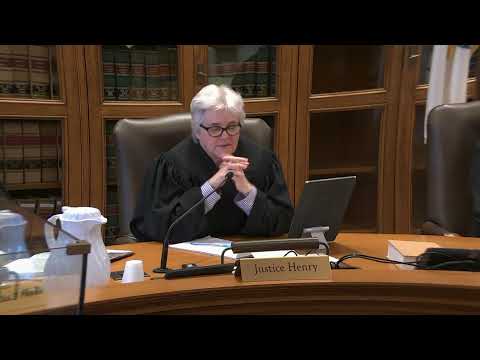
The panel took the case under submission. Judge Vicky Henry, the panel chief, closed oral argument by saying, “The case is, submitted.”