Get Full Government Meeting Transcripts, Videos, & Alerts Forever!
Get email alerts on the Environmental Permitting topic
No spam. Unsubscribe anytime.
Appeals court hears neighborhood challenge to DEP air permit for asphalt plant; dispute centers on odor, administrative comment scope and standing
Summary
An appeals panel heard May 8 from neighbors who object to a DEP‑approved air permit for a Bristol Asphalt plant, arguing the permit did not adequately resolve odor and related emissions concerns and asking for a remand to the agency for more testing.
Neighbors of a proposed asphalt batching plant argued May 8 that the Department of Environmental Protection’s issuance of a pre‑construction air permit did not adequately address odor and related emissions and that the administrative record lacks objective odor criteria. Appellants asked the Appeals Court to remand for a full evidentiary hearing at the agency.
Why it matters: The case raises how administrative permitting processes accommodate community odor concerns when the agency regulations do not set numeric odor thresholds, how DEP applies modeling and conditions, and who has standing to press an adjudicatory challenge when citizen petition rules require a minimum number of signatories.
Appellants’ argument: Attorney George Heiler, representing nearby residents, said appellants met public‑comment requirements and submitted expert analysis recommending additional dispersion modeling, placement of sensitive receptors, and targeted monitoring for constituents that cause odor (for example, hydrogen sulfide and polycyclic aromatic hydrocarbons). Heiler asked the court to reject the agency’s determination that odor concerns were waived because, he said, the written public comments addressed emissions that include odor and requested further testing. Heiler also raised a procedural question: the petition began with 10 citizens but three names later were unavailable; he said the original filing satisfied citizen‑petition thresholds and that DEP should hold an evidentiary proceeding.
DEP and company response: Counsel for Bristol Asphalt, Brian Hurley, said the agency required extensive information and conditions, including additional modeling and permit conditions designed to manage emissions; he argued the record shows MassDEP addressed issues within the scope of its regulations. Samuel Ferring for MassDEP noted the agency’s air‑quality chief explained in the record why numeric odor limits are not set in the regulation and described the permit conditions the agency imposed (monitoring, use of odor‑mitigation materials, and authority to require additional controls or to stop operations if a nuisance occurs).
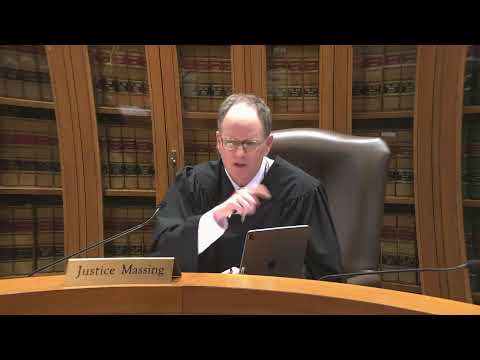
Panel focus: Justices questioned whether the public comments were sufficiently specific to preserve odor as a discrete administrative issue and discussed whether DEP’s regulations and the permit conditions provide a workable enforcement mechanism when the regulations lack a numeric odor standard. The court also discussed whether the citizen‑petition standing threshold continues to apply when signatories are later unavailable.
Disposition: Argument was submitted; the panel will review the administrative record and the comments to determine whether the agency’s decision was supported by substantial evidence and whether appellants preserved odor‑related claims for adjudication.