Get Full Government Meeting Transcripts, Videos, & Alerts Forever!
Get email alerts on the Land Use Zoning topic
No spam. Unsubscribe anytime.
Appeals court reviews zoning board decision that ordered landscaping business to stop; dispute over 'similar construction trade' and home‑occupation limits
Summary
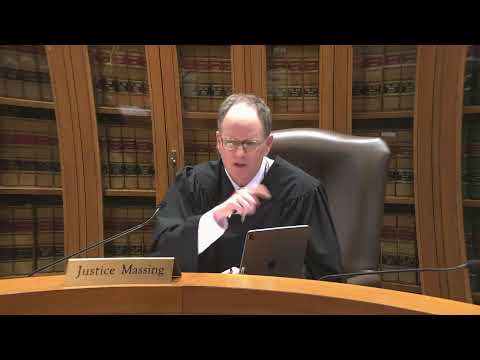
A three‑justice panel heard May 8 in Reza v. Town of Merrimack ZBA whether a family‑run landscaping operation on multi‑acre property is a permitted home occupation or an unpermitted contractor’s yard.
The panel considered an appeal from the Zoning Board of Appeals of Merrimack, N.H.‑border community, in which homeowners who operate a lawn‑care and landscaping business from a multi‑acre property challenge a cease‑and‑desist enforcement order.
Why it matters: The case addresses how local zoning bylaws treat home occupations and whether a growing landscaping operation can be read as a permitted “similar construction trade” or must obtain a special permit or variance. The question affects residents operating small contractor businesses from home in low‑density towns.
Appellants’ argument: Counsel for the Reza family argued the home‑occupation provision should be read to allow similar construction trades and that the landscaping activities here are a permitted use in the applicable zone. The appellants emphasized the rural parcel size (several acres), argued the enforcement arose from abutter complaints after a separate fire, and said the bylaw’s list of illustrative uses implies landscaping activity should be governed by the home‑occupation limitations rather than treated as an outright prohibition.
Zoning board response: Matthew Provencher for the Town argued the record showed substantial commercial activity inconsistent with a residential home‑occupation: multiple heavy trucks and trailers, industrial equipment, early‑morning starts, loading operations, and storage on site. He said the bylaw’s intent and common home‑occupation standards — a single tradesperson with a modest home office and on‑site workshop — differ from a contractor’s yard, and the ZBA correctly found the use not permitted in the zone. He noted the appellants never sought a special permit or variance.
Panel focus: The justices discussed how the bylaw’s “similar construction trade” language should be interpreted, whether the ZBA’s decision effectively barred any path to a special permit, and whether factfinding below left genuine disputes for trial. The panel also briefly touched on constitutional vagueness arguments the appellants raised but which the board said were not squarely developed below.
Disposition: The court took argument and submitted the case for decision; both sides urged the panel to defer to the trial‑court findings and zoning board factual determinations.