Get Full Government Meeting Transcripts, Videos, & Alerts Forever!
Get email alerts on the Trial Procedure Voir Dire topic
No spam. Unsubscribe anytime.
Appeals court reviews whether trial judge erred by limiting voir dire about 'waving' liability in motorcycle crash trial
Summary
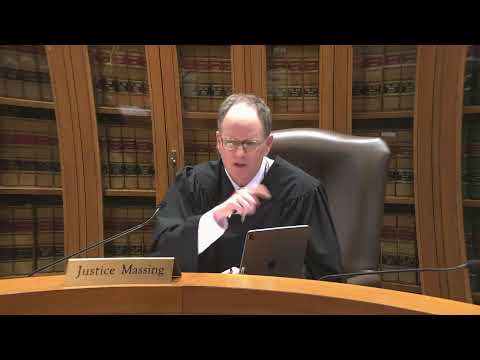
The panel heard paired appeals May 8 on whether a trial court abused its discretion by curtailing attorney‑conducted voir dire about juror bias on a 'waving' (signaling) liability theory and whether the verdict was against the manifest weight of the evidence in a collision involving a commercial truck and a motorcycle.
A three‑justice panel heard paired appeals May 8 in cases arising from a collision on Medford Mall in which a motorcyclist was struck after exiting a parking garage. The appeals challenge both the trial court’s handling of attorney‑conducted voir dire and the jury’s verdicts.
Why it matters: The appeals raise whether prospective jurors should be permitted to answer questions that probe central legal theories during attorney‑conducted voir dire in civil trials, and whether the evidence supported the jury’s finding that the commercial truck driver was not negligent.
Appellants’ arguments: Attorney David Luck, representing Christopher Ciampa, stressed that defense counsel during opening statements characterized the disputed gesture as undisputed, then argued the trial court barred a tailored voir‑dire question that would have exposed juror bias against a liability theory based on waving or signaling. Luck cited amended Superior Court Rule 6 (2017) and argued jurors should be asked directly whether they could fairly consider a case involving a waving theory. He pointed to Officer Brooks’s crash investigation report and testimony, and to appellate decisions recognizing waving as a viable liability theory, and urged the court to reverse for a new trial on voir‑dire error and — in Durham’s separate appeal — for manifest‑weight error.
Defense response: Mark Lavoie, counsel for the truck driver and Sysco, argued the trial judge properly limited the wording of attorney questions because the proposed formulations were too close to the facts and risked planting the seeds of argument. He said the judge’s general statement of the case and subsequent questions adequately vetted bias and that two jurors had disclosed bias during the judge’s voir dire. Lavoie emphasized the trial standard — abuse of discretion — and argued the record showed no prejudice on the part of the jury.
Panel focus: The justices focused on whether the voir‑dire phrasing sought a legal‑issue inquiry permissible under Rule 6 or an impermissible fact‑specific hypothetical. They also discussed whether any error was prejudicial, noting appellate precedent requires a showing of prejudice for reversal.
Verdict challenge: In the companion appeal by Brianna Durham, attorney Lisonbee Gurley argued the no‑liability verdict was against the manifest weight of the evidence and emphasized testimony that the truck driver had superior vantage, admitted he had not checked mirrors, and at times admitted a motion occurred. Defense counsel countered with eyewitness testimony and the crash investigator’s views that the motorcyclist’s exit and failure to observe traffic were the proximate cause.
Next steps: Both cases were submitted after argument; the court will issue written opinions addressing whether voir‑dire limits or evidentiary weight justify reversal or retrial.