Get Full Government Meeting Transcripts, Videos, & Alerts Forever!
Get email alerts on the Civil Rights Use Of Force topic
No spam. Unsubscribe anytime.
Appeals court hears challenge to dismissal of negligence and civil‑rights claims over jail takedown and restraint chair
Summary
The Massachusetts Appeals Court heard oral arguments on May 8 in Newman v. Middlesex County House of Corrections over whether a plaintiff’s negligence and emotional‑distress claims against the Commonwealth and its corrections facility survive summary judgment when the plaintiff did not identify individual officers in discovery.
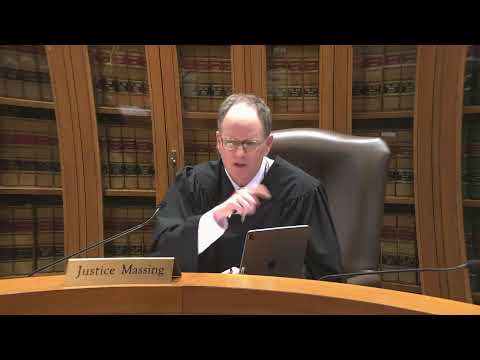
Appeals court justices heard arguments May 8, 2025 in Newman v. Middlesex County House of Corrections, a civil appeal that asks whether negligence and emotional‑distress claims against the Commonwealth can survive summary judgment without naming individual corrections officers.
Why it matters: The case tests how far a plaintiff can press a state‑tort claim against a corrections facility when discovery produced limited identifying information about staff and whether the Massachusetts Tort Claims Act procedures and §1983 principles control pleading and dismissal standards.
Plaintiff’s position: Attorney Dennehy argued the complaint states separate common‑law negligence and emotional‑distress claims tied to two uses of force: use of an ERC restraint chair and an alleged takedown in the facility infirmary. Dennehy told the panel, “There was a negligence claim and an emotional distress claim. The plaintiff in the case properly plead those claims, and there was evidence to support those claims.” He stressed that the complaint names the Commonwealth and that, under negligence law, an individual corrections officer need not be named as a defendant to hold the employer liable.
Defense position: Stephen Pfaff, counsel for the Middlesex House of Correction and the Commonwealth, told the court the plaintiff had multiple chances in discovery to identify the John Doe officers and failed to amend the complaint. Pfaff argued the trial court properly dismissed the civil‑rights and negligence counts at summary judgment because the plaintiff never identified the individual employees after discovery and the “John Doe” procedure would unfairly prevent the officers from asserting defenses. Pfaff also emphasized that the record lacks an incident report for the takedown and that multiple depositions said they “don’t know” about the incident.
Issues raised by the panel: The justices pressed both sides about the record. The panel questioned whether videos of the restraint chair (the ERC) were in the appellate record, whether the plaintiff had used interrogatories to require the Commonwealth to identify officers who responded to the HSU (health services unit), and whether the Massachusetts Tort Claims Act procedural requirements applied when suing the Commonwealth. Dennehy said videos of the ERC chair and a movement card showing placement in solitary confinement exist in the record but that no incident report about the takedown was produced; Pfaff replied that discovery and required motions to compel were not pursued by the plaintiff.
Process and next step: The panel heard argument and the case was submitted for decision. No opinion or vote was issued from the bench at the hearing.
Context and background: Counsel described the case as a multi‑year matter with competing characterizations of the same events: plaintiff counsel treated the chair and the takedown as separate potential bases for common‑law negligence, while defense counsel framed the dispute as a failure to identify responsible employees within discovery time and as a bar to recovery against the Commonwealth.