Get Full Government Meeting Transcripts, Videos, & Alerts Forever!
Get email alerts on the Parks Recreation topic
No spam. Unsubscribe anytime.
Moraine adopts Community Parks and Recreation Vision Plan and directs staff to begin implementation planning
Summary
Council formally accepted the Moraine Community Parks and Recreation Vision Plan after a presentation by consultant Brandstetter Carroll (presented in transcript as Brandcenter Carroll); the plan prioritizes upgrades to three major parks, improved amenities, trails, programming and an action checklist.
MORAINE, Ohio — The Moraine City Council voted unanimously Thursday to accept the Moraine Community Parks and Recreation Vision Plan, a strategic document that outlines facility upgrades, programming priorities and an action checklist for the next 10 years.
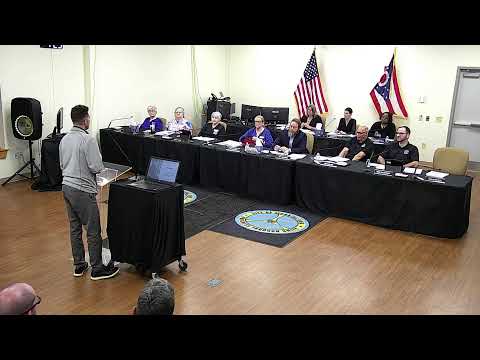
The council’s acceptance followed a 45‑minute presentation by consultant Keith Roadhouse of Brandstetter Carroll (presented in the meeting as Brandcenter Carroll) and remarks by Brent (Parks Director), who led the plan process. The plan — described by presenters as a ‘‘vision plan’’ rather than a master plan — recommends focusing early investments on three large parks (Aura Everett, Deer Meadow and Wax Park), improving maintenance and signage, expanding trails and connectivity, and developing programming and marketing to increase resident use.
Why it matters: Council was told Moraine has roughly 7,000 residents but a daytime worker population of about 14,000; planners recommended investments that aim to serve both residents and the daytime workforce. The plan is intended to align park operations with community‑identified needs, strengthen fiscal responsibility, and help the city pursue grants and partnerships.
Key recommendations presented: upgrade playgrounds and restrooms; add shade, trees and drinking fountains; evaluate an outdoor aquatic facility via a feasibility study (the plan does not commit to building a pool); create a signature splash pad or amphitheater at Wax Park; expand trails and improve river access; evaluate a dog park and expanded disc golf and fields at Deer Meadow; and repurpose and renovate the civic center to support programming. The presentation included an action plan with more than 100 tasks, categorized by timeframe (0–2 years, 3–6 years, 7–10 years), responsible party and funding approach.
Council members and staff discussed operational details such as childcare/children’s‑space needs at the recreation center, staffing and marketing to boost participation. Parks staff noted that past attempts to run drop‑in childcare programs had low utilization and the space used was larger than necessary; consultants recommended monitoring demand and designing scalable, space‑efficient child‑care or supervised‑kids options if warranted.
Outcome and next steps: Council adopted a formal resolution accepting the vision plan. Staff and the parks department were directed to use the plan’s action checklist to prioritize items for upcoming budgets and to pursue feasibility work (for example, a study for an aquatic facility) and grant or partnership opportunities. No immediate capital appropriation was approved at the meeting; council members expressed interest in beginning projects this year as budgets allow.
Discussion versus decision: Adoption of the vision plan is a formal acceptance of the document; the resolution does not itself appropriate funds or authorize construction. Specific capital projects and funding will require separate council action.