Get Full Government Meeting Transcripts, Videos, & Alerts Forever!
Get email alerts on the Playground Accessibility topic
No spam. Unsubscribe anytime.
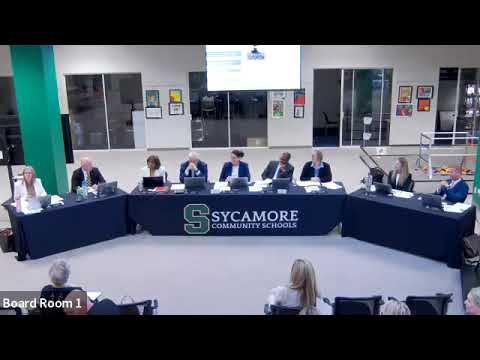
Sycamore trustees hear $5.5 million playground audit; board asks staff for phased, lower‑cost options
Summary
A district audit estimated $5.5 million to bring all Sycamore elementary playgrounds to a universal, accessible design. Trustees and staff discussed surface types, phasing and budget limits and asked for more detailed, site-specific cost options.
Sycamore Board of Education members heard an audit of the district’s playgrounds that estimated about $5,500,000 to upgrade surfacing, equipment and site work to a universal, accessible design.
The audit, presented by district staff, examined surfacing, equipment condition, fencing and contingency costs and compared two primary surface options: a poured rubber surface and a thicker “bonded” rubber surface. "They came up with the number that was presented at the financial retreat, so that 5,500,000.0," the presenter said. "Poured is exactly what it sounds like ... it's poured out at about a half‑inch depth," while the bonded option is roughly "4 inches thick," the presenter added.
The board’s immediate concern was cost and timing. Trustees and staff repeatedly noted the district’s five‑year capital forecast currently shows about $4.1 million available for capital needs and that the playground total is not included in that figure. "We do not have $5,500,000 in our current 5 year forecast to do this," a board member said. The board directed staff to return with phased, lower‑cost options and more precise, playground‑by‑playground estimates.
Why it matters: parents and board members framed the work as an accessibility issue for students with mobility or communication needs, and as a capital priority that competes with roofing, pavement and other deferred maintenance. Staff emphasized that surfacing choices affect long‑term durability, installation complexity and future replacement costs.
Details from the presentation: the audit team inspected surfacing and equipment at every playground, working with architect/engineer SHP and a vendor. The bonded surface option the audit used for its $5.5 million estimate would create a solid rubber surface that attaches to the perimeter curb and is about four inches thick; the poured option is thinner and more susceptible to cracking in freeze‑thaw climates, staff said. A bonded surface was described as having a longer projected lifespan; manufacturers and the audit estimated roughly a 10‑year useful life for typical rubber playground surfacing, though that depends on climate and maintenance.
Staff also provided smaller scope options that focused only on surfacing at elementary sites (rather than full equipment replacement). Those more-limited options reduced projected costs; staff gave an example figure of about $2.11 million for a partial scope (surfacing at selected elementary sites). Presenters said the audit’s figures include contingencies and soft costs such as permitting and drainage work.
Board and public exchange: trustees and staff debated priorities and sequencing. Some trustees said the poured surface’s thinness made it a poor fit for an Ohio climate; others asked whether targeted accessibility paths — rather than full re‑surfacing — could provide immediate access for students who use wheelchairs. "We can make paths," the presenter said in response; "there are other options" beyond a full‑park surface replacement. Board members asked staff to return with a phased approach that identifies the highest‑priority playgrounds (preschool/kindergarten areas were repeatedly mentioned) and separates large playground replacements from smaller accessibility fixes.
Budget context and next steps: treasurer staff told the board that the district currently has about $4.1 million in the forecast for capital work, and that adding a multi‑million‑dollar playground program would require reprioritizing other planned projects or identifying new funds. Trustees asked staff to: (1) produce a playground‑by‑playground cost breakdown; (2) produce “good/better/best” phased options (including targeted accessibility paths and limited resurfacing); and (3) obtain competitive estimates from playground manufacturers/contractors rather than only architectural cost opinions.
Board members and staff said they will return to the board with refined costings and a recommended phasing plan. No funding motion or formal vote was taken at the meeting; trustees asked for more detailed proposals that can be evaluated against other capital priorities in the five‑year forecast.