Get Full Government Meeting Transcripts, Videos, & Alerts Forever!
Get email alerts on the Procurement Transformation topic
No spam. Unsubscribe anytime.
Procurement office reports improved backlogs and staff certifications; regulation changes and tech remain next hurdles
Summary
The Bureau of Procurement reported reductions in backlog, added staff and ongoing policy/regulatory work May 7; the office plans to pursue higher procurement thresholds, updated regulations and electronic bid processes while preserving MBE/WBE and local participation goals.
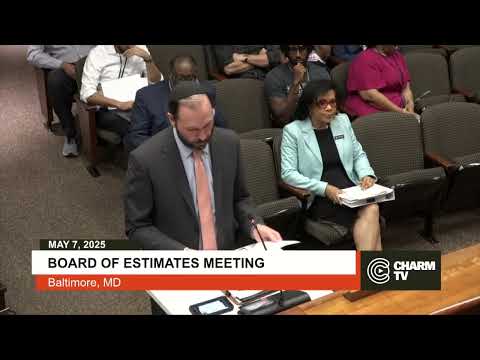
The Bureau of Procurement on May 7 updated the Board of Estimates on a multi‑year procurement transformation effort that officials said has reduced outstanding procurement backlogs, increased staffing and begun training and policy updates but still requires regulatory changes, technology improvements and stronger electronic-bidding tools.
Chief Procurement Officer Adam Manning said the bureau inherited a large backlog after the city transitioned procurement work into Workday but has reduced outstanding items from 515 in early 2023 to about 38 in April 2025, a level he credited to additional hires, team-based assignments and process changes. Manning said the bureau has added about a dozen staff over 24 months and emphasized staff certification: "We are moving to get everybody certified in our processes." He said the bureau is aiming for team-based coverage so individual procurement officers maintain manageable queues.
Manning outlined the four cornerstones of the transformation — people, process, policy and technology — and reported specific measures: digitizing former paper forms into Workday, adding on-demand training modules, streamlining partnership touchpoints (for example bringing SMB&D earlier into requisitions), and using Microsoft and monday.com to coordinate internal workloads. He said a cross-functional team including representatives of the BOE, solicitor’s office and city departments is revising procurement regulations and that the bureau will seek to raise formal procurement thresholds (from current lower amounts toward $250,000 for formal solicitations) to allow staff to focus on higher-complexity procurements.
Board members and elected officials focused on two issues: protecting MBE/WBE goals and moving to secure electronic bid submissions. Comptroller Bill Henry and others urged that cooperative or piggyback contracts not undermine local MBE/WBE participation requirements. Manning said procurement is actively seeking ways to ensure local minority- and women-owned business goals are protected when the city uses cooperative contracts and has pursued contracts designed to include Baltimore MBEs.
On electronic bidding and document lockboxes, Manning said Workday alone does not provide a formal electronic sealed-bid capability acceptable for all procurements; the bureau is working with BSID and other partners on a contract lifecycle management tool and an electronic-capable lockbox that will allow sealed submissions and formal, auditable openings. Manning said digital bid-opening tools are a priority but require legal and technical steps; the bureau is also pursuing an indefinite-delivery/indefinite-quantity (IDIQ) and job-order contracting strategy to speed delivery once legal frameworks are in place.
The Board of Estimates noted the procurement update. Manning said his office will circulate a detailed list of proposed regulatory changes and a timeline for board and council consideration; he asked for continued executive and council engagement on thresholds, electronic bidding and policy changes.