Get Full Government Meeting Transcripts, Videos, & Alerts Forever!
Get email alerts on the Recreation And Parks Audit topic
No spam. Unsubscribe anytime.
City Auditor flags weak timekeeping and overtime controls at Baltimore City Recreation and Parks
Summary
A biannual performance audit presented May 7 found gaps in timekeeping, overtime justification and staff-location data at Baltimore City Recreation and Parks; the agency agreed to corrective steps including training, policy drafting and exploring Workday geofencing.
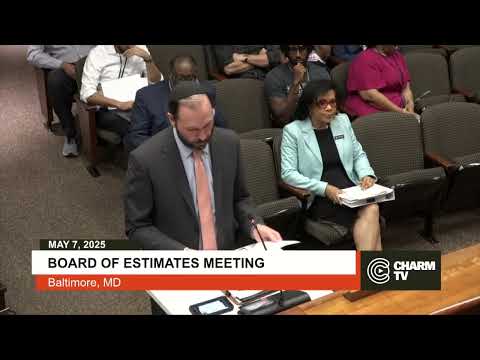
City Auditor Josh Pash presented a biannual performance audit May 7 that found weaknesses in Baltimore City Recreation and Parks’ controls over timekeeping, payroll approvals and overtime documentation, and the agency proposed a corrective action plan that includes staff training, a new overtime policy and a Workday geofencing feasibility study.
Pash said the audit assessed “the effectiveness of controls over resource management and payroll” for fiscal years 2022–23 and examined four divisions — aquatics, recreation centers, park maintenance and urban forestry. He told the Board of Estimates the audit testing showed the agency’s approval process “is not effective,” increasing the risk that employees could be paid for hours not worked.
The audit found that backup systems meant to verify in-person attendance — including DigiQuatics, CivicRec and paper sign-in sheets — were used inconsistently and often could not be reconciled to Workday time data. In a sample of overtime requests, auditors found 78 of 444 requests (17%) lacked documented justification in Workday, and auditors did not find consistent evidence that divisions used available Workday comment fields or attachments to record overtime reasons.
Auditor Josh Pash said the city’s administrative manual on overtime and callback work is dated (1990) and “does not align with those processes in Workday,” and recommended the agency require use of Workday comment fields, implement training for payroll approvers and evaluate geofencing controls built into Workday as a low-cost mitigation.
Baltimore City Recreation and Parks Director Reginald Moore acknowledged the findings and outlined management’s responses. “The agency do agree with the finding and is committed to improving time reporting internal controls,” Moore said, and described a corrective timeline that includes retraining timekeepers and managers (target June 15), division-level compliance audits (by June 30), coordination on geofencing feasibility with the city’s IT group (initial coordination by July 15) and a target to complete feasibility work by Dec. 15, 2025. Moore also said the department will finalize a leadership-approved overtime policy by July 31 and implement related onboarding and refresher trainings by Aug. 15.
Moore and Pash both stressed that the audit tested controls and risks; Pash said “the effect is an increased risk that Rec and Parks is paying employees for hours they did not work,” while Moore emphasized that auditors found no instances of fraud in the sampled payroll records. Moore described operational reasons for higher overtime in some divisions — storm responses, city events, expanded summer youth programming and new facilities coming online — and said the department is adopting a staffing “playbook” to better estimate seasonal and site staffing needs.
Board members asked about specifics: Mayor Brandon M. Scott and Council President Zeke Cohen asked whether geofencing could be implemented quickly and what interim controls would cover mobile summer workers; Moore said he expected initial coordination by July and a Dec. 15 target for implementation if feasible, and that supervisors and sign-in processes will remain in place for mobile staff. Comptroller Bill Henry asked about pool capacity rules and confirmation that the agency is hiring lifeguards for the upcoming season; Moore cited state pool rules (COMAR) on lifeguard-to-swimmer ratios and said his team has recruited and trained lifeguards and expects pools to open for Memorial Day weekend.
The Board of Estimates noted the audit and received the department’s corrective action plan; no policy change or fiscal action was adopted by the board at this meeting.
Looking ahead, the audit team recommended that Rec and Parks: require divisions to use Workday comment fields and attachments for overtime justification, document and implement a payroll/time policy aligned with Workday, require periodic review of active employee reports in Workday to correct location/status errors, and design a systematic method for staffing and resource planning to reduce overtime and meet regulatory staffing levels.