Get Full Government Meeting Transcripts, Videos, & Alerts Forever!
Get email alerts on the Public Safety Budget topic
No spam. Unsubscribe anytime.
Cheyenne Fire Rescue requests $14.76 million for 2026, lists accreditation, staffing and one-time equipment needs
Summary
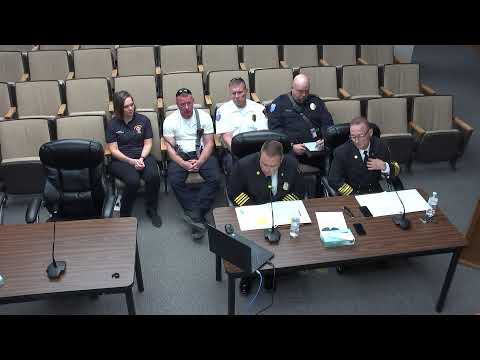
Fire Chief John Copper told the Cheyenne City Council that Cheyenne Fire Rescue is seeking $14,762,460 for fiscal year 2026, citing staffing reclassifications, wellness initiatives and equipment needs.
Fire Chief John Copper told the Cheyenne City Council that Cheyenne Fire Rescue is seeking $14,762,460 for fiscal year 2026, a 0.9% increase from 2025, citing collective bargaining reclassifications, benefits, and increased medical screening and wellness measures.
Copper and Deputy Chief Andrew Dykesorn outlined recent accomplishments including national accreditation by the Center for Public Safety Excellence after more than four years of work on policies and community risk assessment, updates to response deployment and proximity dispatching, completion of infrastructure projects such as vehicle exhaust systems in stations, and continued use of the SAFER grant to support staffing (the department said it has about 15 months left on the SAFER grant period of performance, ending August 2026).
Chief Copper said the department is buying three new engines that are in manufacturing, purchased two properties for future fire stations and completed conceptual designs for stations 2 and 6, and has been generating some revenue from wildland deployments. The chief noted challenges including a wave of retirements that remove institutional knowledge and the need for succession planning and professional development.
Copper and Dykesorn listed five one-time funding requests from the mayor's one-time funds (page 96 of the budget book): $100,000 to refurbish a 2017 F550 into a Type 6 wildland unit (the department said a new comparable vehicle would cost more than $300,000); $21,000 for a Stryker Lucas hands-free CPR compression device to equip ambulances; $19,855 for Knox Box key upgrades as the vendor moves to digital keys; $13,960 for a respirator fit tester to meet the annual fit-test requirement for SCBA and N95s; and $40,000 to replace an aging plan-reviewer vehicle used for inspections and customer meetings.
Dykesorn summarized divisional budget changes: reclassification of positions (including a battalion chief of administration to a second deputy chief), a reclassification in the support division from firefighter to captain, and a requested reclassification in fire prevention creating a deputy fire marshal. He said increases include professional services for medical evaluations tied to the collective bargaining agreement, more overtime to support training and special-operations readiness, and start of a radio-replacement program for portable, mobile and base radios.
Councilmembers asked several substantive questions. Dr. Aldridge asked about rising overtime in the operations and EMS divisions; Dykesorn said the increase is tied to staffing levels, benefit usage, grant volatility and increased training needs, including reimbursable and nonreimbursable training requirements. Councilmembers asked where Cheyenne Frontier Days overtime reimbursements appear in general fund revenue; the treasurer, Robin Lachman, said such revenue typically flows through police and into the general fund and agreed it could be shown more clearly. Copper said the department is pursuing revenue options such as medical billing for transports and inspection fees to offset funding challenges.
On mutual-aid and property-tax changes, Copper said special districts that rely heavily on property taxes are facing cuts following recent state property tax relief measures, and that could affect the departments and districts Cheyenne partners with in Laramie County.
Chief Copper said the department has ordered three engines that may not be delivered for several years and that the city is planning to rely on a public-safety infrastructure fee (6P) to help pay for future apparatus, with a conservative fallback from existing replacement funds if needed.
No formal votes were taken during the presentation; councilmembers thanked the department for service and asked staff to provide clearer revenue line items for reimbursed overtime and to return with any additional requested details during budget hearings.