Get Full Government Meeting Transcripts, Videos, & Alerts Forever!
Get email alerts on the Ems Service Transition topic
No spam. Unsubscribe anytime.
Laramie begins EMS transfer split with Ivinson; consultants, city and hospital prepare separate systems
Summary
Laramie officials presented a transition plan to move inter-facility patient transfers from Laramie Fire Department to Ivinson Memorial Hospital, with consultants saying city operations are on track for a Sept. 1 handoff. Public commenters, including five civilian paramedics facing layoffs, warned of reduced advanced-care capacity.
Laramie — Laramie city officials and outside consultants told the City Council Wednesday that the city is preparing to separate inter-facility patient transfers (IFTs) from front‑line 911 emergency response, moving routine hospital-to-hospital and long-distance patient transports to Ivinson Memorial Hospital while Laramie Fire will continue emergency response in the city and county.
The transition follows more than a year of joint study with Fitch & Associates and a decision in November 2024 to part ways on how to run IFTs. "We have been working with Ivinson Memorial Hospital to transition patient transfer services to the hospital and out of Laramie Fire," City Manager Janine said as she introduced the update, and Chief Justin Johnson reviewed the operational history that led to the shift.
Why it matters: LFD logged hundreds of long transfers that consumed many firefighter/paramedic hours and stretched departmental staffing. City and county leaders say separating the transfer workload should preserve on‑scene emergency capacity. But several current LFD paramedics told council that losing specialized civilian paramedics will reduce advanced prehospital care available on some 911 calls.
Most important details
Consultants from Fitch & Associates said the transition project is on schedule and that behind‑the‑scenes work is well underway. "We haven't hit any significant delays or hurdles," Chad Primo of Fitch said, adding the team is "on track, if not ahead of schedule, to meet the September 1 deadline." Fitch reported 56 tasks and milestones for the transition, with 19 already completed.
On operations and licensing, council was told the city has obtained or renewed required items for independent billing and clinical compliance: a National Provider Identifier (NPI) has been applied for and obtained, CLIA laboratory certification was renewed, state drug and DEA licensing were verified, and the ambulance license was confirmed. The city has also selected a commercial billing vendor after an RFQ that drew three proposals; the chosen vendor's contract is under legal review.
Financial and staffing background
Council and the consultant reviewed long‑term growth in IFT workload: the department reported more than 350 out‑of‑town transfers in 2018; 429 in 2020; 518 in 2021; and 530 in 2022. The workload prompted pilot programs: a civilian provisional driver program (started with a $50,000 budget) and, later, a civilian paramedic program launched in September 2022 with an initial budget of about $200,000 that grew to five full‑time civilian paramedics.
Chief Johnson said the city and hospital negotiated repeatedly and jointly funded a Fitch study; after that analysis the parties could not agree on terms, and "by November of last year, it was decided to, separate ways. And the city of Laramie would, prepare to, operate it as own entity. We'll do emergency response calls in the city of Laramie and Albany County, and the hospital would take care of their in the facility transfer business," Johnson said.
Transition tasks and timing
Fitch described the near‑term work as onboarding a billing vendor (typical vendor onboarding 60–90 days), finalizing a medical director contract that must now be held directly by the city rather than through IMH, establishing supply and pharmaceutical vendor processes previously handled by the hospital, and developing mutual‑aid and alternative destination policies for cases when the closest safe receiving hospital is not IMH.
Primo said the Medicaid validation process can slow billing startup because Medicare numbers generally come first, but he emphasized that the city has up to a year to submit billing and that delayed billing would not be permanently lost.
Public comments and staff impact
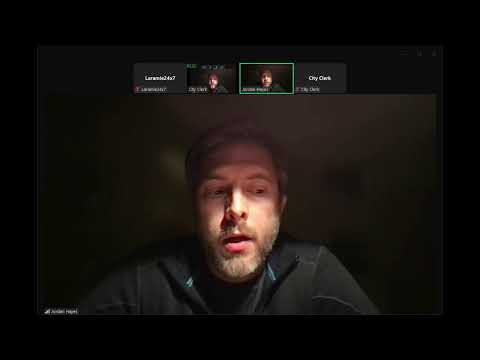
Three members of the public spoke during the work session. Jordan Hayes, who identified themself as one of the five civilian paramedics slated for layoff, said these paramedics handled about half of the department's call volume and perform interventions "only medic and in some cases, only a critical care paramedic can provide." Hayes described a recent pediatric transfer to Denver Children’s Hospital that he said required paramedic‑level interventions en route and expressed concern that similar high‑acuity care will be less available locally after the transition.
A second commenter described LFD's combined fire/EMS model as an efficient way to deliver paramedic‑level care, and a third—also a paramedic—warned that, "All 5 of us have begun moving on. Even if the tune changed tomorrow, I doubt we could stop this bleeding," saying that losing those five clinicians would reduce the level of care LFD can provide on some 911 calls.
What the city will and will not do yet
Discussion vs. formal action: Council heard updates and directed further implementation work but did not take a formal vote on a specific ordinance or contract during the session. Chief Johnson and city staff described operational decisions already made (the November 2024 decision to separate services and the January 2022 county agreement establishing broader EMS service participation), and outlined remaining administrative steps (contracts, vendor onboarding, and supply arrangements) required before the Sept. 1 operational changeover.
Outstanding questions and council concerns
Vice Mayor Richardson and other council members asked whether the city's medical director would be the hospital's existing medical director or a new, separate contract; Fitch and staff clarified that it is expected to be the same medical director but that a new contract is required because the entity providing transfers will change. Council members also pressed for clarity on alternative‑destination medical policies and asked staff to ensure policies cover transports to nearer hospitals that may not be IMH in some county calls.
What comes next
City staff and Fitch said they will continue to negotiate and finalize vendor and medical director contracts, complete onboarding steps for billing and revenue collection, finalize supply and pharmaceutical procurement processes, and prepare public communications so residents and patients are not surprised. Fitch offered the firm as a point of contact for council members who want to review the project's Asana dashboard and task list.
Ending note
The city and IMH will operate separate transfer systems after the transition, but council members and public commenters emphasized ongoing concern about maintaining advanced prehospital care for high‑acuity calls. Staff says the transition is designed to preserve 911 emergency response capacity in Laramie and Albany County while shifting the prolonged, long‑distance transfer workload to the hospital; details on billing timing, supply chains, and staffing adjustments remained in progress at the time of the work session.