Get Full Government Meeting Transcripts, Videos, & Alerts Forever!
Get email alerts on the Gifted Education topic
No spam. Unsubscribe anytime.
Norfolk Public Schools expands Emerging Scholars program; retesting finds ~30% newly identified as gifted
Summary
District officials described a talent‑development approach that pulls top local scorers into weekly enrichment and then retests; 109 students retested from the initial cohort yielded nearly 30% newly identified as gifted, officials said.
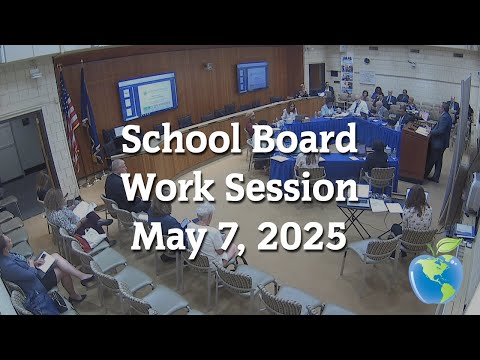
Carla Stead, Norfolk Public Schools’ lead for gifted and academic career services, briefed the School Board on May 7 about the division’s local plan for gifted education and the Emerging Scholars talent‑development program.
“First, we focus on equity and opportunity,” Stead said, summarizing the division’s approach. “Our goal is to support talent development for all students by expanding access to enrichment and advanced learning, not just for those that are formally identified gifted.”
Stead described a multi‑level services framework (levels 1–4) that ranges from districtwide enrichment to formal identification and intensive gifted services. The Emerging Scholars program uses local norms: first‑grade universal screening via the Cognitive Abilities Test (CogAT) identifies students who score in the top 15% at their school even if they do not meet the state 85th‑percentile threshold for formal processing. Those students are clustered in grades 2–4 and receive weekly pull‑out strength development with the gifted resource teacher; students are retested in fourth grade for formal identification.
Stead said the first cohort retest produced a notable outcome: “Of the 109 students retested, nearly 30 percent were newly identified as gifted after receiving services.” She contrasted that result with the broader 2022 cohort screening, which produced smaller identification rates. Stead also said both Emerging Scholars and formally identified gifted students showed lower rates of chronic absenteeism than the general student population.
Stead described other supports: the division’s use of CogAT as a universal screener, increased referrals (up 30% over two years), teacher and parent workshops to identify potential, and partnerships for professional development on twice‑exceptionality. At the secondary level she noted that AP, IB and honors classes serve academically advanced students even if not labeled gifted and that the division will continue targeting professional development and staffing (full‑time gifted resource teachers at elementary schools and shared GRTs at middle and high schools).
Board members asked follow‑up questions about Newcomer and special‑education populations, school‑level variation in identification rates, and whether the Emerging Scholars approach suggests a broader schoolwide enrichment model. Stead said the district is tracking English learners and students with disabilities more intentionally and has provided professional development in partnership with William & Mary on twice‑exceptionality.
The board did not take formal action. Stead said the division will begin the next local plan revision process this summer and present a draft to the board in June 2026 before submission to the Virginia Department of Education in October 2026.