Get Full Government Meeting Transcripts, Videos, & Alerts Forever!
Get email alerts on the Contractor Accountability topic
No spam. Unsubscribe anytime.
Sponsor outlines bill to ban invasive surveillance by state contractors after reported probes; bill left pending
Summary
Sponsor described House Bill 50‑61 as a response to contractor misconduct allegations and proposed prohibitions on invasive surveillance, whistleblower protections, a state auditor‑managed reporting portal and criminal investigatory authority for Texas Rangers; the committee took resource testimony and left the bill pending.
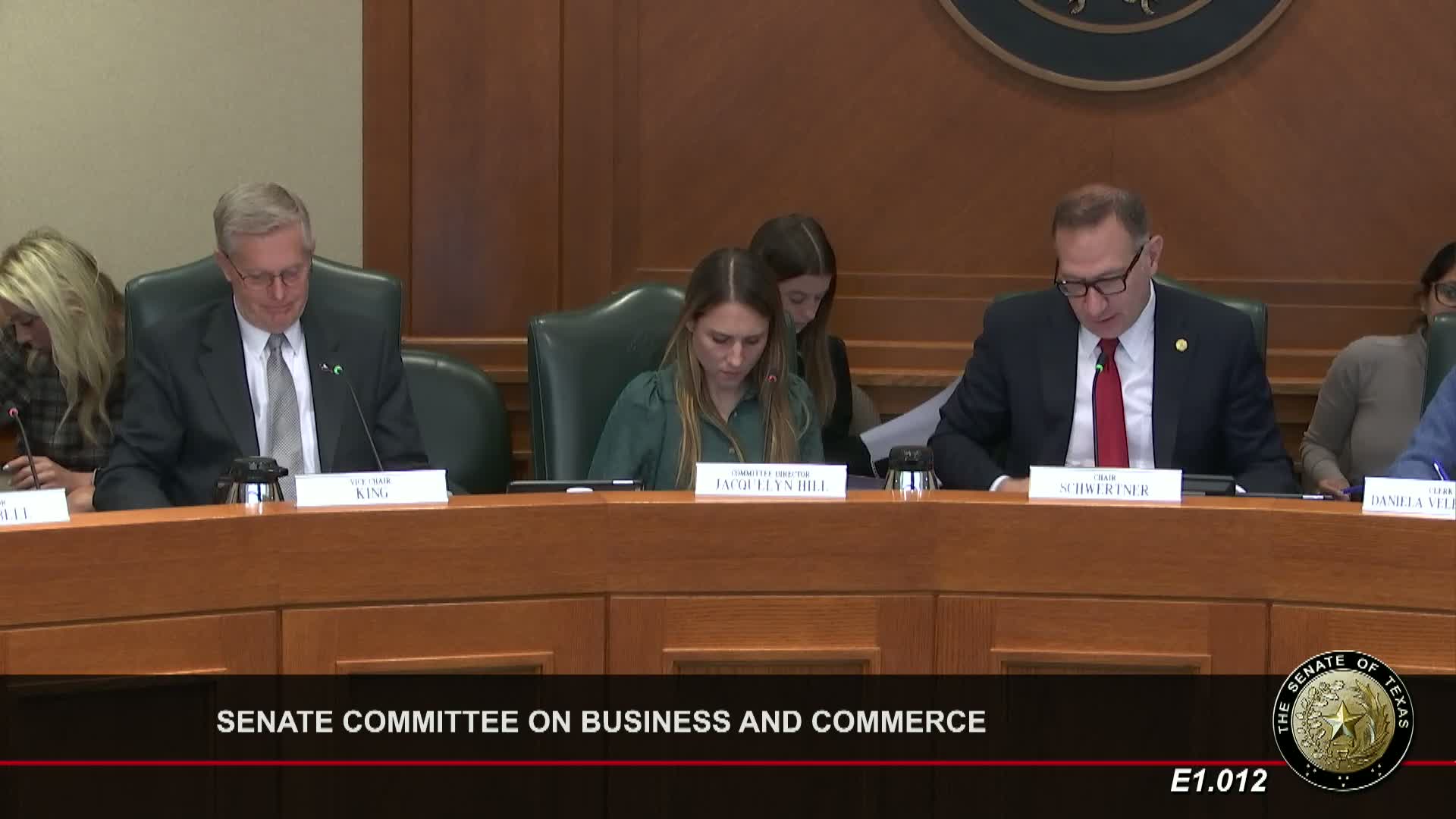
Senator Schwartner presented House Bill 50‑61 to the Senate Committee on Business & Commerce as a legislative response to alleged improper surveillance and data practices by some state contractors. The sponsor said the House bill, authored by Representative Leach, would bar contractors from engaging in invasive surveillance, intimidation, coercion, extortion, undue influence or misuse of confidential information when contracting with the state, and would create reporting and enforcement mechanisms run by state authorities.
Sponsor testimony said state and federal investigations are active into some contractor practices and that one contractor, identified as Superior Insurance (a Centene subsidiary), and its former CEO were under investigation by the Texas Attorney General’s Office. The bill would establish a secure hotline and online portal managed by the State Auditor’s Office for confidential reporting and would authorize the Texas Rangers to conduct criminal investigations arising from those reports. Sponsor also said the bill includes whistleblower protections and potential administrative penalties including contract termination, administrative fines up to $2,000,000 and disqualification from state contracting for up to 15 years.
The committee called resource witnesses from the State Auditor’s Office and the Office of the Attorney General for technical briefing; no members of the public registered to give testimony for or against the bill during the hearing segment. After the resource witnesses answered members’ questions the committee closed public testimony and the chair left the bill pending subject to the call of the chair.
Because the hearing record reflects only resource testimony and no committee vote on final passage, HB 50‑61 was not adopted or reported at the hearing; the sponsor and committee left the bill available for future action.