Get Full Government Meeting Transcripts, Videos, & Alerts Forever!
Get email alerts on the Ndas Child Sexual Abuse topic
No spam. Unsubscribe anytime.
Survivors urge Texas to ban NDAs that silence child sexual abuse victims; senators hear personal testimony on 'Trey's Law'
Summary
Senator Paxton told the committee the substitute for SB 835 and companion HB 748 aim to invalidate nondisclosure agreements to the extent they force silence by victims in settlement agreements involving child sexual abuse.
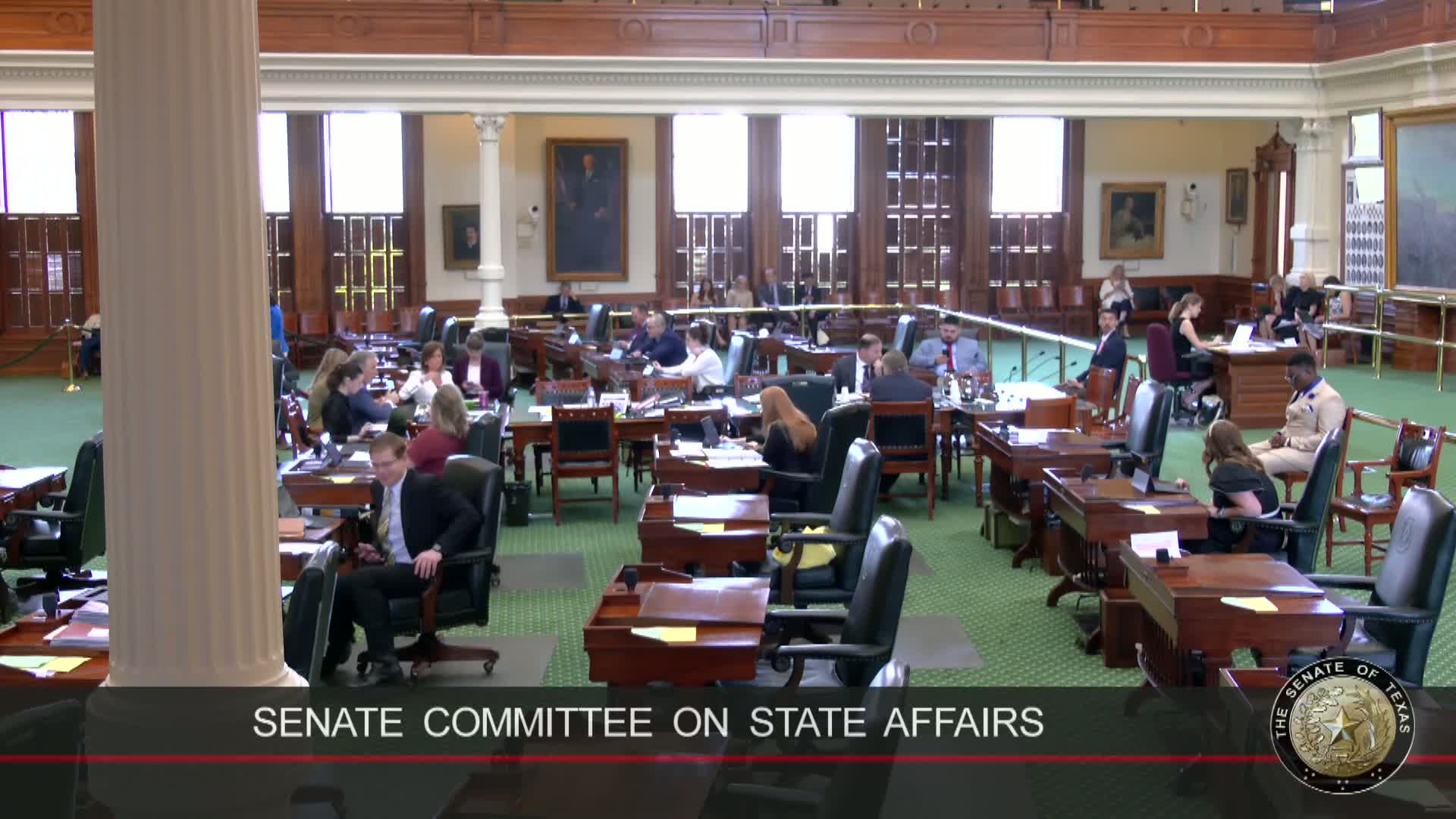
Senator Paxton, the bill sponsor, told the Committee on State Affairs that the committee substitute for Senate Bill 835 and the companion House Bill 748 seek to invalidate nondisclosure agreements (NDAs) to the extent they force silence by victims in settlement agreements involving child sexual abuse.
Paxton described NDAs used in settlement agreements as a “perverse application” when employed to protect predators and institutions rather than to preserve legitimate business secrets. He said the legislation, known in testimony as Trey's Law, would simplify and clarify what NDA‑based confidentiality provisions are unenforceable while preserving the ability to keep certain settlement terms confidential, such as payment amounts or the victim’s identity if the victim chooses.
Survivors and family members gave extended, emotional testimony. Elizabeth Phillips, who identified herself as the sister of Trey Carlock (for whom the bill is named), said her brother was silenced by a settlement with an NDA and later died by suicide. “NDAs are for trade secrets, not trauma secrets,” Phillips told the committee and urged passage of the House bill as the stronger version.
Other witnesses described being groomed and abused by trusted religious leaders and youth‑serving institutions, including accounts tied to Kanakuk Ministries and allegations that institutional leaders, insurers and lawyers used NDAs to keep abuse out of public view. Witnesses included Cindy Clumashire, who accused a traveling evangelist of abusing her beginning at age 12 and said she refused an NDA from the abuser's attorneys; Joseph (Joe) Alarcon, who said his family refused an NDA and then faced legal pressure from the alleged perpetrator’s organization; Susie Spencer, Joseph Cleveland and others who described decades‑long impacts of abuse and the chilling effect of NDAs on reporting and recovery.
Panelists and senators discussed common themes: survivors said telling the story was central to healing, while sponsors emphasized the public safety angle—silencing victims can conceal patterns that endanger other children. The committee heard from multiple survivors who said institutions used NDAs, insurance‑driven settlement practices and legal threats to suppress disclosure; senators noted that a number of other states have enacted similar limits on NDAs in abuse or sexual‑assault cases.
After hearing nearly two hours of testimony, the committee recessed for the Senate floor session and left the matter pending; several senators thanked witnesses for their courage and urged expedited action to move the House version or a strengthened substitute quickly.
No committee vote was taken at the hearing.