Get Full Government Meeting Transcripts, Videos, & Alerts Forever!
Get email alerts on the Public Health Potency Warnings topic
No spam. Unsubscribe anytime.
Parents, clinicians press committee for THC potency caps, stronger warnings and better data collection
Summary
A stream of parents, clinicians and public‑health advocates told the Joint Committee on Cannabis Policy that high‑potency THC products are linked to cannabis‑induced psychosis, addiction and other harms, and urged passage of bills that would require clearer warning labels, set potency limits and improve data collection.
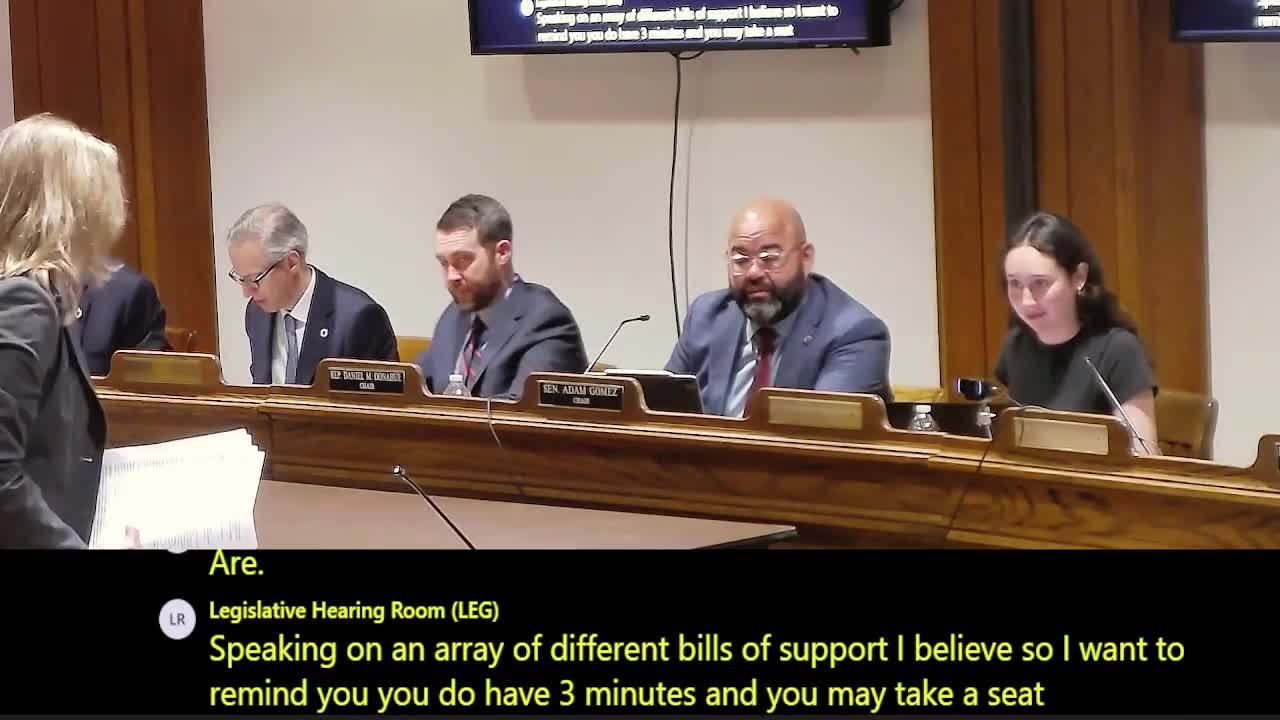
Parents, physicians and public‑health advocates urged the Joint Committee on Cannabis Policy on Tuesday to act on a package of public‑health bills that would add clearer warnings, require broader data collection and set product potency limits.
Amy Turncliff, a neuroscientist who said she coordinates public‑health statements on cannabis, told the committee she has collected clinician and parent testimonies describing “cannabis‑induced psychosis” and urged warning labels and data collection. "We literally say there is limited information on the side effects of using this product," she testified. "We are in desperate need of an omnibus bill that focuses on prioritizing public health."
Multiple speakers asked for potency limits. Senator Patrick O'Connor and other proponents described bills (S96/H191 and related measures) that would cap THC concentration or milligrams per serving; O'Connor cited public‑health organizations and international examples supporting limits. Several witnesses said scientists commonly classify products above 10% THC as high potency and pointed to other jurisdictions' limits: Connecticut and Vermont impose a 30% cap on flower and 60% on concentrates, while Quebec initially set a 30% limit.
Parents and frontline providers described clinical and family impacts. Teresa Hodgins, Ann Marie Galvin and Carolyn Montello each recounted families struggling with young people who developed severe psychiatric symptoms or addiction after frequent use of high‑THC products. "Many are afraid to come testify because they don't want their kids to be harmed any more than they're already harmed," Hodgins said.
Medical witnesses and recovery‑services representatives echoed those concerns. Dr. Safdar Medina, a pediatrician who treats adolescents with mental‑health and substance‑use disorders, described patients whose daily high‑dose use produced panic attacks, psychosis, hospitalizations and suicidal ideation. Mark Mulhern, executive director of a peer‑recovery nonprofit, said his organization has seen a rise in parents seeking support for children harmed by cannabis and asked the Legislature to implement "common sense" potency limits and warning labels.
Advocates asked the committee to require better data collection. Senate Bill 97 and related measures would direct state agencies to track emergency‑room visits, hospitalizations and other metrics tied to cannabis, and to develop a research agenda on patterns of use and sources of supply. Witnesses said the data gaps make it difficult to identify and address emerging harms.
Lawmakers and witnesses debated tradeoffs. Industry speakers generally supported targeted actions on intoxicating hemp and improved warnings but warned that potency rules can be blunt and that enforcement should avoid harming legitimate CBD businesses and small farmers. No votes were taken; sponsors said they will continue to refine bill language and pursue additional evidence.