Get AI Briefings, Transcripts & Alerts on Local & National Government Meetings — Forever.
Senate approves bill requiring notices at hotels used to shelter people experiencing homelessness
Loading...
Summary
The Senate passed House Bill 28‑03 after a contentious floor debate over public safety, dignity for people experiencing homelessness, and municipal authority to use hotels as temporary shelter. Supporters cited public‑health statistics; opponents called the measure dehumanizing and counterproductive.
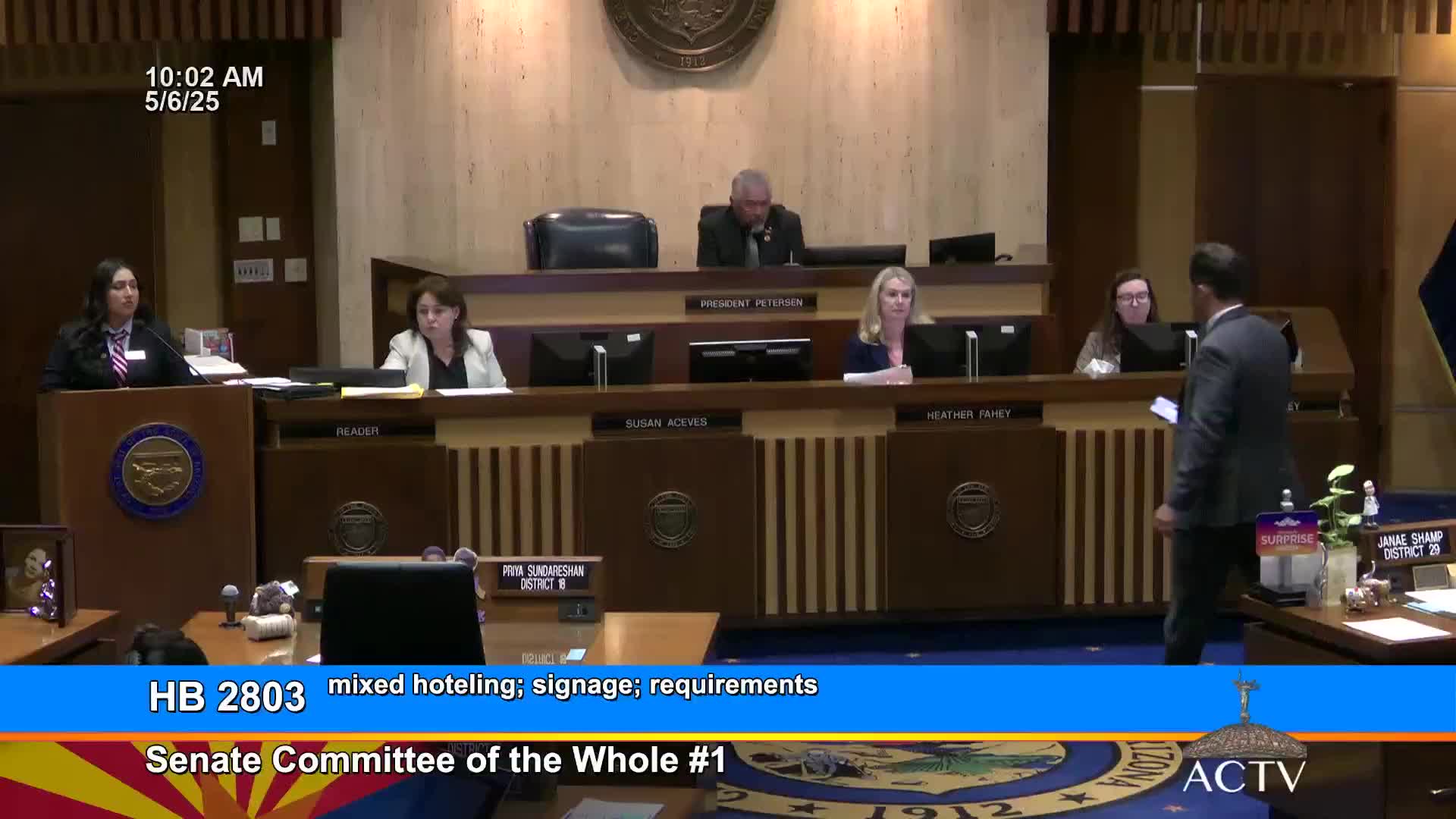
The Arizona Senate voted to pass House Bill 28‑03 on Wednesday, a measure that requires hotels used to temporarily shelter people experiencing homelessness to post a notice advising guests to secure belongings, lock doors and report safety or health concerns to law enforcement. The bill also restricts use of state or local funds for mixed hoteling in some circumstances.
Senator Kavanaugh and other supporters framed the bill as a public‑safety measure. Kavanaugh cited federal data in floor remarks, saying “the Substance Abuse and Mental Health Services Administration estimates approximately 38 percent of individuals experiencing homelessness have an alcohol use disorder, while 26 percent abuse other drugs,” and referenced the National Alliance to End Homelessness’s estimate that 18.4 percent of people experiencing homelessness have serious mental illness. He said warnings would protect families and children who pay for hotel rooms without knowing others in the hotel were being sheltered.
Opponents said the signage would stigmatize and dehumanize people who are unhoused and that the bill would reduce local governments’ ability to use hotels as a last‑resort shelter option. Senator Epstein argued the bill “is highly prejudicial” and could take away temporary shelter options for single mothers, survivors of domestic violence and others reliant on noncongregate shelter. Several senators said the measure does not address root causes — housing supply, behavioral health resources, or funding for shelter providers — and that it could expose vulnerable people to more risk.
Senators also raised data on related risks: Senator Hatathly (who represents portions of tribal lands and raised concerns earlier in the session) noted national figures showing that commercial sex trafficking sometimes involves hotels; she cited statistics that a large share of trafficking incidents occur at hotels and that survivors often use hotels while traveling.
The Senate vote recorded the bill as passing; the roll call produced a final tally recorded in the journal. The bill will return to the House for further processing.
Why it matters: The measure intersects homelessness policy, public‑safety messaging and municipal sheltering strategies. Cities and counties sometimes contract with hotels for short‑term shelter when congregate shelters are full or not appropriate; the bill constrains how local and state funds may be used for such programs and imposes a state sign requirement that opponents say could reduce willingness to shelter or be sheltered.
What the floor debate showed: Sponsors emphasized safety for hotel guests and staff; opponents emphasized dignity and the need to expand housing and services. Multiple senators requested more stakeholder engagement and additional data; sponsors said they sought to fill gaps in public notice and safety.