Get Full Government Meeting Transcripts, Videos, & Alerts Forever!
Get email alerts on the Medical Board First Aid topic
No spam. Unsubscribe anytime.
Senate amends bill narrowing first-aid licensing exemption; final passage fails on tie
Summary
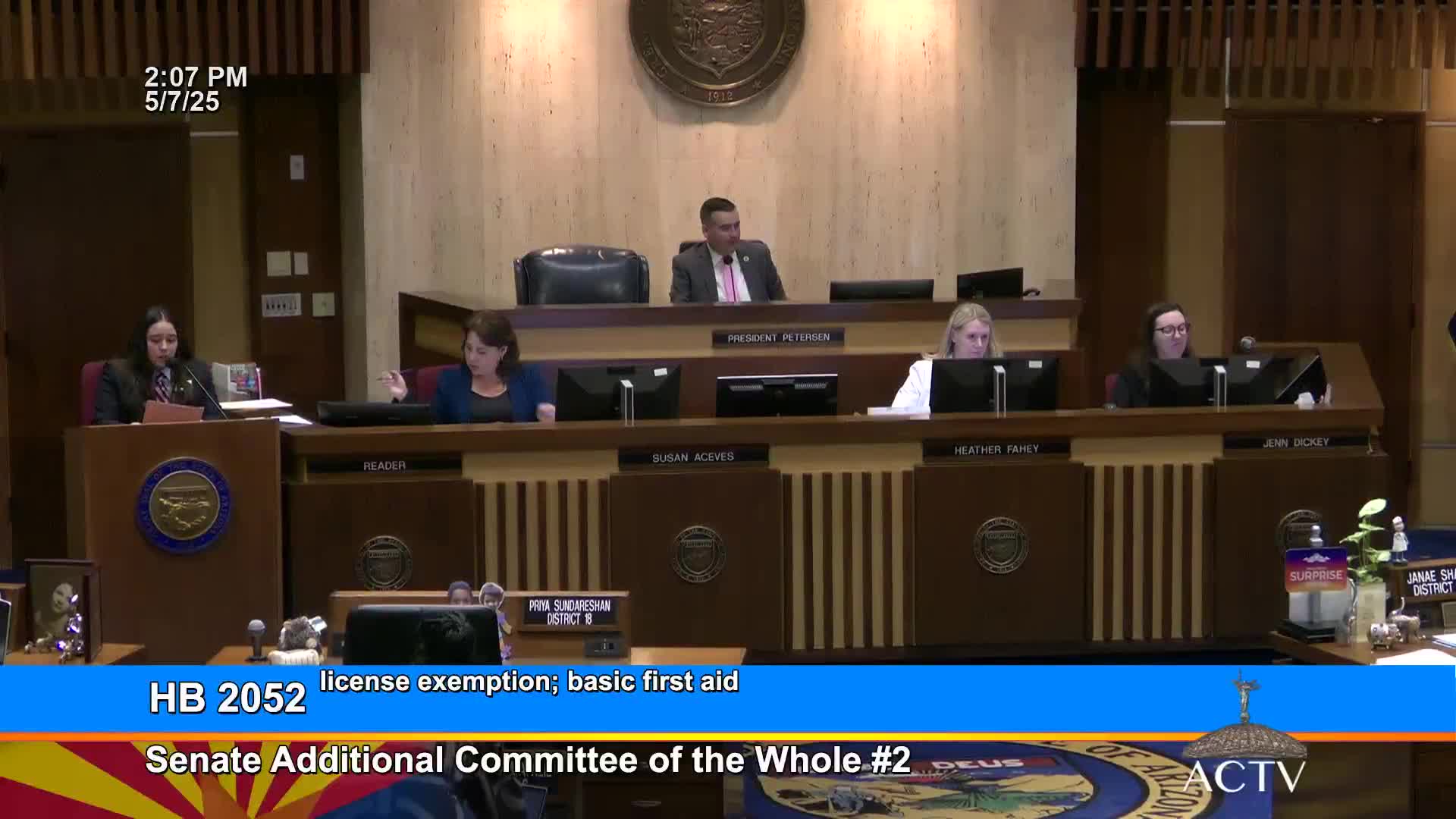
Lawmakers considered a House bill to modify medical-board licensing rules for first aid. The Senate adopted a floor amendment that narrowed exemptions — requiring consent and limiting nonprescription medication — but the measure failed on final reading, 13-13 with four not voting.
The Arizona Senate debated House Bill 2052, which would have amended statutes governing the Arizona Medical Board to narrow a licensing exemption related to administering first aid. Senators adopted a Payne floor amendment that changed the bill’s scope; the bill later failed on final reading, 13-13 with four senators not voting.
The Payne floor amendment narrowed the licensing exemption to apply only when the person administering first aid first obtains the injured person’s consent. It required consent from a parent or legal guardian for injured minors under 15 and added a requirement to notify law enforcement about the injured person’s condition in those circumstances, among other changes. "This amendment, will now narrow the first aid licensing exemption to apply only to the cases where individuals administering aid first obtain consent from the injured person," Senator Payne explained on the floor.
Supporters said the change clarified the circumstances in which non-licensed persons could provide aid. Opponents raised concerns about the amendment’s restriction on administering over-the-counter pain medication and potential liability issues. "Just because they're over the counter does not mean that they're not toxic at levels that you'd be surprised at," the majority leader said, explaining reservations about allowing unlicensed individuals to administer medications.
Senators also debated how the proposal interacted with existing Good Samaritan protections. Senator Schamp noted that Good Samaritan laws already protect routine actions such as cleaning and bandaging minor wounds, and said the amendment focused primarily on medications and consent requirements. The final vote on third reading was tied at 13-13 with four not voting; under Senate procedure the bill failed to pass.
Why it matters: The bill sought to define the limits of volunteer or layperson action in medical situations and to clarify when licensing requirements apply — a policy area that intersects with public health, liability and emergency response.
Decision and next steps: The Payne amendment was adopted in committee-of-the-whole, but the full bill did not secure a majority on third reading and failed; no subsequent action was recorded during the session.