Get Full Government Meeting Transcripts, Videos, & Alerts Forever!
Get email alerts on the Prisoner Device Access topic
No spam. Unsubscribe anytime.
Senate committee hears bill to allow tablets in prisons to expand education and reentry services
Summary
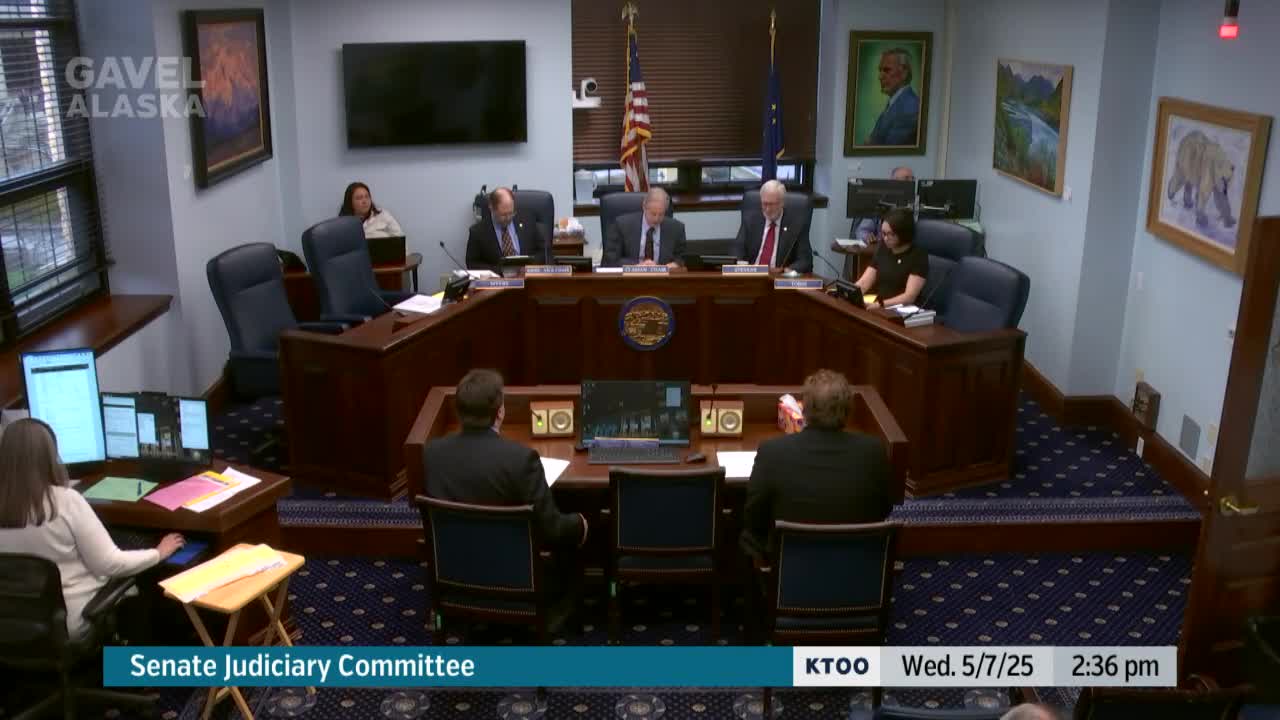
May 7, 2025 — The Senate Judiciary Committee on Wednesday heard companion bills to permit limited electronic devices, including tablets, in Alaska correctional facilities, a measure sponsors say will expand access to education, telehealth and pre‑release reentry planning.
May 7, 2025 — The Senate Judiciary Committee on Wednesday heard companion bills to permit limited electronic devices, including tablets, in Alaska correctional facilities, a measure sponsors say will expand access to education, telehealth and pre‑release reentry planning.
Senator Robert Myers, sponsor of Senate Bill 19 and representing District Q, told the committee the bills aim to reduce recidivism by increasing incarcerated people’s access to education and services. “These tablets are not intended to be a luxury for prisoners,” Myers said. “They facilitate connection to essential services and resources that will help reduce recidivism rates and promote safety in our communities.”
The committee adopted the Senate committee substitute for House Bill 35 (version T) as its working document after a brief staff explanation of the change and then held the bill for further review.
Why it matters: Proponents said tablets could lower some Department of Corrections administrative and transport costs by enabling telemedicine, remote legal meetings and digital enrollment in education and benefits. Several reentry coalition coordinators from Fairbanks, the Matanuska‑Susitna area and Juneau testified the devices would allow case managers and community organizations to begin reentry planning well before release — a step they contend improves chances of successful reintegration.
Invited witnesses summarized reentry practice and results. Marsha Oss, coordinator of the Fairbanks Reentry Coalition, described working from lived experience and emphasized planning before release: “Having a tablet would really help people be able to connect with peer support, their case manager, their coalition, counselors, the union reps,” she said, and it would allow people to complete applications for SNAP, Medicaid and educational programs before release. Barbara Monger, coordinator for the MATSU Reentry Coalition, said her coalition already starts reentry planning at least 30 days before release and supports the bill’s aim to expand vocational training, telehealth and housing and employment referrals inside institutions.
Don Habiger, coordinator for the Juneau Reentry Coalition, cited practical barriers that tablets could address, including interruptions to in‑person access during events such as COVID closures and facility shutdowns. He also gave examples from other states of training programs delivered digitally; he said one program in California produced a 75% hiring rate for participants.
Committee members asked procedural and implementation questions. Senator Tobin asked the committee to request the Department of Corrections to address device security and protections against identity theft and exploitation for incarcerated people who may have low internet literacy; the chair said the department will be asked to answer that question at a future hearing.
The committee noted the Department of Corrections’ reported support for the concept as a way to reduce oversight costs and increase rehabilitative services. The corrections commissioner was not present but will be made available at a subsequent hearing, the chair said.
Administrative details: the committee adopted the committee substitute for House Bill 35 as its working document (motion by Senator Kiel) after staff described the change (removal of a line referencing TV‑MA rated television shows). The committee then held HB 35 (and set aside SB 19 for the moment) for further review. Members were reminded of an amendment deadline: any amendments to House Bill 35 or Senate Bill 167 must be submitted electronically by 4 p.m. Friday, May 9.
The hearing included invited testimony only; no final votes on the underlying policy were taken.