Get Full Government Meeting Transcripts, Videos, & Alerts Forever!
Get email alerts on the Elected Officials Salaries topic
No spam. Unsubscribe anytime.
County staff present proposed salary and benefit adjustments for elected officials; board schedules ordinance enactment
Summary
Personnel recommended new salary levels and benefit parity for most elected officials based on a third‑party market study; board heard the ordinance language and scheduled final enactment.
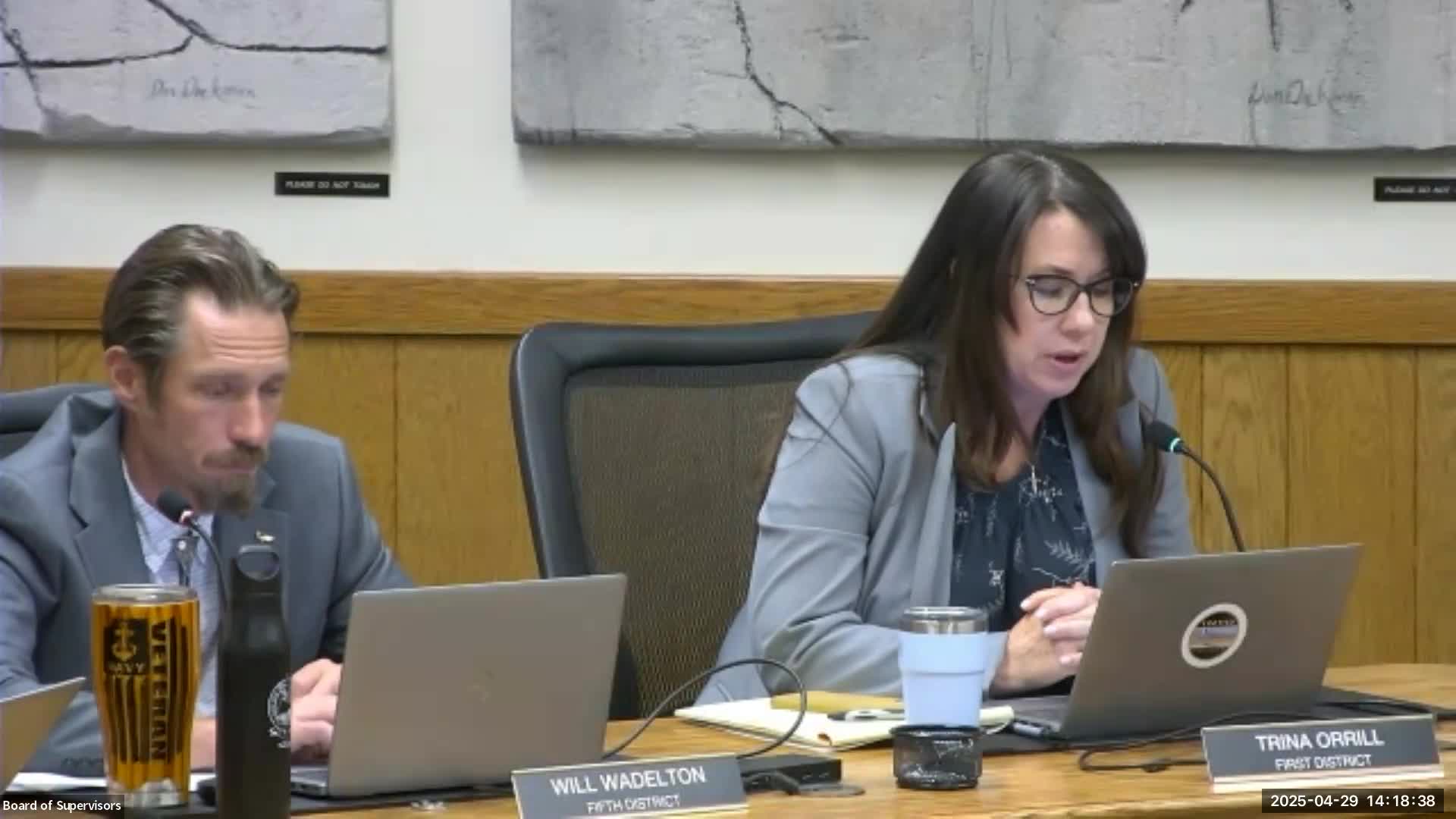
The Board of Supervisors considered a personnel department proposal April 29 to amend Inyo County Code provisions setting salary and benefits for elected county officers and scheduled final enactment after the required reading period.
Carmen Marcelin, assistant personnel director, presented the ordinance amendments that would set new base salaries and align certain benefits for elected officials effective June 5, 2025 (the presentation included a walk‑on correction to add the coroner to a subsection and to move the effective date to the start of a pay period). Marcelin said the recommended salaries were derived from a comprehensive classification and compensation study completed under contract with Evergreen Consulting and that the county benchmarked positions to market midpoints in a peer set.
If enacted the ordinance would set (effective 2025‑06‑05) these base yearly salaries for the positions listed in subsection 2.88.040: assessor $170,000; auditor‑controller $170,000; clerk‑recorder $162,000; district attorney $217,000; public administrator $112,000; sheriff $217,000; tax collector/treasurer $162,000. The ordinance text presented also ties future cost‑of‑living increases for elected officials to the same adjustments provided to appointed county officials as a group (except the sheriff’s COLA would align with the Law Enforcement Administrators Association adjustments). Benefits parity proposed: elected officials (except coroner) would receive the same medical, dental, vision, life insurance, longevity, clothing allowance, employee assistance program, AirMedCare Network membership, county medical plan opt‑out payment, medical insurance deductible reimbursement, wellness bonus, participation in the flexible benefits plan and deferred compensation offerings as appointed officials; the sheriff would receive adjustments consistent with the law‑enforcement administrators’ package.
Marcelin explained that the Evergreen Consulting market study used a peer group of counties and regional employers to define a competitive midpoint and recommended “bring‑to‑minimum” adjustments for positions whose current pay fell below the market median. She added that elected officials are treated as positions rather than subject to step increases and that setting the positions at market midpoints provides stability for a multi‑year period.
Public comment included criticism of the size of the increases, concerns about timing, and questions about budget impact. One public commenter said the proposed raises were excessive and noted that elected officials “are under no obligation to work 40 hours a week,” arguing that large increases were inappropriate. Supervisors asked clarifying questions about the origin of the consultant, the process, and the effective date; staff said the enactment date was chosen to align with the start of a pay period and the department could adjust the date if the board preferred.
Board actions and next steps: a supervisor made a motion during the meeting to approve moving forward with the ordinance and schedule enactment; the formal second reading and final adoption are scheduled for a later meeting (board staff walked on an amended ordinance to include the coroner and set the June 5 effective date). The ordinance will return for enactment on 05/13/2025 for introduction and the effective date for salary changes is slated for 06/05/2025 unless the board directs a different date.
Why it matters: setting elected officials’ salaries and benefits alters long‑term personnel costs and establishes a benchmark for appointed staff parity. Staff said the study was meant to provide an objective market basis for pay decisions and to improve recruitment and retention in county government.
Ending note: staff indicated budgetary adjustments will be processed administratively and that the board can modify the effective date or other provisions prior to final adoption; no final appropriation was adopted at the April 29 meeting.