Get Full Government Meeting Transcripts, Videos, & Alerts Forever!
Get email alerts on the Court Technology topic
No spam. Unsubscribe anytime.
Circuit court clerk briefs board on e-filing gains and access limits as local expungement group presses for changes
Summary
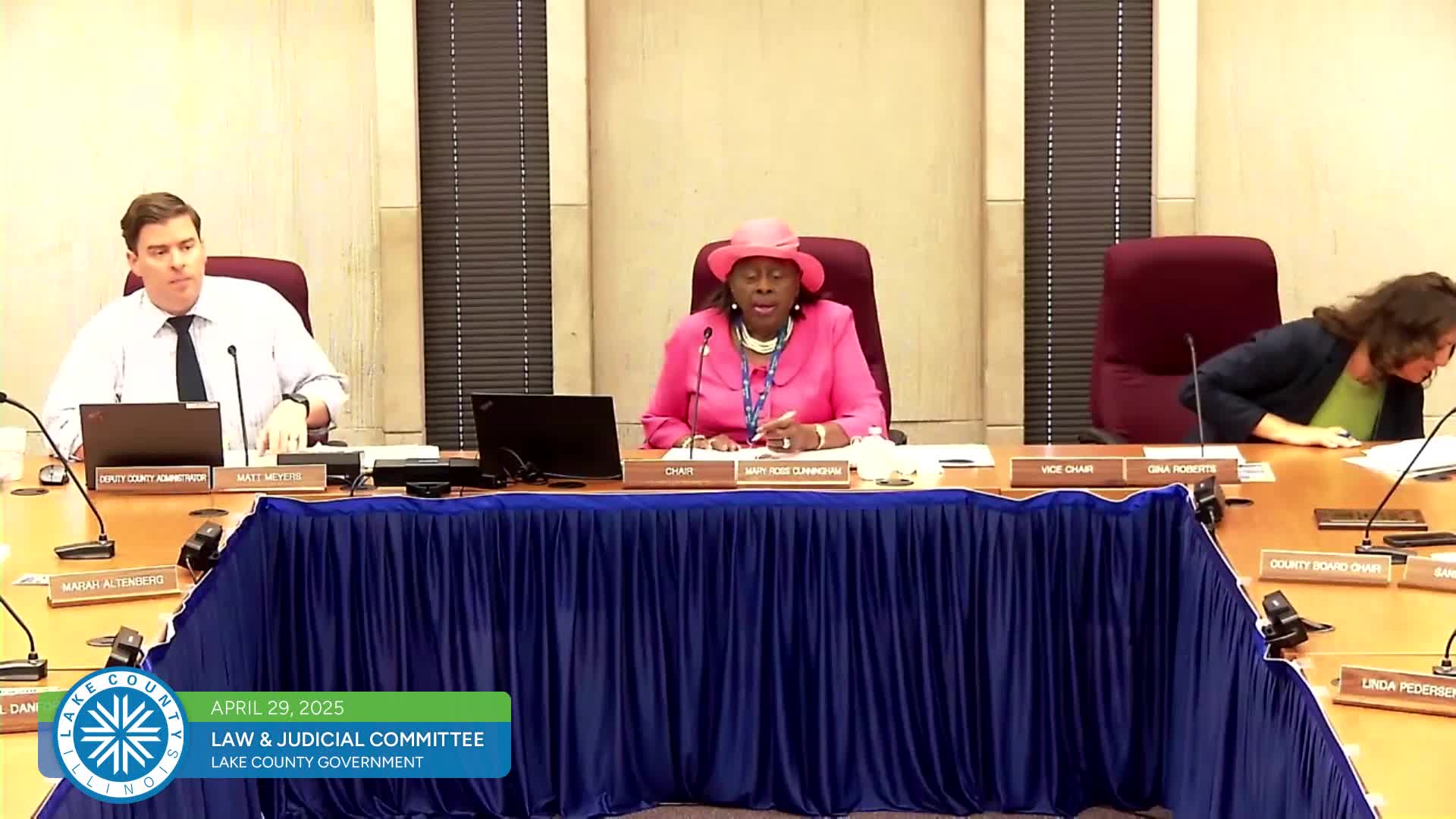
Circuit Court Clerk Aaron Weinstein told the Lake County Board Law & Judicial Committee on April 29 that the clerk's office has modernized many operations but continues to restrict public remote access so court systems remain stable.
Circuit Court Clerk Aaron Weinstein told the Lake County Board Law & Judicial Committee on April 29 that the clerk's office has modernized many operations but continues to restrict public remote access so court systems remain stable.
That came after a public comment from Steve York, president and managing attorney of Coalition Legal, who said the county's change to a $142 flat filing fee has reduced a backlog of expungement petitions but that operational requirements are creating new burdens. "We are now processing approximately 30 new intakes a month," York said, adding that the office's prior backlog of about 26 cases is "down to 0." He asked the clerk's office to stop requiring a physical $60 check to pay the Illinois State Police and to instead remit the full $142 electronically so outside providers can process larger volumes without manual accounting steps.
Why it matters: county e-filing and public-record access affect attorneys, self-represented litigants and nonprofit providers who assist residents with sealing or expunging records. Changes to fees and to how the public accesses records also intersect with new Supreme Court rules on remote access and state-level reforms such as automatic expungement provisions that are in progress.
Weinstein summarized upgrades and constraints. He said the circuit clerk's department has 37 budgeted positions, runs multiple court locations and has moved many record functions online. The office previously handled roughly $30 million a year in payments but now totals about $19 million, he said. Weinstein said the e-filing portal and new case-management system required careful rollout because of sealed juvenile and expunged records: "We cannot allow information to get out there that should not be getting out there."
On public access, Weinstein and court IT staff have imposed a technical limit to prevent automated or very high-volume queries from bringing the system down. "They are down, they can do 60 clicks an hour," he told the committee, describing the current throttling that disconnects users who exceed the limit. Board members and outside attorneys reported being logged out when they run many searches in a day; the clerk said users must wait until the rate limit expires and that staff are continuing work with vendor Journal Technologies and county IT to raise capacity without risking stability.
Several board members asked for clearer timelines and specific fixes. Member Danforth pressed for a calendar of next steps and asked whether village prosecutors and other frequent users could receive higher allowances; Weinstein said separate access arrangements have been discussed and that the courts' judicial IT group is working on privileged access for prosecutors.
On expungements, York said the county's fee ordinance divides the $142 filing charge so $60 goes to the Illinois State Police and $82 to the clerk's office; he asked the county to take the full payment electronically and remit the ISP portion on the filers' behalf. Weinstein said he understands the issue and would check whether the ISP still requires a physical check, noting the county is moving away from checks where possible. He warned that upcoming automatic-expungement rules and other changes will increase workload and that staffing and automation efforts (including AI bots that reduced e-filing review times from days to under 24 hours) will be essential to handle volume.
The clerk's presentation also covered: relocation of some court operations (a summer move of Round Lake Beach traffic court to Park City for renovations); passport services and outreach clinics; near-completion of document digitization and microfilm conversion; plans for eCertify to allow electronic certified documents; and ongoing integration work between the county's Journal Technologies case system and the Tyler system used by the sheriff and other partners.
Board action: the committee approved consent agenda item 8.18 (agenda notation "8.18 0.5") by voice vote during the meeting. The motion was moved and seconded and carried; no roll-call tally was recorded in the meeting transcript.
Looking ahead: Weinstein said the clerk's office will continue configuration work with vendors, pursue additional portal features (including calendaring and enhanced attorney access), and review whether the Illinois State Police or state-level processes still require a paper check for the ISP portion of expungement fees. York and other outside users asked the county to prioritize higher-capacity public access for high-volume legitimate users such as legal services providers and prosecutors so they can serve Lake County residents efficiently.