Get Full Government Meeting Transcripts, Videos, & Alerts Forever!
Get email alerts on the Commission Governance topic
No spam. Unsubscribe anytime.
Fairbanks North Star Borough air commission questions its role as vacancies persist
Summary
At a May 7 meeting commissioners reviewed the Air Pollution Control Commission’s advisory role after regulatory authority shifted to the state, discussed persistent vacancies (four of seven members currently seated) and debated whether to suspend regular meetings or keep quarterly sessions on the calendar.
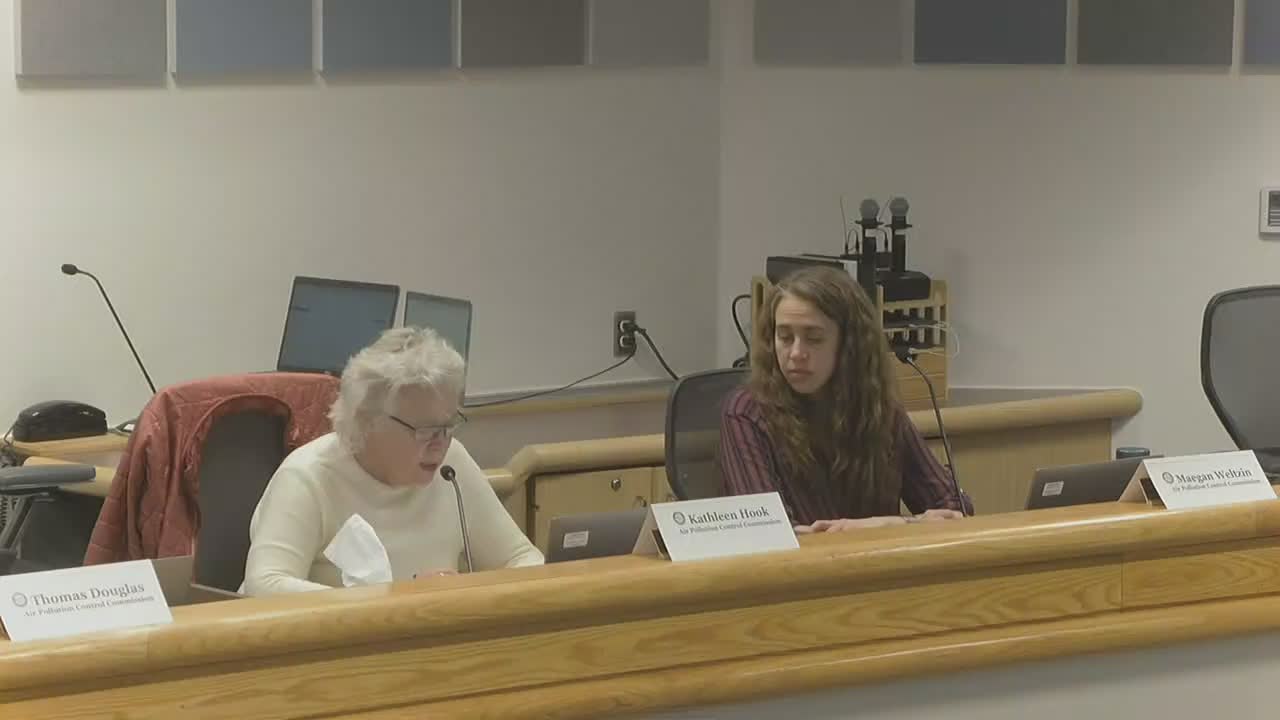
Fairbanks — The Fairbanks North Star Borough Air Pollution Control Commission debated its ongoing role and how to handle persistent vacancies at its May 7 meeting, after a commissioner presented research on the commission’s statutory role and membership requirements.
Commission Chair Kathleen said the commission was established under chapter 4.12 of the borough ordinances and that it is intended to be a seven‑member body with three‑year terms and a four‑member quorum. “While Prop 4 removed the Bureau’s direct ability to regulate certain air quality measures, the APCC still has an opportunity to shape air quality policies, educate the public, propose legislature solutions and collaborate with higher priorities,” Kathleen told commissioners.
The discussion grew from concerns about recruitment and whether the commission adds value while operating with only four seated members. Commissioner Douglas asked whether the borough or the commission is responsible for recruitment; commissioners were told appointments are made by the mayor and the mayor’s executive assistant typically sends renewal and application reminders. One commissioner said that some borough commissions have been “shelved until needed” and that the mayor is reviewing which commissions remain active.
Commissioners weighed two approaches: keeping quarterly meeting dates on calendars to reduce the difficulty of reconstituting the body, or placing the commission in a form of temporary suspension (“suspended animation”) so resources can be reallocated until specific needs arise. Kathleen recommended that the minutes from the May 7 meeting be sent to the mayor so the administration can review the commission’s concerns about membership and usefulness. A commissioner replied, “That’s a great idea.”
The commission did not take a formal vote on suspension at the May 7 meeting. Commissioners discussed continuing to hold quarterly meetings by default if staffing and quorum permit, but also acknowledged the practical difficulty of scheduling when membership is thin.
The commission’s advisory powers were described as primarily consultative: reviewing proposed regulations, translating technical materials for the Borough Assembly, developing comprehensive plans for prevention and control of air pollution, and educating the public. Commissioners emphasized that the body’s continued usefulness depends on member recruitment and whether the mayor and assembly view the commission as a productive advisory resource.
The meeting record shows no formal motion to suspend the commission; commissioners requested the meeting minutes be forwarded to the mayor for consideration and possible action.
The commission’s next regular meeting is scheduled for Aug. 6; remote participation remains an option.