Get Full Government Meeting Transcripts, Videos, & Alerts Forever!
Get email alerts on the School Funding topic
No spam. Unsubscribe anytime.
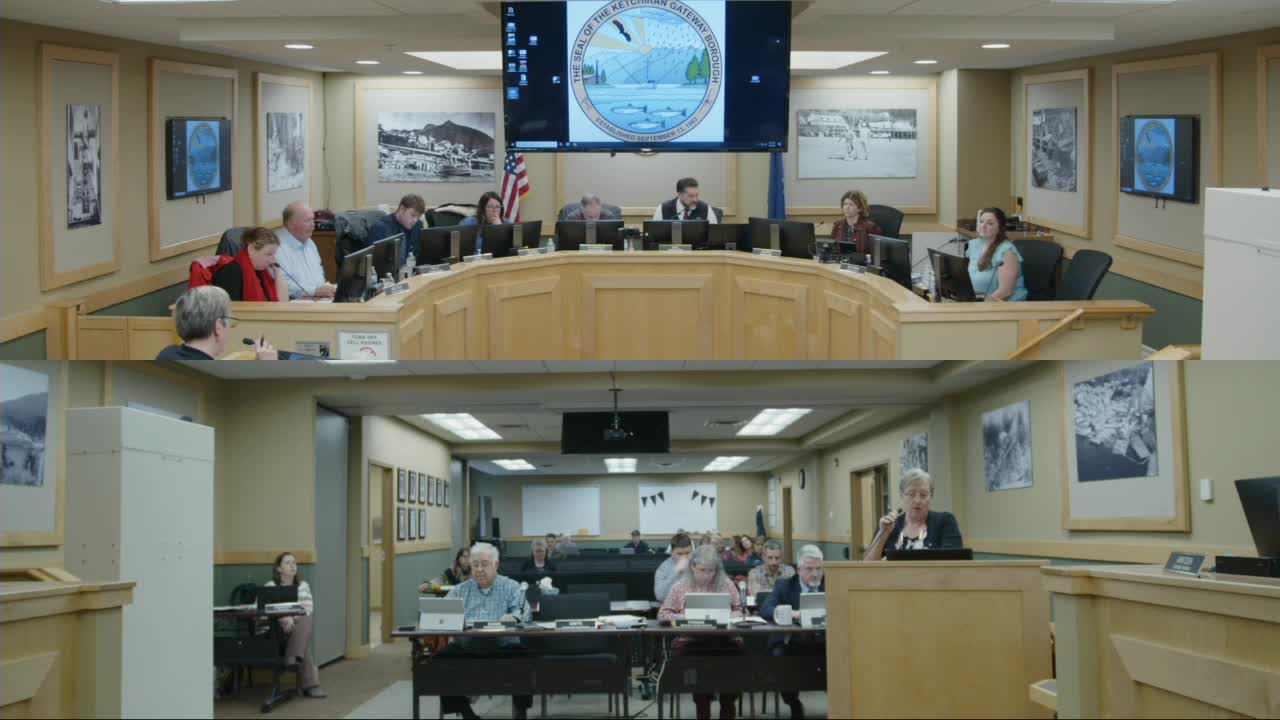
Ketchikan Assembly approves supplemental school funding, holds back full FY26 allocation amid fiscal uncertainty
Summary
The Ketchikan Gateway Borough Assembly approved a FY25 supplemental local education payment and authorized conservative FY26 funding, while pressing the school district for clearer cash-flow details and oversight amid multi-year deficits and disputed accounting practices.
The Ketchikan Gateway Borough Assembly on May 5 approved a $939,156 increase to the FY25 local education contribution — including $453,405 paid in cash and an in‑kind health insurance payment not to exceed $485,751 — and set conservative parameters for FY26 local funding while scheduling additional public hearings to resolve remaining questions.
Assembly members and borough staff said the action is intended to keep school operations funded near the district’s requested level while protecting borough reserves as state revenues and district counts remain unsettled.
Assistant Borough Manager Cynna Smith told the assembly that student counts and state revenue estimates changed after the district submitted its budget, reducing the maximum allowable local contribution by roughly $19,887. Smith recommended language that lets staff adjust the in‑kind payment downward “not to exceed” the stated amount so the borough will not overfund the district if final state numbers change.
The assembly approved ordinance 2065 on a 5–1 vote (Arntzen opposed). The motion increased the FY25 local contribution to the statutory cap of $13,519,109 and raised total district spending authority to $49,551,166. Assemblymember Matson moved the measure; Assemblymember Otis seconded. The ledger on the motion records: Matson yes; Otis yes; Thompson yes; Arntzen no; Bailey yes; Palmer yes.
During extended questioning, Assembly members pressed the district business manager for specifics about a possible cash shortfall the district projected for mid‑June. Business Manager Daniel Schuler said his cash‑flow analysis showed a potential shortfall of about $1.2 million on or about June 18 unless timing of state entitlement payments could be advanced. Schuler told the assembly that the district had requested moving an entitlement payment from June to May and that such timing adjustments — not additional borough cash — could avert the immediate shortfall.
Schuler and borough staff warned that the district’s fiscal picture is driven largely by unusually high health‑insurance claims and by timing of state reimbursements and grant reimbursements. Schuler said the district’s negative fund balance shown in the audit reflects carryover items and special‑revenue transfers tied to prior years’ reporting.
Multiple assembly members and citizens during public comment raised concerns about district budgeting practices and alleged misuse of restricted funds. Public commenter Nicole Lynn cited an Alaska Supreme Court opinion and urged the borough not to accept a district budget that she said relied on “future funds” to cover current expenses. The assembly said it will not approve a funding level that violates state law and requested more clarifying detail from the district.
The assembly also introduced and amended ordinance 2066, the FY26 local funding ordinance, setting a preliminary local contribution of $11,694,754 (assuming a baseline BSA of 5,960) and authorizing spending authority of $37,491,678. That measure passed on a 5–1 vote and was set for a second public hearing May 19; the assembly said it would hold funds in reserve until the legislature, DEED student counts, and district clarifications are final.
The assembly and staff agreed to two follow‑up items: (1) borough staff urged the district to present answers to written questions the borough sent about cash‑flow timing and what the district will do if entitlement timing cannot be advanced; (2) borough staff will use the “not to exceed” in‑kind language when making the health‑insurance payment so the borough cannot exceed its legal cap even if the numbers shift.
Assembly members said they preferred a cautious approach — holding back discretionary portions of the FY26 request to preserve flexibility and reserves — rather than immediately committing the full amount the district requested, while also noting the practical impact on district operations if the borough withheld funding entirely.
The district’s business manager said he expected some entitlement and transportation payments to be received in May that would reduce or remove the immediate cash‑flow concern; the assembly voted to approve the FY25 supplemental funding and to continue public review of FY26 allocations.