Anchorage Assembly holds handoff work session to onboard incoming members
Summary
Outgoing and current Anchorage Assembly members gave advice and outlined priorities — public safety, housing, homelessness and long-term capital projects — during an informal handoff and onboarding work session.
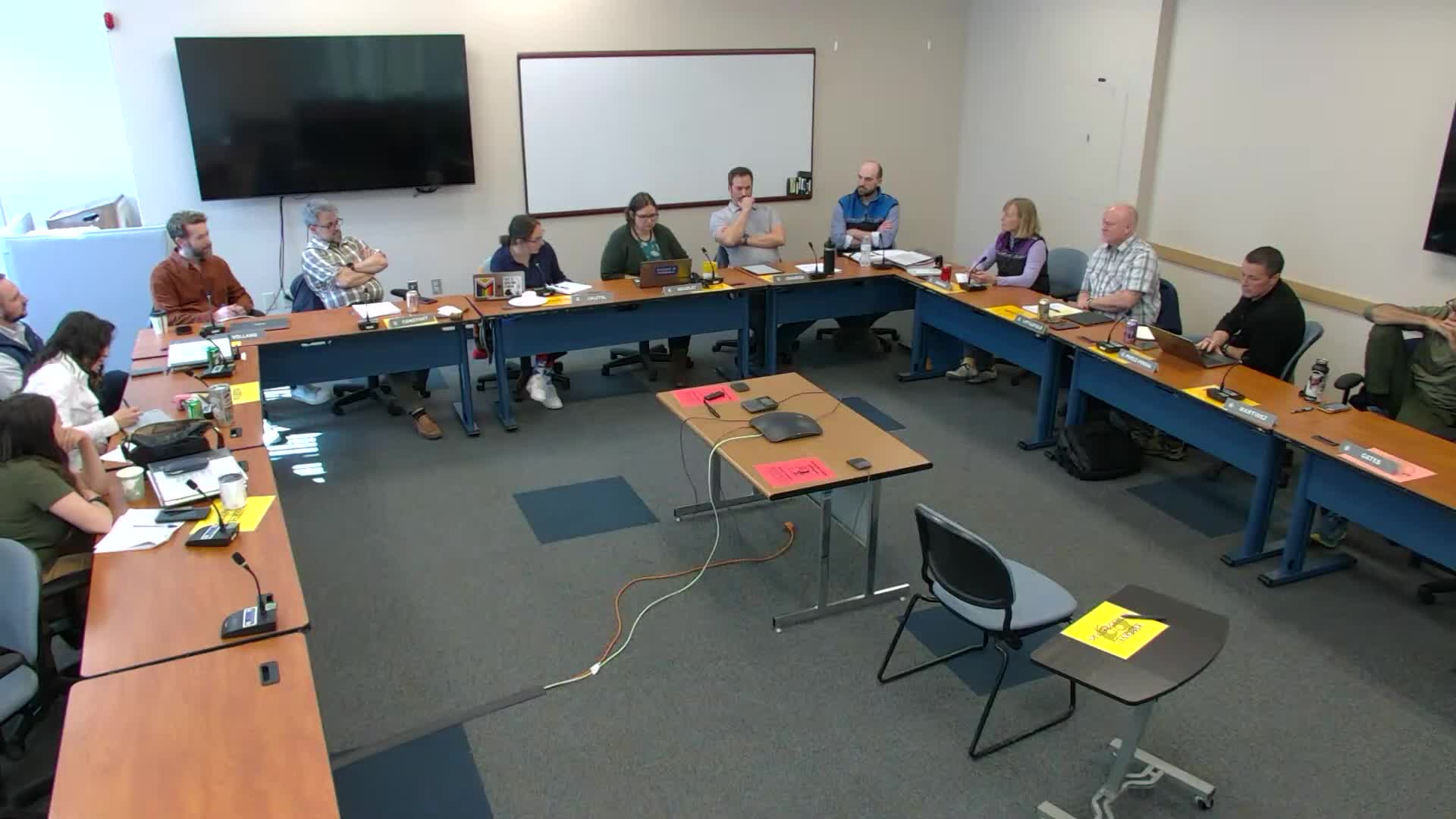
The Anchorage Assembly held an informal handoff work session on Oct. 12, 2025, where outgoing, current and incoming members traded advice about committee work, procedures and priorities including public safety, housing, homelessness and long-term capital projects.
The session, described by organizers as a brief, round-robin introduction and question-and-answer forum, focused on practical onboarding: whom to contact in the administration, how the assembly’s committee structure maps to departments, and procedural guidance on rules, motions and public communications.
The exchange mattered because new and returning members will immediately confront high-profile policy items and ongoing capital programs requiring sustained oversight. “There are big continuing projects that you will never see all the way through likely in your term. But they need stewards,” said Meg Zalatow, Assembly member, urging colleagues to pick areas to track closely. “We are a mile wide and an inch deep,” she added, describing the assembly’s need to divide technical oversight among members.
Members repeatedly named public safety, housing and homelessness as top near-term priorities. Jared Kirker, Assembly member, said public safety is “issue number 1,” describing the subject as the driving reason he ran. Multiple members — including Daniel Boland, Assembly member, and Keith McCormack, Assembly member — also said they plan to focus on housing and homelessness, and on mitigation of public-safety risks such as fire.
Speakers emphasized practical steps for new members: build relationships with department staff, attend committee meetings to learn which departments answer to which committees, and tour municipal facilities. “Do a ride along, schedule it with the police, do a ride along with the fire department, go to the water treatment plant with AWU, take a tour of the port,” Zalatow said.
Several speakers stressed reliance on branch staff. The assembly’s clerk, legislative services and legislative council were described as essential internal resources. Former member Randy (last name not specified in the session) reminded new members to “take advantage of legislative services. They are a great and huge help.” Members said the clerk’s office can provide scripts to ensure motions and procedural steps are handled correctly during meetings.
On procedures and decorum, members urged fast onboarding for Robert’s Rules of Order and other parliamentary practices. “Learn the rules. Learn Robert’s Rules,” said Christopher Constant, Assembly member. Members also recommended using the council’s “as-applied” or “in-brief” guides, training modules such as Jurassic Parliament, and working with the clerk and legislative attorneys for complex procedural questions.
Speakers warned about the frictions of public life, including social media. Daniel Boland advised new members to treat social media as “a two-edged sword,” and others recommended maintaining a public page for official business and turning off notifications to limit distraction.
Multiple members described the job’s demands and the need for personal boundaries. Anna Brawley, Assembly member, urged new members to “put your own health first, physical and mental well-being.” Mark (last name not specified), Assembly member, repeated advice to set boundaries and be the public face of one’s decisions: “You got here by your merits… Please be your answer.”
The session also included tactical advice on voting and reconsideration. Meg Zalatow noted the assembly’s reconsideration mechanism, telling members it is acceptable to change one’s vote after sleeping on a difficult decision. Anna Brawley referenced the Open Meetings Act while describing the assembly’s voting unpredictability: “there’s not a scenario where we’re all going in the backroom and figuring it out beforehand.”
Members encouraged new colleagues to pick long-term projects to steward — port modernization, AMATS planning, hydro and energy studies and river-related work were cited — and to partner with administration staff and subject-matter experts to understand financing and technical constraints. “When we were trying to figure out the plan of finance for the port, I met with Public Finance three times before it was appropriate for assembly members,” Zalatow said, urging persistence in learning complex financial issues.
The work session concluded with outgoing members invited to offer final remarks and with reminders about an upcoming, consequential regular meeting scheduled for Tuesday at 5 p.m.
The session did not include formal votes or ordinance action; it functioned as a training and transition forum for newly elected and continuing assembly members.