
Assembly work session previews amendments to AR 2025-91; administration to produce S‑version
Get AI-powered insights, summaries, and transcripts
Subscribe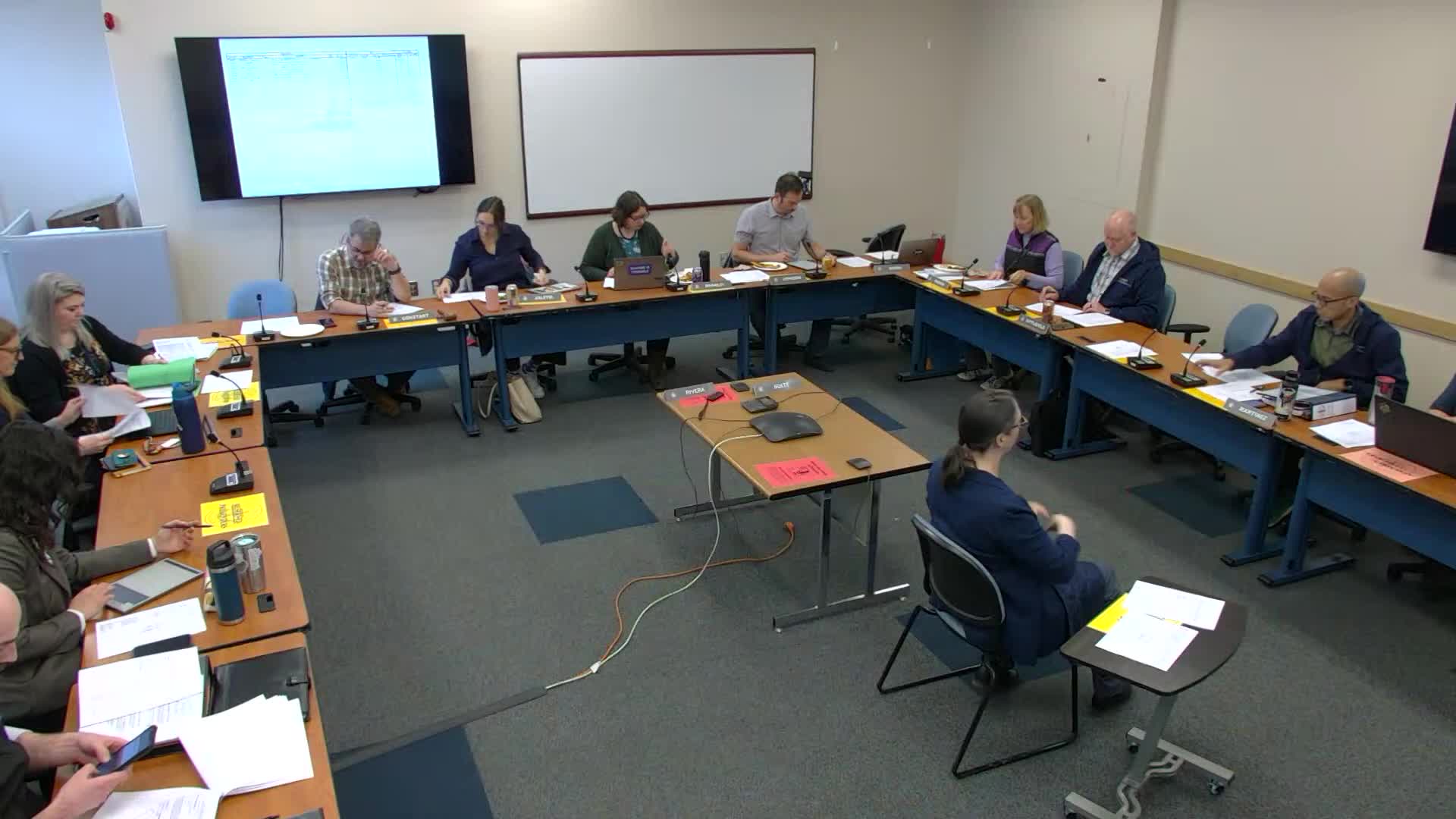
Summary
The Anchorage Assembly met in a work session to review a slate of proposed amendments to AR 2025‑91 and to hear preliminary administration updates; the administration said it will circulate an "S" version of the budget before the Tuesday meeting.
The Anchorage Assembly met in a work session to review member amendments to AR 2025‑91, the municipal budget revision, and to hear preliminary administration updates ahead of the Tuesday meeting when a substitute ("S") version of the budget will be circulated.
The administration told the Assembly there was about $480,000 of tax‑cap capacity available when the item began, some additional fund balance in the marijuana tax fund and no available balance in the alcohol tax fund; moving money from those restricted funds would require cuts elsewhere. The administration also said it will prepare an S‑version of the budget and try to provide it to the body before Tuesday so members can review which amendments will be included.
Why it matters: the work session covered several standalone member proposals that would either add one‑time or ongoing appropriations, create or fund task forces, or direct programmatic activity. With limited tax‑cap capacity, the Assembly and administration flagged tradeoffs and implementation questions — procurement, legal authority, and operational capacity — that will shape which items survive to the final budget vote.
What the Assembly discussed (high‑level) - Needs‑based relocation for residents displaced by condemnation: Members proposed a program to allow recovery of relocation costs (first month and security deposit) in code‑abatement remedies so people displaced by condemned, uninhabitable housing have immediate options. Sponsors (as noted in the packet) include Zalito and Johnson; the proposal suggested a pilot dollar range (the paperwork referenced a $50,000–$100,000 range). The administration noted that to ensure recoverability the municipal code would likely need an explicit amendment.
- Public Safety Advisory Commission (PSAC) task force facilitation: Members proposed $30,000 to fund an external facilitator to run a public task force to reimagine public safety advisory processes. Legislative services staff and assembly liaisons would provide logistical support; sponsors listed in the packet include Verra, Brawley and Gresvordia. Legislative services staff present said the RFQ list of potential facilitators is planned to be local and that past facilitators expended earlier $25,000 allocations, prompting the increase to $30,000.
- Wildfire community awareness and engagement: A member amendment proposed $50,000–$100,000 for Anchorage Fire Department outreach and community engagement about wildfire risk and mitigation citywide, not limited to any single neighborhood. The administration noted AFD already conducts outreach and has grant funding that supports much of that work; staff said they will follow up with the department to determine how additional funds would be deployed and how the new money would complement ongoing grants.
- Transit response to Fairview grocery closure: Members proposed an appropriation (listed in the packet as $250,000) to address transit and access needs after the announced closure of a grocery/pharmacy location in Fairview. Proponents described options including a weekend shuttle to a Midtown grocery/pharmacy, limited subsidized rides (anchor rides), cab voucher funds for pharmacy access, or contracting a third‑party operator. The public transit director was noted to be out of the country; staff cautioned that FTA rules, routing lead times, capacity and procurement constraints make implementation choices complex.
- Day‑labor / "daily dignity" pilot: An $85,000 amendment would fund contracted day‑labor opportunities to provide short‑term paid work for sheltered or newly‑housed residents. The mover said existing private providers (LaborMax and Reverb were named in the discussion) already have vehicles, equipment and worker compensation processes; the Assembly discussion raised Title 7 procurement rules, potential meet‑and‑confer obligations with Local 71 (union) if the work duplicates bargaining unit duties, and the need to determine whether vacancy funding or other non‑tax‑cap sources could pay the pilot.
- Violence‑intervention / school safety programming: A member proposed funds to support violence interruption programming and community‑based alternatives to purely security‑based responses in schools. The Anchorage Police Department was described as generally supportive; the proposal would rely on APD or a subsequent RFP to allocate funding to community providers (one example mentioned in the discussion was the Juanita Strong project).
- Anchorage Municipality fiftieth‑anniversary activities and OMB fiscal study: Members proposed modest one‑time appropriations to support a civic 50th anniversary program (the packet listed three line items that a sponsor suggested could be reduced to $10,000 each for a total of $30,000) and a recurring appropriation (the sponsor proposed $50,000) to OMB to study long‑term municipal fiscal trends and public engagement around budgeting.
- Support to Anchorage School District (ASD) activities: One member proposed funding (the packet listed $300,000 ongoing) to reduce or eliminate user fees the district pays to rent municipal pools and rinks used by school sports (the item was discussed as a large proposal and staff said more analysis is needed on legal, operational and accounting implications before a determination could be made).
Administration and process notes - The administration listed several changes it intends to include in the S‑version prior to Tuesday: title and capital project changes in Anchorage Water & Wastewater (AWU), a larger Merrill Field gas system capital cost in Solid Waste Services (SWS) that requires immediate work, an Anchorage Hydro capital amendment, and a few technical edits in general government and treasury budgets. Those items were presented as not reducing the roughly $480,000 tax‑cap capacity available for member amendments.
- Several members pressed for clarity on procurement or award authority where amendments propose contractor funding (for the PSAC facilitator and for the day‑labor pilot). Legislative services present said the RFQ route used for the facilitator would be handled by the legislative branch and, for the dollar amount discussed, would not require assembly approval of the ultimate award; nevertheless members requested that the chair or the assembly be informed as vendors are selected.
- Members raised concerns about equity and scope when proposals would subsidize particular activities (for example, whether pool and rink subsidies pick winners among many youth sports). Several members asked for additional analysis and legal review of feasibility before committing significant tax‑cap dollars.
What happens next The administration will draft and circulate an S‑version of AR 2025‑91 before the Assembly's Tuesday meeting to show which amendments the administration recommends including and how the remaining list changes the package. Members can still bring amendments on the floor Tuesday, but the S‑version is intended to clarify which items are being advanced and to highlight open implementation questions (procurement approach, legal authority, funding sources).
Ending: The work session closed with members and staff agreeing to follow up on implementation details (procurement mechanics, RFQ timelines, grant overlaps, and precise dollar‑amount origins) so the Assembly can make final decisions at the next regular meeting.