
Anchorage work session reviews AMC 1.15 ethics rules; officers urged to 'disclose, disclose, disclose'
Get AI-powered insights, summaries, and transcripts
Subscribe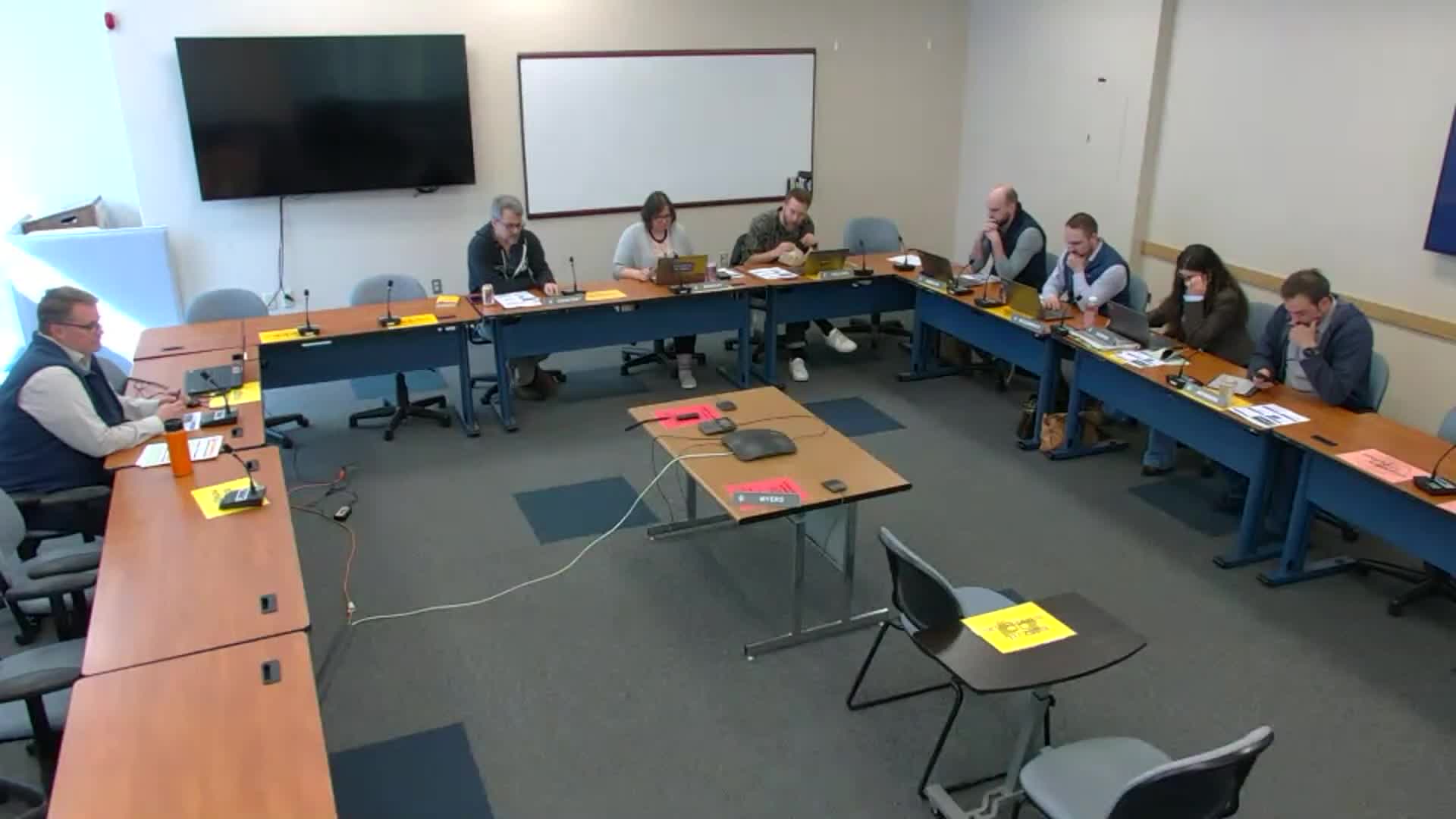
Summary
Municipal ethics officer Paul Urvosti briefed the Anchorage Assembly on the municipal code of ethics (AMC 1.15), focusing on conflicts of interest, use of municipal resources, partisan activity, gifts and disclosure procedures; the presentation emphasized disclosure and available advisory opinions rather than new formal actions.
Municipal ethics officer Paul Urvosti told the Anchorage Assembly at a May 2 work session that the municipal code of ethics (AMC 1.15) is designed to protect public resources and public trust and that disclosure is the primary shield for officials facing possible conflicts of interest.
Urvosti, who also serves as the administrative hearing officer and said he is temporarily the interim director of the Anchorage Equal Rights Commission, led the session and focused most of his time on conflicts of interest, which he described as the most frequent issue the board of ethics sees. "Public service is a public trust," Urvosti said, summarizing the code's purpose.
The presentation canvassed key topics in AMC 1.15: permissible and prohibited conflicts of interest; the duty to disclose "potential" conflicts that a reasonable person could see as substantial; limits on use of municipal resources; restrictions on partisan or political activity using municipal assets; gift rules; post-employment restrictions; and the board of ethics' advisory-opinion process.
Why it matters: Urvosti told assembly members that failure to disclose — not merely having a conflict — is the conduct that historically has resulted in sustained ethics violations. He highlighted recent clarifying language drawn from a Supreme Court determination that, he said, provides the clearest test yet for recusal: a "narrow and specific interest in the immediate subject of the official action." He said the municipality may propose code changes to incorporate that phrasing.
Most important points
- Disclosure before deliberation: Urvosti emphasized that disclosure must be made before an item is taken up so the body can determine whether the interest is substantial. The code requires disclosure in sufficient detail "to permit the other members of the body to determine if the interest is substantial," he said.
- Scope of "official action": Under AMC 1.15, "official action" includes deliberation as well as voting, so participating in work sessions or conversations about an issue can create disclosure obligations.
- Conflicts judged on a case-by-case basis: The code distinguishes minor or inconsequential interests from substantial ones; matters in the middle are decided by the body. Urvosti advised leaning toward disclosure when in doubt so colleagues can rule on participation.
- Use of municipal resources and partisan activity: Municipal resources must be used for municipal purposes; de minimis personal use is allowed but "not for political or partisan activity," Urvosti said. Elected officials have limited exceptions tied to their official duties, but employees generally cannot use municipal resources for partisan causes.
- Gifts and travel reporting: Urvosti summarized the code's timing-and-nature rules for gifts. He said routine small gifts (generally under $50) may be acceptable, but timing or context (for example, a gift handed out immediately before a vote affecting the giver) can still raise a violation. Travel paid for by outside groups above a specified threshold requires pre-event reporting under the board's procedures.
- Post-employment and outside work: The code contains a one-year restriction on former municipal employees working on matters they participated in while employed; that restriction can be waived by the assembly.
Advisory opinions, forms and procedure
Urvosti told members that advisory opinions from the board of ethics provide protection when followed, noting that advisory opinions and past advisory decisions are published on the board website. He described the practical path for officials: ask the municipal ethics officers (he and Deputy Municipal Attorney Joe Busa) for a quick informal read; if the matter is significant, request a formal advisory opinion from the board, which carries protection when followed.
Assembly chair closing remark and next steps
At the close of the session the chair urged a cautious, disclosure-first approach: "Disclose, disclose, disclose," the chair said, urging members to use disclosure both as a shield and a prompt to seek advisory opinions when uncertain. No votes or code changes were adopted at the work session; Urvosti and staff indicated a likely future code amendment to better define the "narrow and specific interest" standard.
Ending note
Urvosti encouraged members to consult the ethics officers or the municipal attorney when questions arise and to use the board's published opinions and the disclosure forms on the clerk's site. The session adjourned and the Assembly scheduled a separate work session on housing after a short recess.