Get Full Government Meeting Transcripts, Videos, & Alerts Forever!
Get email alerts on the Open Meetings Hybrid topic
No spam. Unsubscribe anytime.
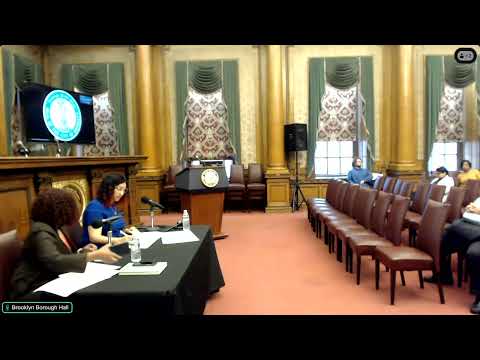
Brooklyn borough board debates video‑conference rules as hybrid meeting law approaches expiry
Summary
Members discussed the impending expiration of the state’s hybrid/open meetings extension, whether weather should qualify as an "extraordinary circumstance" for remote participation, and options for a board resolution to clarify local rules; no formal action was taken.
The Brooklyn Borough Board discussed the state’s open meetings hybrid provision on May 6, debating whether to expand local rules to allow remote participation for weather and other local conditions as the current extension approaches expiration in 2026.
Board members raised practical concerns about attendance and quorum. Chairperson Scaville said it is “so difficult to get a quorum if the weather is really bad” and argued that local officials should be able to decide when members may attend remotely. Other members, including Chairperson Lohman, described local practices of approving remote participation for members who cite extenuating circumstances.
Staff and members clarified the law’s mechanics. A borough staff member explained that the video‑conferencing provision does not itself define “extraordinary circumstances”; instead, a public body’s resolution must enumerate the circumstances and the chair must determine whether individual remote requests meet those criteria. The staff explanation emphasized that remote participation is allowed only where a quorum is physically present and remote seats are reserved for members who fall within the enumerated extraordinary circumstances.
Several members said they support local flexibility. Chairperson Buseert suggested the board prepare a resolution urging the state to amend the law’s conditions to include weather and similar local exigencies; Chairperson Baptiste said decision-making should be pushed to the local level where possible. A staff member agreed to circulate a copy of proposed legislation that one member’s office had shared.
No motion or formal vote was taken. Board members asked staff to share the proposed state legislation and to schedule committee review of any draft borough resolution for a future meeting.