Get Full Government Meeting Transcripts, Videos, & Alerts Forever!
Get email alerts on the Victim Compensation Fund topic
No spam. Unsubscribe anytime.
Sept. 11 Victim Compensation Fund urges New Yorkers to register, outlines eligibility and help resources
Summary
A Department of Justice-funded program told the Brooklyn Borough Board it has paid more than $15.5 billion to eligible claimants since 2011 and urged residents who were in the exposure zone on or after Sept. 11, 2001 to register at vcf.gov; staff described documentation options and an appeals process.
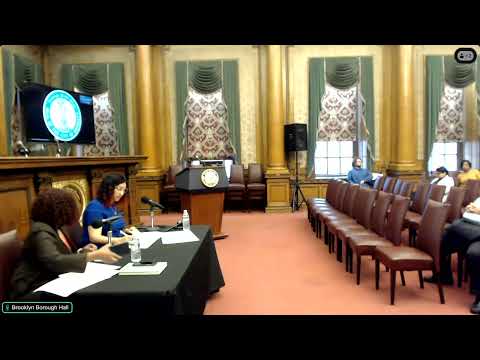
Stathi Patzias, manager of external affairs for the September 11 Victim Compensation Fund, told the Brooklyn Borough Board on May 6 that the fund has paid more than $15.5 billion to eligible claimants since 2011 and urged New Yorkers who were in the defined exposure zone to register at vcf.gov.
The presentation explained who can apply and how the program works. Patzias described the VCF as a federal program administered through the Justice Department’s Civil Division that compensates people with 9 11 related physical illnesses or injuries and relatives of deceased victims. He said the fund has received nearly 99,000 claims and found more than 66,000 claimants eligible as of April 30, and that the fund’s administrative costs are about 4% of its budget.
Patzias summarized the steps to a claim: register with the VCF, obtain certification from the World Trade Center Health Program (run by the Centers for Disease Control and Prevention), and file a claim. He said an interactive presence guide on vcf.gov lists documents someone might use to prove they were in the New York City exposure zone — defined in law as broadly below Canal Street for the time window from Sept. 11, 2001 through the end of cleanup operations on May 30 — and that the VCF’s new guide has had more than 7,000 visits since launch.
On eligibility questions, Patzias said first responders, rescue and recovery workers, volunteers, journalists and “anyone who lived, worked, visited the area” during the qualifying period may be eligible. He noted that the World Trade Center Health Program’s disaster area is broader on some metrics and that a small portion of Brooklyn is included in that health program’s coverage area; he advised people north of Canal Street that they may still qualify for health coverage from the WTC Health Program even if they are outside the VCF exposure zone.
Board members and attendees asked how a claimant could prove presence if they were students or worked just outside the zone. Patzias said documentation such as school transcripts, enrollment records, employer or union records, and witness statements can support a claim. He described an appeals process that allows a claimant to request a nonadversarial hearing with VCF staff and present additional evidence.
Patzias also addressed family claims. He said a personal representative may file for a deceased person and that claimants are not required to hire an attorney to file. “You do not need an attorney,” he said, adding that the VCF’s helpline and multilingual materials are available to help people begin the process.
The VCF representative asked board members to share outreach materials and offered printed materials for community boards and offices. He repeated the filing deadline stated in his presentation, and directed potential claimants to vcf.gov or the program helpline for case-specific assistance.
Board members thanked Patzias for the information and asked staff to share the VCF contact details with constituents. The fund did not request any formal action from the borough board during the presentation.