Get Full Government Meeting Transcripts, Videos, & Alerts Forever!
Get email alerts on the Automated Traffic Enforcement topic
No spam. Unsubscribe anytime.
Committee votes 6–1 to send automated traffic enforcement plan to public hearing after state briefing
Summary
The Ordinance Committee voted 6–1 on April 15 to send an ordinance enabling automated traffic enforcement safety devices (ATSD) to a public hearing. State traffic officials briefed the committee on statutory requirements, privacy limits and implementation steps; members expressed support for safety goals and concerns about data privacy and use.
The Ordinance Committee on April 15 voted 6–1 to send to public hearing a proposed ordinance authorizing the use of automated traffic enforcement safety devices (ATSDs) in Norwalk, following a detailed briefing from state traffic officials about statutory requirements, privacy protections and the application review process.
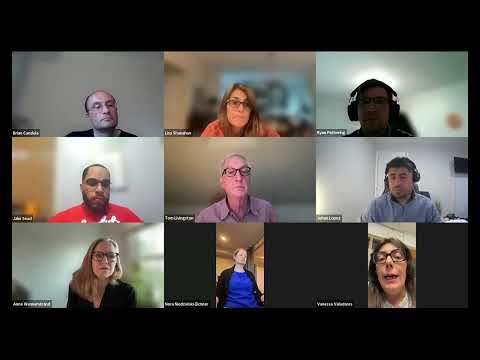
Ryan Pottering, transportation supervising engineer for the Connecticut Office of State Traffic Administration, told the committee the state statute that created the program sets out steps a municipality must take before devices go into operation: a local ordinance authorizing use; a written privacy policy meeting or exceeding the state model; a citation hearing process; a comprehensive safety action plan; and a plan identifying specific locations that must be subject to public hearing and local approval before the state begins its review. Pottering said the statute also requires a 30‑day public information campaign before device operation and an 18‑month initial report after activation evaluating effectiveness.
Pottering said personally identifiable information captured for enforcement “cannot be disclosed by the municipality or the vendor except for the charging and collection of enforcement of the ATSD itself,” and that personal data must be destroyed within 30 days after collection of a fine or resolution of a hearing as written in the statute cited in the briefing.
Jim Travers, director of transportation, reiterated that fines from this program would be used by the city for transportation projects and camera maintenance, not retained by the state. Transportation staff and the police chief, Travers said, support the program as a tool to address speeding where it is unsafe for officers to stop motorists and where school and pedestrian safety are a concern. Garrett Boyle, transportation staff, presented crash data, noting over 1,000 crashes related to speeding in the last 10 years and more than 15,000 crashes related to aggressive driving across the last decade in local crash databases. Garrett said the program is intended to supplement — not replace — traditional enforcement and to direct revenue into safety improvements.
Committee members raised privacy and enforcement questions. Councilmember Nora Nadelski Eitner voted no and expressed concern about potential secondary uses of data (including federal access), and about citations issued to registered vehicle owners when someone else is driving. Pottering and city staff said the statute prohibits non‑enforcement disclosure and that municipalities can adopt stricter local privacy policies; staff also said the citation model is vehicle‑based, similar to parking citations, and that vendors and city contracts can be audited.
Committee members asked about public outreach and equity. Pottering and city staff described required public hearings for each location, signage requirements, a 30‑day warning period for each newly activated device and examples of municipal outreach used elsewhere; staff said outreach would include mailings and social media and that vendors are typically required to conduct public awareness as part of contract scopes.
After discussion, the committee voted to send the ordinance enabling ATSDs to a public hearing; the committee recorded the vote as 6 in favor, 1 opposed.