Get Full Government Meeting Transcripts, Videos, & Alerts Forever!
Get email alerts on the Maternal Health And Family Support topic
No spam. Unsubscribe anytime.
Norwalk commission director outlines maternal-health bills, child tax-credit proposal, benefits-cliff pilot and AI risks to women’s jobs
Summary
Melvette Hill, executive director of the Commission on Women, Children, Seniors, Equity and Opportunity, briefed Norwalk commissioners on state bills addressing maternal mental health, birth-center expansion, a refundable child tax credit, a benefits-cliff pilot, and the labor-market risks AI poses for women.
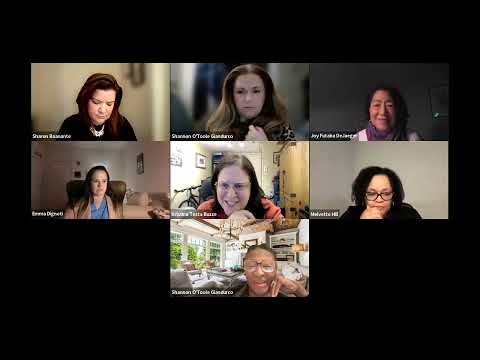
Melvette Hill, executive director of the Norwalk Commission on Women, Children, Seniors, Equity and Opportunity, told the commission that several Connecticut bills addressing maternal and infant health, family support and workforce training are moving through the legislature and in advocacy phases.
“This bill establishes a task force to study perinatal mental health care, establishes report card for birth centers and hospitals that provide maternity care, and then it requires the commissioner of public health to convene an advisory committee to study doula friendly practices in hospital,” Hill said, describing what she identified as House Bill 7214 (an act concerning maternal health). Hill said HB 7214 is currently tabled on the House calendar.
Hill also described another bill, listed in her presentation as HB 7102, “an act concerning maternal and infant health care,” saying it would develop a strategy to increase birth centers and birthing hospitals in underserved regions with high percentages of Medicaid recipients and would increase Medicaid reimbursements for doulas. “It also increases Medicaid reimbursements for doulas. Yay,” Hill said.
On tax policy, Hill described HB 5986, “an act establishing a refundable child tax credit against the personal income tax.” “This bill supports a tax credit of $600 per child up to 3 children,” she said, adding that the proposal would provide the full refundable amount to families with no tax liability so they receive the full benefit. Hill said United Way of Connecticut is promoting the measure.
Hill summarized a proposed pilot to mitigate the “benefits cliff,” saying the pilot would test ways to phase out public benefits—such as SNAP, TANF and child care subsidies—so that small increases in income do not cause an abrupt loss of supports. She said the commission’s two-generational initiative previously completed a feasibility study and delivered recommendations that informed the pilot legislation she described.
The commission also heard Hill’s framing of labor-market threats and opportunities related to artificial intelligence. Hill cited recent research and said she had presented to the Governor’s Council on Women and Girls about jobs that may decline and those that are likely to grow. “There’s a whole presentation. . . . When we look at the jobs on the bottom here, you’ll see food services, customer service and sales, and office supports. Those jobs . . . are on the decline,” she said. When asked which research she referenced, Hill identified the McKinsey Global Institute’s Future of Jobs reporting and offered to share the materials.
Hill said the omnibus AI proposal in the legislature is Senate Bill 2, which she described as including education and workforce elements, and she mentioned efforts to expand an “AI Academy” into early grades. She also described involvement with a public–private partnership she called “Quantum Connecticut” and said the governor had invested about $100 million in quantum computing and AI innovation.
Hill closed by promoting a public event: a May 3 screening of the documentary The M Factor on menopause and perimenopause, to be held at the Legislative Office Building with an expert panel and partners she named in her remarks.
Commissioners asked for additional materials and follow-up. Simone, a member of the public who joined the meeting, asked which McKinsey work Hill had cited; Hill responded that she would share the Future of Jobs report and other sources. Commissioner Sharon Benante asked how the commission supports the LGBTQ+ Justice and Opportunity Network; Hill said the network is administered with funding through the judicial branch and that a fellow named Will helps run the effort.
Why it matters: The bills Hill described affect maternal mental health services, the availability and accountability of birthing facilities, state Medicaid reimbursements for doulas, and direct family assistance through a refundable child tax credit. The benefits-cliff pilot aims to inform how public benefits scale with earnings. Hill and commissioners also flagged AI-driven labor changes as a workforce equity issue for women, especially women of color in entry-level roles.
Contact and next steps: Hill offered to share her slide deck and recorded presentation and invited commissioners to follow up by email for materials and collaboration.