Get Full Government Meeting Transcripts, Videos, & Alerts Forever!
Get email alerts on the Municipal Finance topic
No spam. Unsubscribe anytime.
Huntersville staff advise holding tax rate; board weighs folding $154 solid-waste fee into property tax
Summary
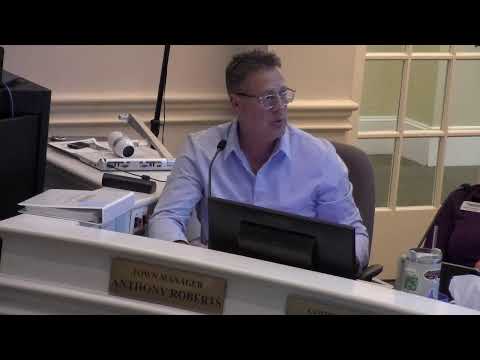
Anthony (staff member) told the Huntersville Town Board at a budget workshop that the town is proposing to keep the tax rate unchanged unless board members direct otherwise and opened discussion on whether to absorb the $154 solid-waste fee into the property tax.
Anthony (staff member) told the Huntersville Town Board at a budget workshop that the town is proposing to keep the tax rate unchanged unless board members direct otherwise and opened discussion on several fees, including the annual $154 solid-waste fee.
The solid-waste fee, Anthony said, currently covers about 58% of the direct cost of the program; residents pay $154 on their annual tax bill while the town subsidizes the remainder. The fee generates about $3.3 million a year based on projected residential customers, Anthony said. “If I don’t hear from you, the tax rate is staying the same,” Anthony said when opening debate on fees.
Why it matters: folding the standalone solid-waste fee into the town’s property-tax rate would spread the cost differently across taxpayers and could affect commercial property owners, who do not pay the separate solid-waste fee. Staff estimated that covering the $3.3 million currently raised by the fee through the tax rate would require a little more than a two-cent increase in the rate, which would also increase taxes paid by commercial properties that now do not pay the $154 fee.
Details and context
- Fee coverage and revenue: Staff described the $154 residential charge as covering roughly 58% of per-unit solid-waste costs; the town pays the remainder. Based on the number of accounts budgeted for FY 2026, the $154 charge produces about $3.3 million annually.
- Contract and growth pressure: Staff noted the town’s contract with its hauler is subject to CPI adjustments and that adding residential units increases total program cost; both factors push the town to review the fee annually.
- Rolling fees into the tax rate: Officials discussed the political and distributional consequences of converting the itemized fee into general property tax revenue. Staff said replacing the fee with property-tax revenue would reduce the visible line-item fee on the bill but would raise property taxes for commercial owners who currently do not pay the solid-waste fee. Anthony noted the county’s sales-tax distribution (which is allocated on an ad valorem basis) could also interact with any change in the town’s tax levy.
- Vehicle fee history and use: Jackie (staff member) summarized the vehicle fee history: Huntersville has charged a $20 annual vehicle fee since about 2007 and has kept the collections in a separate special-revenue fund dedicated to transportation projects. Jackie said a $20 fee generates roughly $1 million a year for the town and that the legislature’s broader authority allows municipalities to levy up to $30.
Public input and next steps
Staff invited the board to solicit public feedback at upcoming outreach events and budget hearings. Anthony and Jackie encouraged the board to consider the distributional effects—who would pay more and who would pay less—before giving staff direction. The town’s schedule includes public outreach events in May, a formal public hearing on the budget, and a June 3 vote to adopt the budget and set the tax rate.
Attribution and limits
This account summarizes discussion from the town’s budget workshop and does not report any formal vote. Board members had not taken a formal action to change the fee or the tax rate during the workshop; staff said they would proceed with the current assumption of maintaining the tax rate unless given other direction.
Ending
Staff asked the board whether they want the town to proactively solicit community input on the fee question through surveys and outreach at scheduled events; the board deferred a final decision to later workshops and the formal public-hearing process.