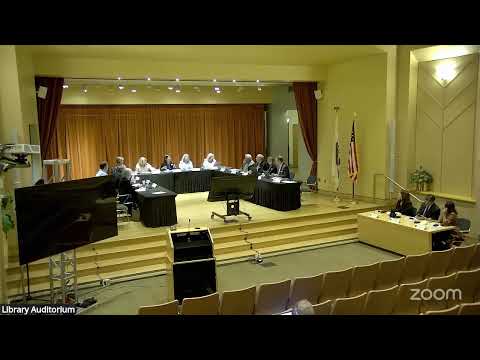
CCTA outlines Lamorinda smart‑signals upgrades and $1.7M countywide evacuation study; cities press for tangible outcomes
Loading...
Summary
Contra Costa Transportation Authority planning staff briefed Orinda, Moraga and Lafayette officials on a countywide smart‑signals upgrade covering 56 intersections and a Caltrans‑funded evacuation study funded at about $1.7 million.
Contra Costa Transportation Authority planning staff on Wednesday detailed two countywide initiatives for the Lamorinda area: a smart‑signals modernization covering 56 intersections and a separate, Caltrans‑funded emergency evacuation study estimated at $1.7 million, both intended to improve traffic safety and evacuation capacity.
The smart‑signals project will replace aging intersection controllers and detection technology, enable remote access to controllers, and connect signals across jurisdictions to support future synchronization, CCTA planning director John Huang told the joint meeting. Huang said the Lamorinda work combines an earmark and other countywide funds that together amount to “over $7,000,000” for the area and that design is at varying stages (one project at about 65% and another at about 35%). He described a conservative schedule that anticipates construction beginning in 2026 and completing in April 2027.
City and town elected officials pressed CCTA on how the upgrades will work during emergencies and on construction impacts. Huang said the project will not require trenching or major ground disturbance because most equipment upgrades happen inside existing cabinets, and that residents will likely notice only new cameras or cabinets. On evacuations he said remote access would allow traffic engineers to change signal phasing remotely to “flush traffic out” of a corridor, and that the project will connect signals so coordination and synchronization are possible once communications are in place.
Council members raised operational questions and constraints. Council member McCormick and others warned the evacuation component risks being too high‑level for the available funds. Huang acknowledged the scope is large and said the evacuation work will include scenario modeling, multiple runs and recommendations for next steps rather than immediately delivering construction projects.
The evacuation study: scope, funding and schedule
Huang said the evacuation project received Caltrans sustainability grant funding and that CCTA is providing the match, creating a roughly $1.7 million countywide program to analyze evacuation networks, perform modeling and undertake extensive public outreach. The RFP for consultant services was expected to be released in late May 2025, with the project beginning in July 2025 and a two‑year schedule to finish. Huang said the project will examine multiple hazard scenarios (wildfire, sea‑level rise and man‑made incidents) and leverage existing local hazard mitigation plans and first‑responder expertise.
Elected officials pushed for clarity on deliverables. Council member McCormick and Mayor Wallach said they want “tangible” results and not just another high‑level study; several asked that the effort identify specific infrastructure projects and funding pathways. Huang said the project will generate recommendations and a prioritized list of candidate projects for the La Mirinda area and countywide, and that CCTA expects to involve local fire chiefs, police and emergency managers in defining modeling assumptions.
Technical issues noted
- Backup power: CCTA plans to provide battery backup systems (BBS) for signal cabinets; Huang said batteries are expected to run about 12–16 hours and that other technologies (hydrogen, longer‑duration storage) are being researched.
- Security and communications: The deployed system will use secured wireless/radio communication initially; fiber was considered but was cost‑prohibitive for this funding package. CCTA said the wireless network will be secured and expandable later if funding for fiber becomes available.
- Scope and signals covered: Huang said 56 intersections have been identified in the three jurisdictions, focused on major routes such as Moraga Way and Mount Diablo Boulevard; he acknowledged some signals outside the immediate project area are not included but can be added later.
Local participation and oversight
CCTA said the procurement and project oversight will include local staff: the RFP review panel will include representatives from the three jurisdictions and first‑responder agencies. Scott (city manager) and others confirmed that Moraga’s public works director Sean Napra and Police Chief John King will participate on the review panel. Elected officials requested ongoing Tri‑City briefings during design and implementation and suggested using the smart‑signals rollout to plan future evacuation coordination exercises.
Ending
No formal action was taken; the presentation concluded with consensus that the projects are worthwhile but with repeated requests from council members for clearer, earlier deliverables from the evacuation study and quicker interim reporting from CCTA so cities can coordinate near‑term measures while the consultant work proceeds.