Get Full Government Meeting Transcripts, Videos, & Alerts Forever!
Get email alerts on the Filmmaking topic
No spam. Unsubscribe anytime.
Student filmmakers say sound and editing built tension in short film "Echo"
Summary
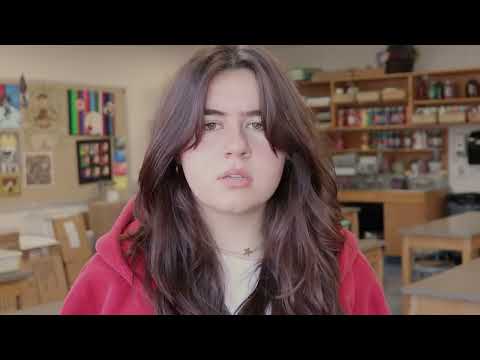
On the Ivy Film Show, director Sofia Bowman and cinematographer Delia Doherty described how sparse cinematography, repeated sound motifs and tight pacing created tension in their short film Echo, their final IB film production.
On the Ivy Film Show, director Sofia Bowman and cinematographer Delia Doherty said their short film Echo relied on simple camera work, repeated sonic motifs and deliberate pacing to create tension despite being shot largely in daylight.
The film is the pair's final production as International Baccalaureate (IB) film students. Bowman and Doherty described a collaborative approach in which editing and sound design were prioritized to shape suspense while the cinematography remained deliberately simple to focus viewers on detail and performance.
"Because it was like a horror and a thriller, like, and although I am the director, we mainly collaborated on doing editing and sound. And when we were really approaching it, it was prioritizing, like, making sure that we had pacing correct," said Sofia Bowman, director, SD Productions. "And being able to, like, make it kinda sound eerie. Because although we shot during the day, and a lot of things are, like, in a lot of bright lights, and it's, different than regular horror that's usually, like, darker and a lot more, like, moody."
Bowman described using abrupt cuts and recurring musical material to unsettle viewers: "we really, carry tension through maybe sound of, like we have, like, an eerie, string... Play. In a few parts of the film. ... And then it echoes out, and it's kind of, it's rip like, repeated. I mean, he used it, like, a bunch of times, but it still makes it sound, like, kinda like urine. We use minor chords, so it sounds like there's something, like, wrong about it, although it's in bright daylight."
"I chose mostly simple shots because I wanted to just create, like, a sense of unease and stillness throughout the whole film," said Delia Doherty, cinematographer, SD Productions. "And I also didn't want the audience, like, getting lost. I wanted their eyes to be on the film, like, the entire time they watch and, like, not only pay attention to Sofia, who's the main focus, but, like, all the small details surrounding her that might not be noticeable at first."
The two credited editing as central to turning footage into effective scares. "Having seen the film in its, like, production stages before some of that sound went in, it was really surprising to me how much of a difference that makes," host David Shotwell said in response to Bowman; Bowman and Doherty said layered sound and careful cutting revealed scarier beats than the raw footage alone.
Both students described a largely nonverbal approach: Doherty noted that the film contains "very little dialogue," and Bowman said the project emphasized pacing and repeated musical cues over conventional horror lighting. The pair also told the program that their editing process included experimentation during postproduction that improved shots they had thought unfixable.
Without specifying a premiere date, the show screened Echo on the program: "So without any further ado, SD Productions' latest picture, Echo, we hope you enjoy," Shotwell said. The filmmakers said Echo represents the culmination of a two-year IB film program and a deliberate choice to rely on sound and editing to carry the film's tension.
Less-critical production details discussed on the show included the students' intent to keep camera movement minimal, the use of minor chords in the score, and an emphasis on visual detail in bright settings rather than conventional low-light horror cinematography.