Get Full Government Meeting Transcripts, Videos, & Alerts Forever!
Get email alerts on the Domestic Violence Gun Dispossession topic
No spam. Unsubscribe anytime.
Council urges creation of a domestic‑violence dispossession investigator to enforce firearm removals
Summary
The council passed a resolution calling for Metro Police and the district attorney’s office to create a dedicated position to follow up on court‑ordered firearm dispossession in domestic‑violence cases after advocates and council sponsors cited gaps in enforcement.
NASHVILLE — The Metropolitan Council on May 6 adopted a resolution asking Metro Nashville Police Department and the Davidson County District Attorney’s Office to establish a dedicated domestic‑violence dispossession investigator to ensure court‑ordered removals of firearms are carried out.
The measure, introduced by Councilwoman Gadd with many co‑sponsors, grew out of concerns raised by the Metro Office of Family Safety and community advocates that state law requiring dispossession after domestic‑violence orders is not being fully enforced. During public comment earlier in the meeting, Linda McFadden Ketchum of Middle Tennessee Moms Demand Action cited Metro data: the Office of Family Safety identified 302 “alarming cases” in 2024, of which 212 had incomplete firearms declaration forms and another 90 raised suspicions of dishonesty.
McFadden Ketchum told the council: “This resolution could solve that problem. It asks the Metro Nashville Police Department and the district attorney’s office to sit down together to decide where a dedicated gun dispossession investigator position could be housed.” She added that to the committee’s knowledge “there is no position like this in Davidson County at this time.”
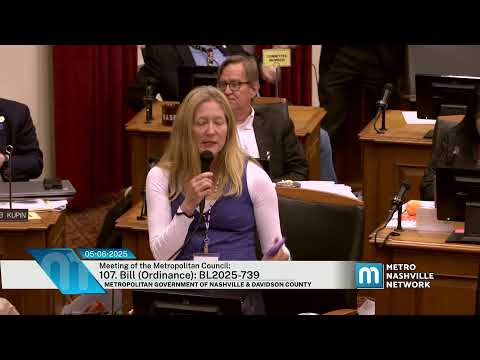
Sponsor Councilwoman Gadd emphasized that Tennessee law requires people subject to domestic‑violence protective orders to relinquish firearms within 48 hours after an order takes effect and to submit a firearms declaration to the court; she told the council those requirements are not being reliably enforced and that a dedicated investigator could follow up, gather facts and, where necessary, seek search warrants to enforce compliance.
The council adopted the resolution; sponsors indicated the next step would be for the mayor’s office and the two agencies named to evaluate how the role could be implemented and where it would be housed (for example, Metro police or the DA’s office). Council members and supporters urged that the position be considered for funding in the upcoming city budget.
Advocates framed the measure as practical enforcement of existing law rather than creation of new criminal penalties. The resolution includes a request that Metro and the DA’s office report back on feasibility, placement and potential funding mechanisms for the investigator position.