Get Full Government Meeting Transcripts, Videos, & Alerts Forever!
Get email alerts on the Tax Increment Financing topic
No spam. Unsubscribe anytime.
Butte-Silver Bow officials report rising tax increment values, new industrial projects in annual TIF update
Summary
Community Development Director Karen Burns and staff briefed the Butte-Silver Bow Council of Commissioners on annual reports for urban renewal and targeted economic development districts, highlighting revolving loan balances, recent completions and multi‑million-dollar projects in the Montana Connections industrial area.
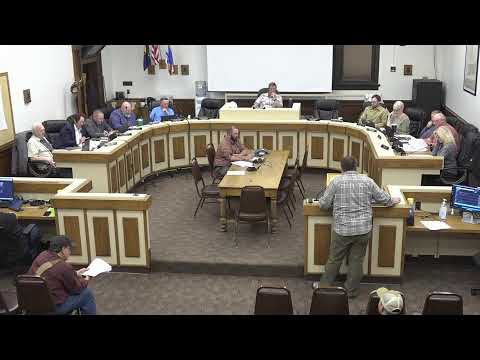
Karen Burns, Butte-Silver Bow director of community development, told the Council of Commissioners on May 7 that the county’s tax-increment financing programs have moved several major projects from planning to construction and maintain revolving loan funds for future lending.
The update covered four active districts — the Urban Revitalization Agency (URA), the Harrison Avenue district, the South Butte targeted economic development district (TED) and the Montana Connections TED — and summarized loan and grant activity, incremental value increases and projects completed or underway.
“The Urban Revitalization Agency, URA 1, sunset in 2013. Our loan funds continue to revolve in that district,” Burns said. “We have dispersed over $7,200,000 to over 50 loans within that district. We have about $2,800,000 ready, available to lend right now.”
Why it matters: tax-increment financing (TIF) is a primary local tool for funding infrastructure and incentivizing development in targeted areas. Burns and staff said the county’s programs have supported both historic-uptown preservation work and industrial development that creates jobs and taxable value.
Key details reported to the council: - URA and revolving loans: URA 1 loan disbursements exceed $7.2 million with roughly $2.8 million available to lend; URA 2 has active grants and will use a loan corpus tied to earlier programs. Pauline Giacomino, Urban Revitalization financial project manager, said URA 2 had 43 active grants and had awarded roughly $1.5 million in fiscal 2024, producing an investment of more than $8.3 million in those projects. - Harrison Avenue district: awarded about $250,000 in grants and $750,000 in development agreements in fiscal 2024; staff reported more than $35.7 million in private investment tied to projects in the Harrison corridor that will increase incremental value when assessed. - Montana Connections and TIFID 2 legacy: staff listed completed projects (National Guard readiness center; Empire Building Materials) and large projects under way or contracted, including a Town Pump distribution facility described in the presentation as about $27 million and other industrial users such as ADM distribution and Western States (Rocky Mountain Traffic Control). - South Butte TED: staff reported projected revenue and recent infrastructure work, including sidewalks in the North Parkmont area, and an RFP to extend a sidewalk/trail along Basin Creek to improve connectivity with Harrison Avenue.
Burns emphasized statutory constraints and procedures: TIF funds must be spent within district boundaries except for certain connecting infrastructure, and each district operates with its own advisory board that reviews projects and makes recommendations to the council.
On legislation, Burns summarized bills tracked this session that affect TIF practice: a change to the definition of blight (supported), a budget-related proposal tied to Senate Bill 117 that died, House Bill 19 (now signed) requiring a public hearing before a district issues bonds, and unsettled cleanup language on what mills are included in increment (House Bill 451/related amendments did not pass).
Commissioners asked about several specific items: whether loan funds remain usable after a district sunsets (Burns said Montana law allows continued use of revolving loan funds within district boundaries), the status of the Solvay property cleanup (Burns said progress is limited but new leadership at the site is engaging on remediation), and whether expanded URA boundaries were accepting applications (Burns said yes).
The presentation closed with staff noting that some districts are still collecting small amounts of increment in their first year and that advisory boards set program details, including loan and grant terms.
The council did not take a formal vote on the presentation; the briefing was provided as the annual report required by state law.