Get Full Government Meeting Transcripts, Videos, & Alerts Forever!
Get email alerts on the Public Works Budget topic
No spam. Unsubscribe anytime.
Cheyenne Public Works presents FY26 budget focusing on payroll, vehicle and operating costs
Summary
Public Works Director Vicky Nemechek outlined the department's proposed fiscal 2026 budget, highlighting payroll and vehicle operation cost increases, divisional staffing, and use of the 1% sales tax for capital and operating items.
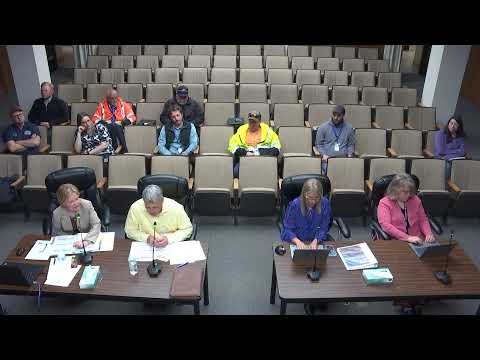
Public Works Director Vicky Nemechek presented the department’s proposed fiscal year 2026 budget to Cheyenne City Council, saying the plan responds to payroll pressures, vehicle operation costs and ongoing operational needs across multiple divisions. "Public works is a diverse department that provides many services to both internal and external customers," Nemechek said during the presentation.
The department described its responsibilities as maintaining city rights-of-way, city-owned facilities and vehicles; collecting and disposing of trash, recycling, yard waste, household hazardous waste and electronic waste; and operating a free public transportation service that includes door-to-door rides for disabled residents. At the start of the presentation Nemechek said the department includes "76 full time, part time, and seasonal employees." Payroll and vehicle operation costs were cited repeatedly as principal drivers of budget changes across divisions.
Managers from multiple divisions — traffic, facilities maintenance, street and alley, fleet, transit and solid waste — described division-specific budget shifts. For example, traffic maintenance will continue using the 1% sales tax (the "fifth penny") for many operating items such as striping and paint; facilities maintenance asked to add funds for training, a landfill key-fob system and expanded HVAC contracts; and several divisions noted increases tied to utilities and vehicle operations. Nemechek introduced division leaders by name and briefly summarized accomplishments and priorities for each division.
Council members asked for clarifications on a range of items during the presentation, including how fuel and parts costs decreased in one division, how professional development spending would be tracked against retention, and the number of current vacancies across the department. Nemechek and Deputy Director Craig LaVoy said they would provide follow-up detail where figures were not on hand during the meeting.
The presentation also reiterated that some operational purchases (for example, striping and other public-facing traffic operations) are funded from the city’s 1% sales tax. Council questions and staff answers focused on clarifying the source of specific budget lines and on follow-up data requests rather than on any immediate policy decisions.
The council did not take formal votes during the presentation; staff will provide additional data requested by council members as part of the budget review and adoption process.