Get Full Government Meeting Transcripts, Videos, & Alerts Forever!
Get email alerts on the Comprehensive Plan topic
No spam. Unsubscribe anytime.
City planners present draft vision for Plan Spokane after public workshops; staff cite nature, community, innovation and livability themes
Summary
City planning staff summarized results from more than 300 participants in public workshops and presented a draft single vision statement to guide Plan Spokane through 2046, while staff and commissioners discussed sustainability, tribal recognition and a public timeline for drafts.
City planning staff on May 1 presented a proposed single vision statement for the citywide comprehensive-plan update called Plan Spokane and summarized engagement from more than 300 people who took part in workshops, surveys and outreach.
The proposal frames a 20-year horizon (2046) and packages community feedback around four primary themes: access to nature and climate resilience; community and belonging; innovation and jobs; and livability, including affordability and walkability. “The Spokane fosters vibrant, resilient, and inclusive community by balancing economic growth, environmental stewardship, and the diverse needs of all residents to ensure access to attainable housing, safe streets, and thriving neighborhoods that promote innovation, cultural vitality, and community connection for all its residents,” City planning staff member Casey Downey read aloud from the packet materials when presenting the draft.
Why it matters: the comprehensive plan sets high-level policy that directs future zoning, capital improvement projects and other regulations for the next two decades, and the subcommittee’s work will feed the full Planning Commission review and public draft process.
Staff described an engagement effort that included four in‑person workshops in March, an online board and short survey, and tabling events; planners said most workshop participants stayed for the full session and produced substantive feedback. Staff told the subcommittee the engagement produced recurring one‑word responses such as “vibrant,” “walkable,” “safe,” “connected” and “livable,” and that attendees suggested adding emphasis on arts and culture, housing and food security, economic mobility, and pedestrian safety to the draft vision.
Commissioners and staff debated specific wording and emphasis. Commissioner Amber Lenhart suggested stronger language around sustainability and climate, and Commissioner Mary Wincus pressed for clearer links between the vision and how city government will carry it out. Downey told the group that tribal sovereignty and related wording will be coordinated with a tribal working group that is part of the plan’s climate work.
Staff also described the schedule for draft materials: subcommittee and Planning Commission review through summer, with the first consolidated public draft expected around September–October and the next subcommittee meeting scheduled for May 21. Documents and engagement materials are available on the project website (planspokane.org), and staff asked the subcommittee to send edits in writing so planners can track and incorporate comments.
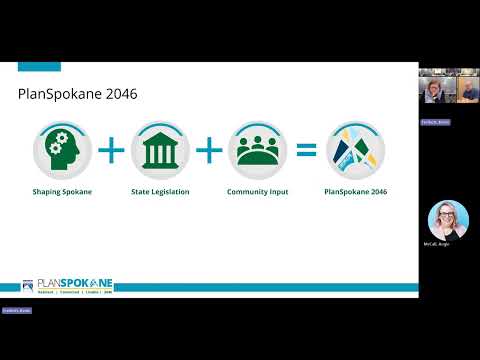
The presentation repeatedly framed this update as a streamlining of the city’s prior plan, Shaping Spokane (adopted February 2017), and the earlier comprehensive plan adopted in February 2001, emphasizing shorter, more accessible text, improved maps and infographics, and cross‑referencing rather than duplicative paragraphs.
Looking ahead, staff said the draft vision and the package of engagement findings will be refined before the subcommittee’s next meeting and then forwarded for broader Planning Commission review and public release in the fall.