Get Full Government Meeting Transcripts, Videos, & Alerts Forever!
Get email alerts on the Agritourism topic
No spam. Unsubscribe anytime.
Yakima County to Continue Agritourism Hearing after Drafts Add ‘Guest Lodging’ and Parking Flexibility
Summary
Yakima County public services staff and commissioners agreed to continue the agritourism hearing to incorporate stakeholder feedback on new winery and agritourism text that replaces “overnight lodging” with “guest lodging” and adds temporary overflow parking allowances.
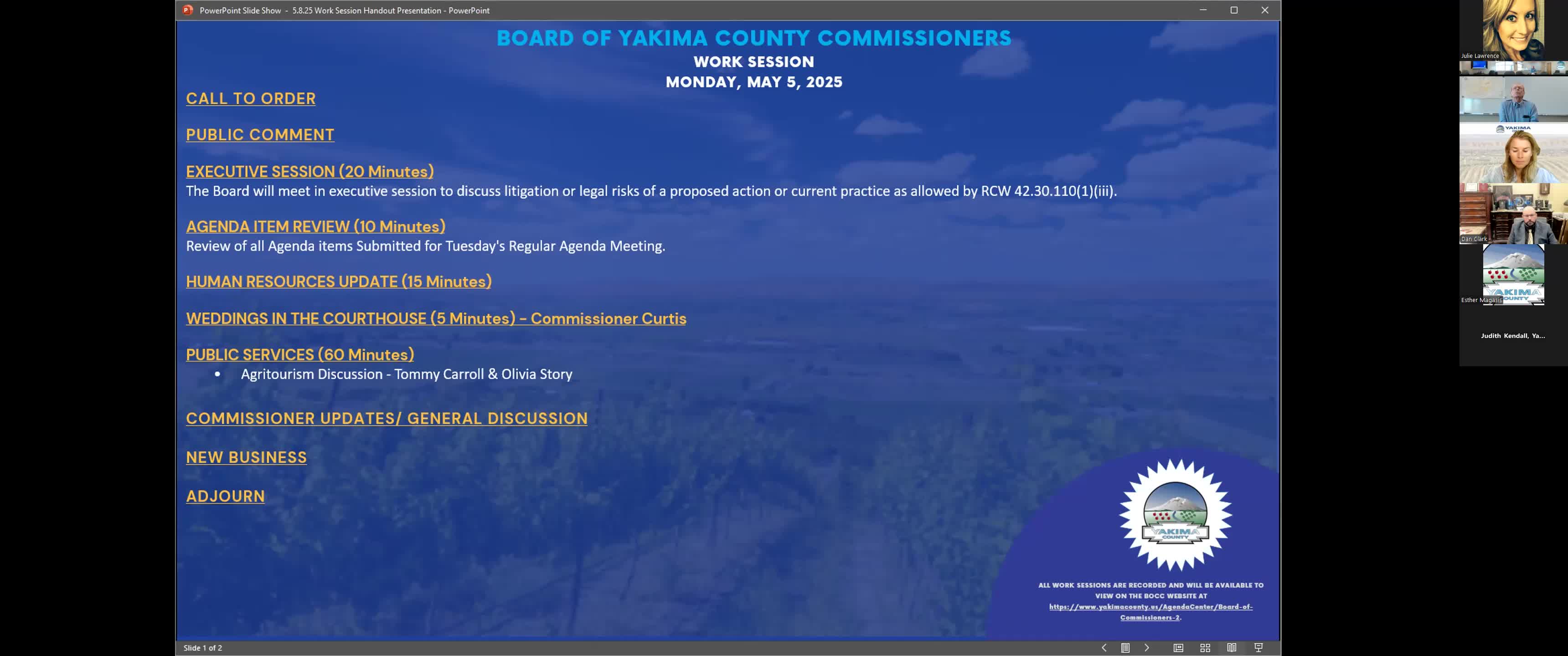
Yakima County public services staff asked the Board of Yakima County Commissioners on May 5 to continue a multi-year agritourism hearing so the board can set a future date to close the hearing and consider ordinance updates. The proposed changes would add a guest-lodging allowance for wineries, distilleries and agritourism operations and permit temporary overflow parking on agricultural properties when it does not interfere with farm operations.
The change replaces the term “overnight lodging facilities” with “guest lodging facilities,” Olivia Story, Public Services, said. "We're proposing changing it to guest lodging facilities because we have a definition for overnight lodging facilities, and it runs kinda contradictory to what we're trying to do here," Story said, adding that the new language is intended to allow cabins, RVs, tents and yurts while avoiding unintended regulatory conflation with standalone overnight lodging uses.
Tommy Carroll, Public Services, said the change aims to avoid confusing two separate land uses. "What we realized last minute was that we're all trying to say is just some sort of guest accommodations. And by calling it overnight lodging facilities, we complicated it more than we needed to," Carroll said. Carroll and Story told commissioners the guest-lodging definition is similar across the agritourism and winery sections and that staff recommends removing a existing footnote tied to the “overnight lodging” land-use category.
Why it matters: Lakey stakeholders, property owners and county regulators have debated agritourism text since at least December 2023. Commissioners said the draft language matters for local farmers and small agribusinesses that rely on on-site sales, tastings and occasional overnight guest stays to sustain operations.
Commissioner Lindy said she was comfortable with the changes and asked whether the county’s draft code remains consistent with a recent Washington Supreme Court decision that addressed agritourism-related regulation in King County. Carroll said the court decision was specific to King County facts and could be applied to other counties, but that Yakima County’s code is tailored to operations that actually produce agricultural products and includes existing zoning setbacks and standards. "I think for us, this is just a continuation of what we've always been doing," Carroll said.
Commissioner Lindy asked whether the updates could expose existing commercial farms to new complaints from nearby residents — for example, over odors, nighttime work or wind machines. Carroll and Story said the proposed changes do not alter zoning or commercial operators’ rights and that existing setback rules and other code provisions remain in place. "We did not add special new standards of setbacks for wineries or their events," Carroll said. "We currently have setback requirements in our code that could hopefully and potentially address this." Commissioner Lindy said she was reassured but stressed protecting existing farm operations.
Staff and commissioners agreed the next step is to schedule a continuation of the open hearing so the board can formally close the public record and move toward consideration of ordinance updates. "The recommendation I would have is to actually have the hearing, a continuation of the hearing, at the next possible date so that we could, at that point, determine to close the hearing," Commissioner McKinney said. Public Services confirmed they would place a continuation date on a future agenda and accept any additional written comments from stakeholders.
The board did not take a formal vote on ordinance language at the May 5 session; commissioners directed staff to schedule a continuation of the hearing and to bring back materials for a formal closure and consideration on a future agenda.