Get Full Government Meeting Transcripts, Videos, & Alerts Forever!
Get email alerts on the Public Safety Compensation topic
No spam. Unsubscribe anytime.
Brook Park moves to update police and fire longevity pay to match union contracts
Summary
Council advanced ordinances to amend antiquated longevity clauses in Brook Park—s codified ordinances so police chief, captain and fire chief/assistant chief longevity pay will follow current collective bargaining agreements. Councilors debated whether linking the ordinances to the CBA is appropriate or whether council should set standalone pay.
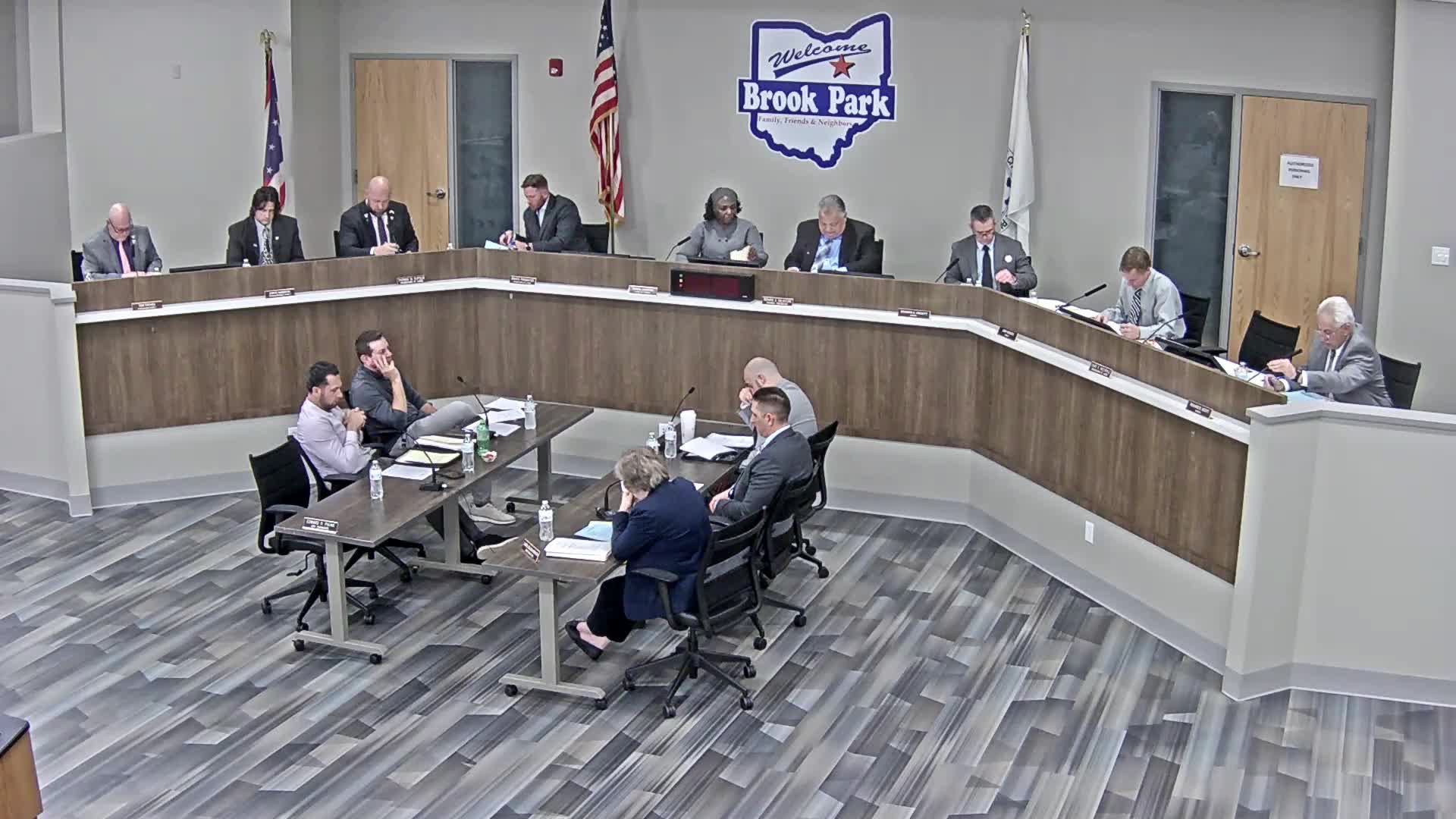
Brook Park City Council on May 6 advanced legislation to update decades-old longevity-pay language in the city—s codified ordinances so that longevity payments for the police chief, police captain and the fire chief and assistant fire chief will align with the current collective bargaining agreements.
The mayor introduced two ordinances to modernize section 141.08 (police) and section 143.08 (fire), removing vestigial 1973 pay formulas and making longevity pay "follow the current CBA" so that longevity amounts automatically track what the city negotiates with public-safety unions.
Why it matters: Supporters said the change will make leadership posts more attractive and remove a structural disincentive that had discouraged candidates from taking promotional exams. Opponents cautioned against automatic "me too" language that ties appointed leadership pay to bargaining-unit provisions without separate council review.
Discussion and numbers: Mayor Orcutt said the existing ordinance dated to Jan. 16, 1973, and had produced disparities in longevity pay that made higher-ranked positions relatively unattractive. HR Commissioner Retnauer told council the change aims to bring parity so captains and the chief receive longevity comparable to other ranks.
Finance and law review: Finance Director Robert McGahn was asked whether the city could afford the change; McGahn said it was affordable. During the caucus HR and finance staff explained an arithmetic example used in discussion: for the current chief and captain, longevity at the top step would be $3,400 each (totaling $6,800); compared to the legacy 1973 top-step figure of $1,000, council referenced a differential figure during debate. The law director confirmed the proposed change is legally permissible.
Council members were split on the drafting approach. Councilman Tom Troyer favored separate, explicit city-set pay language so council can adjust pay and not simply mirror union contracts. Councilman Dan Thorndaster (supporting) said collective bargaining can "raise the tide of all ships" and supported tying longevity to the CBA.
Action: Councilors voted to place the police and fire longevity ordinances on the council agenda for first reading; both placement motions passed in committee by 5—1 votes. The items will move forward for formal readings and votes at council.
Ending: Staff recommended the change as a housekeeping update to reflect negotiated compensation and to improve competition for promotional exams; council requested additional fiscal detail and said it may revisit how the language is drafted before final passage.