Get Full Government Meeting Transcripts, Videos, & Alerts Forever!
Get email alerts on the Housing Maintenance Grants topic
No spam. Unsubscribe anytime.
Brook Park council advances overhaul of home-maintenance grant, drops lien requirement
Summary
Council moved to adopt a revised Home Maintenance Assistance Grant (HMAP) program that extends the program year, eases a lien requirement that discouraged applicants and retains income and inspection safeguards. Councilors debated trade-offs between neighborhood improvement goals and protecting public funds.
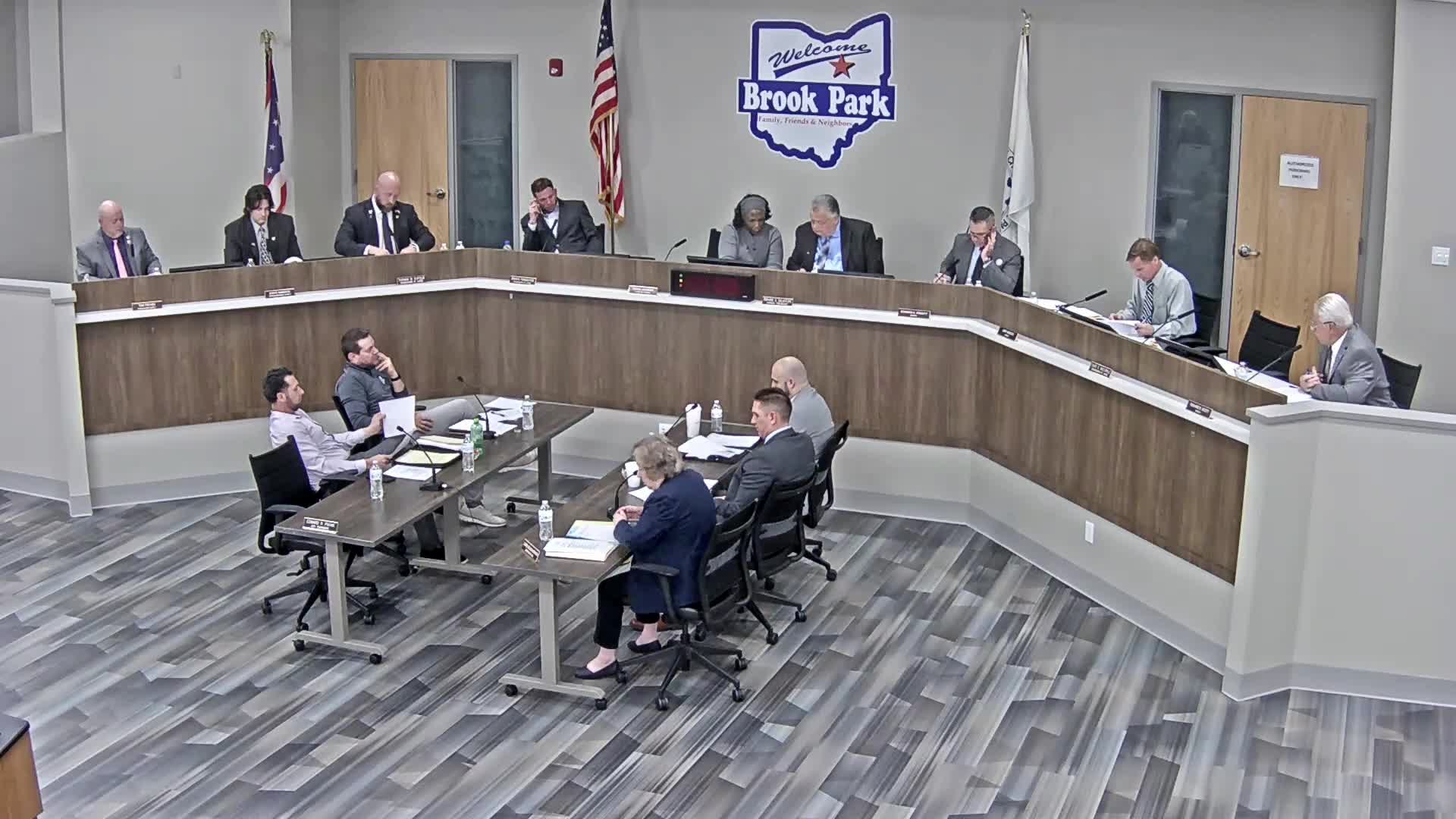
Brook Park Mayor Michael Orcutt and City Council advanced changes to the city—s Home Maintenance Assistance Grant (HMAP) program on May 6, approving an ordinance that extends eligibility into the 2025—26 program year and removes a five-year lien repayment requirement that had deterred some applicants.
The revision, introduced by Mayor Orcutt and cosponsored by several council members, keeps income and building-inspection safeguards while eliminating the automatic lien that previously required repayment if a recipient sold a property within five years.
Why it matters: City leaders said the program is intended to help low- and moderate-income homeowners make safety and exterior repairs that improve whole neighborhoods. Supporters said the lien discouraged eligible residents from applying; opponents warned the city risks spending taxpayer dollars on work that could increase a house—s resale value without a legal claim to recover funds.
Council debate and details: Orcutt said the change would make the program—s $50,000 annual appropriation more usable and allow approved work to be completed through 2026 to help residents still recovering from last year—s tornado. "We feel that this was something that was implemented before my time on council ... to be able to help clean up the neighborhoods," Orcutt said.
Councilman Tom Troyer repeatedly pressed for more fiscal detail and for alternatives to removing the lien. "Can anybody tell me what this amount is going to be? We don't have numbers on this," Troyer said, arguing the city should consider contractual alternatives rather than eliminating the lien.
Finance Director Robert McGahn detailed the application and payment process: contractors submit invoices, the building department confirms permits and inspections, the city verifies current property-tax and income-tax status, and the finance office issues payment. McGahn also told council that roughly $15,000 of the program—s $50,000 had been spent in the prior year, and four or five applicants were approved under the old rules.
Law Director comment: The law director explained a lien is attached to property and persists until paid or legally removed, while a contractual alternative (a cognovant note) could have different legal and practical effects; she said those alternatives could carry their own pitfalls.
Protections and eligibility: The revised program retains eligibility screening and documentation requirements. Applications require three contractor estimates, verification of current property taxes and income (using thresholds in the ordinance—s exhibit A), and correction of existing building-code violations before payment.
Council action: Council placed the revised HMAP ordinance on the agenda and, later in the meeting, passed ordinance number 11467 (the revised HMAP) on first reading; the ordinance was passed by recorded vote at the May 6 meeting.
What remains: Council members asked staff to monitor program take-up and consider language clarifications and possible future tweaks, including whether leftover funds could be reallocated to additional households within a shorter window if uptake remains low.
Ending: With the change in place, city staff will accept applications under the revised program criteria and follow the program—s income, inspection and contractor-review steps before authorizing payments.