Get Full Government Meeting Transcripts, Videos, & Alerts Forever!
Get email alerts on the Homelessness topic
No spam. Unsubscribe anytime.
Yakima leaders review homelessness response: county funding, police calls and new outreach pilots
Summary
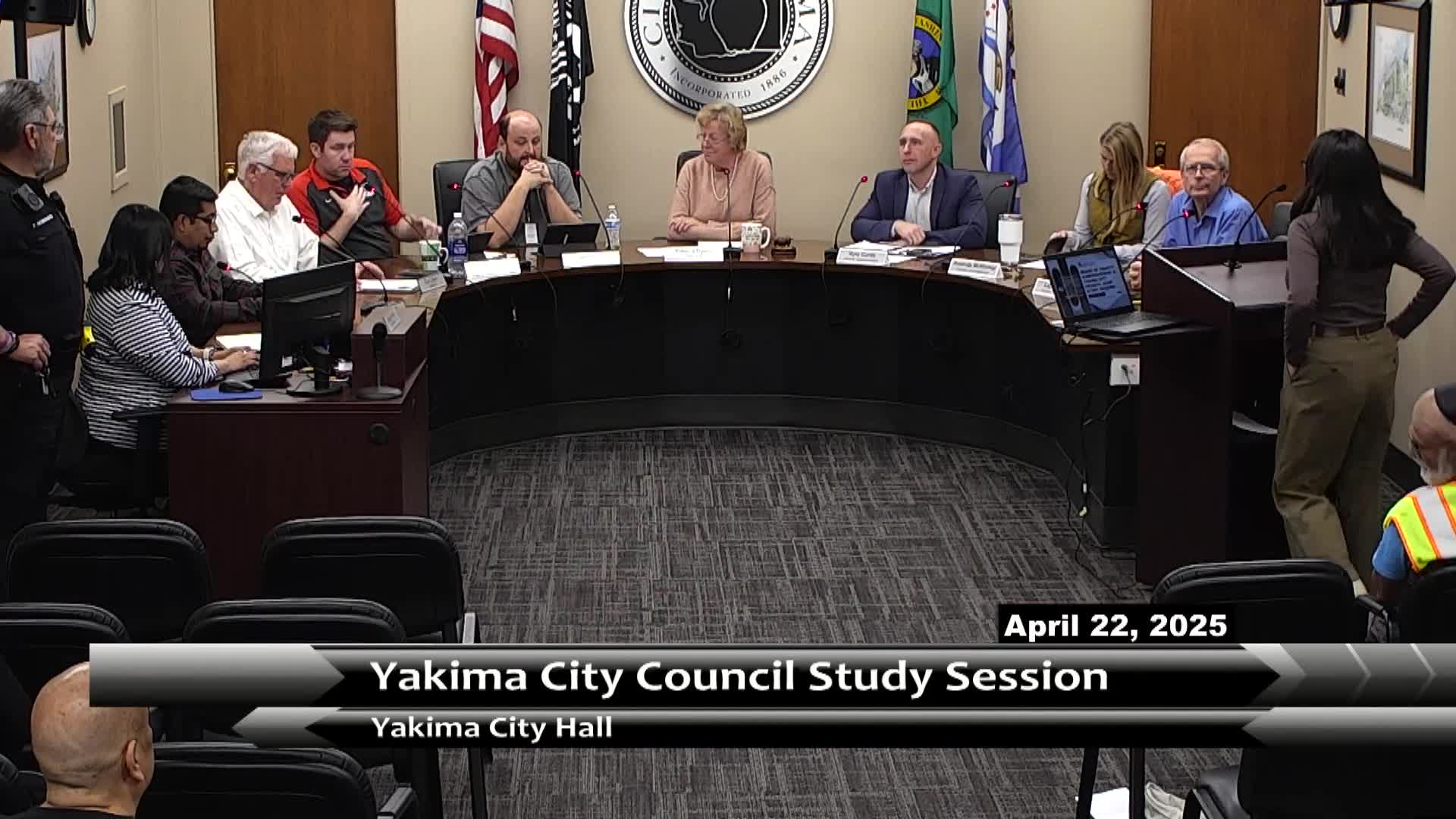
Yakima County and Yakima City elected officials met in a joint study session to review the county's homeless response system, recent data on housing exits and police service calls, and local pilots aimed at street outreach and cleanup.
Yakima County and Yakima City elected officials met in a joint study session to review the county's homeless response system, recent data on housing exits and police service calls, and local pilots aimed at street outreach and cleanup.
Esther, a Yakima County Human Services staff member, told the council and commissioners the county's current homeless-response budget is heavily weighted toward rental assistance and shelter and that some program amounts are set by the state. "The big number here, I think, that I always get drawn to is the 57,068, exits to permanent housing," Esther said, adding the county has "housed almost 6,000 people out of homelessness into permanent housing" since the county took over the program in 2020. She said the county's rental-assistance contract in the current grant round is about $3,600,000 and covers June 2024 through July 2026.
The nut of the session was how that funding mix shapes local options: Esther and commissioners said rental assistance (including rapid rehousing and HEN) is time-limited in most cases (rapid rehousing typically covers initial move-in costs; HEN requires monthly DSHS recertification and targets people who cannot work). Permanent supportive housing remains the only permanent option and requires both a history of homelessness and a qualifying long-term disability, she said.
Captain Janice of the Yakima Police Department presented officer-level data on calls the department marked as homeless-related. "We spend about 40 minutes on homeless calls in general," she said, adding officers typically respond in two-person teams at an estimated cost of "$80 an hour per a police officer" ("so we have about $160 an hour or investing into each 1 of these incidents"). She reported that in 2024 the department logged "a little over 2,700 calls for service that are identified as homeless responses" and "3,300 additional to that that were identified by officers" ("so just over 5,000 that we responded to last year"). When asked about total cost estimates for 2024 she first said the city's projected investment was "over $500,000" and later referenced a figure of "$1,006,000" while answering questions.
County staff described new and continuing approaches aimed at visible street homelessness. These include a recently hired street case manager embedded half time with the Department of Corrections to reduce recidivism by arranging pre-release services, and coordination among outreach, code enforcement and law enforcement so roles do not duplicate. Esther said the county has also worked with DOC to prefill paperwork and schedule appointments for people before release from jail.
Staff outlined a planned downtown-first-street cleanup pilot to start this summer. Under the pilot, People for People would provide two people from its job-placement program to work 30 hours per week (six hours per day, split between Union Gospel Mission and Downtown Association outreach/cleanup) for about ten weeks; if successful, staff said, the model could be extended.
Councilmembers and commissioners focused substantial discussion on accountability and limits on state-set programs. Commissioners said the county has amended some contracts in the past to restrict use of hotel vouchers and to prohibit service providers from busing in people from other counties; county staff said those contract terms are enforceable and that audits and contract termination are options if a provider is found to have violated the agreement. Esther said shelters must remain low-barrier (providers should not turn people away for lack of identification) and that the county's contract language targets intentional recruitment of out-of-county residents.
Several elected officials urged more enforcement and consequences for repeated street-level offenses and for dealers. Commissioner McKinney and others said a longer-term gap is state law: they raised changes to the Involuntary Treatment Act and other statutes as necessary to increase options for involuntary care of people with severe substance-use and mental-health conditions. Commissioner McKinney said the commissioners are pursuing a legislative amendment to allow mental-health sales-tax revenues to be used to build new facilities; staff said a bill passed both chambers and was awaiting the governor's action.
Landlords and business impacts were a recurring theme. Council members described property damage and repeated calls for service at some rental properties and downtown businesses; county staff said the rental-assistance grants include a 6% administration cap, and they estimated that a majority of rental-assistance dollars go to rent payments rather than administration. Council members asked for better data that would let the county and city correlate rental-assistance locations with police calls and nuisance properties; staff said providers now must enter data in the HMIS database and that the county has required HMIS participation and increased data audits so outcomes can inform future contracting.
In closing, elected officials and staff identified a set of follow-ups: continued quarterly data reporting, expanded outreach and cleanup pilots, a review of contract language and enforcement options for providers, and continued legislative advocacy on state statutes that local leaders say constrain their options. The meeting concluded with routine adjournment motions for each body.
Ending: County and city officials agreed to continue joint work on funding priorities, data collection and pilot projects and to return to similar joint discussions as the county's five-year plan and provider contracts are updated.