Get Full Government Meeting Transcripts, Videos, & Alerts Forever!
Get email alerts on the Permitting Priority topic
No spam. Unsubscribe anytime.
King County Permitting Division adds childcare and affordable housing to priority review list
Summary
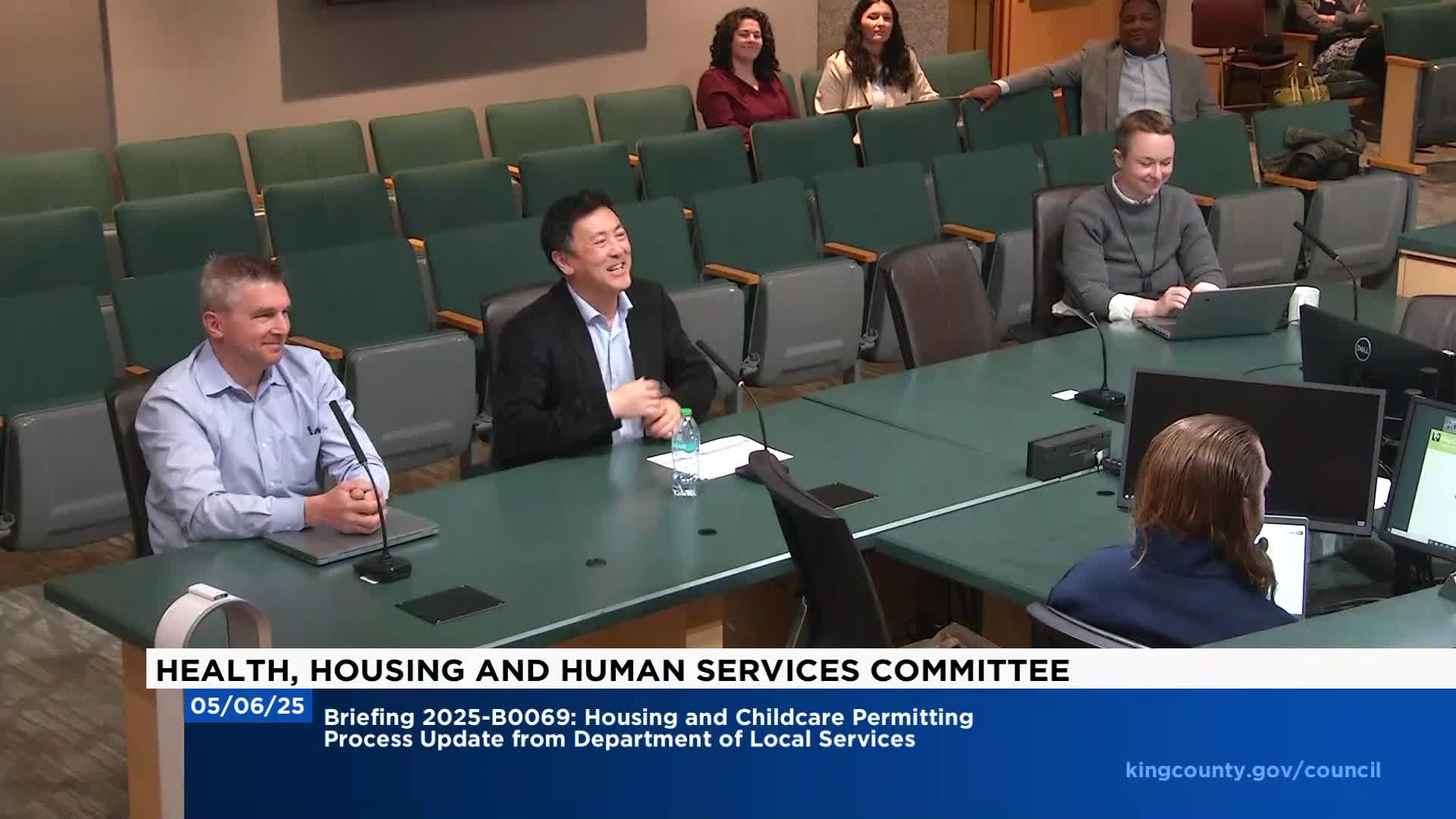
Jim Chan, Permitting Division director, told the Health, Housing and Human Services Committee on May 6 that King County added commercial childcare and qualifying affordable‑housing projects to the division’s priority review list in Q1 2025.
Jim Chan, division director for Permitting in King County Department of Local Services, told the Health, Housing and Human Services Committee on May 6 that the Permitting Division updated its priority list in the first quarter of 2025 to include commercial daycares and affordable housing projects and explained how the priority process will work.
Nut graf: Chan said the county receives thousands of permit applications annually, typically processed first‑in, first‑out, and that placing qualifying childcare and affordable‑housing projects on the priority list gives them front‑of‑line review. He described eligibility criteria and urged applicants to seek pre‑application technical assistance early.
Priority details and eligibility
- Priority list change: As of Q1 2025 the division added commercial daycares (focused on commercial daycares that create the most capacity) and affordable housing projects that meet a minimum affordability threshold.
- Affordable housing eligibility: Chan said qualifying projects must meet a test such as at least 50% of units affordable to 70% AMI or lower (the division described a “50/50” guideline in the briefing) to qualify for priority review.
- Holistic permitting elevation: Chan emphasized that priority status can — and should — extend to associated permits (stormwater, road, health, etc.), not only the building permit, because ancillary permits often cause schedule delays.
Technical assistance and operational notes
Chan and deputy director Mark Rowe said the division cannot advocate for applicants and cannot exempt code requirements unless Council or legislative action creates exemptions. They recommended that applicants assemble an experienced design team, contact the permitting division early for voluntary pre‑application consultations, and plan for site‑related infrastructure costs and state and county code compliance.
Cost recovery and fees
The division is enterprise‑funded (permit fees support staffing). Chan said the division will propose a permit‑fee schedule amendment in 2026 to rebalance fee income with service levels; he said continued council support for permit cost recovery is one way to sustain priority review capacity.
Discussion
Committee members asked about technical assistance, homeless‑encampment applications (the division described a shortened, low‑cost application and rapid turnaround for hosted encampment permits), and reuse versus ground‑up development. Chan said life‑safety and fire‑protection requirements often add cost when retrofitting existing buildings and that regional best practices could inform future policy work.
Ending
Chair Mosqueda said the committee appreciates the administrative change adding childcare and affordable housing to the priority list, and council members offered to work with the division on fee schedule updates and other supports to maintain priority review capacity.