Get Full Government Meeting Transcripts, Videos, & Alerts Forever!
Get email alerts on the Housing Rv Adu topic
No spam. Unsubscribe anytime.
Clallam County planning commission refines RV and ADU rules, schedules public hearing
Summary
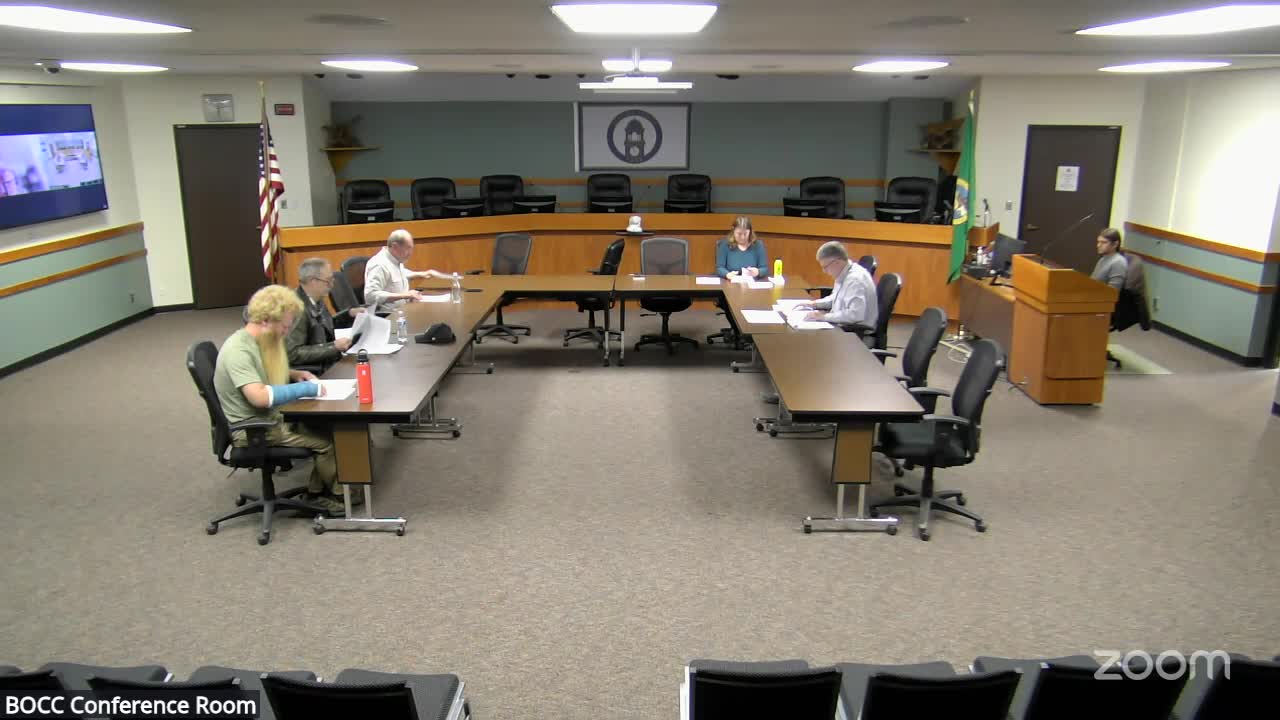
Clallam County Planning Commission members met May 7 to review a draft of proposed zoning changes aimed at clarifying rules on recreational vehicles and accessory dwelling units and to set a public hearing on the package.
Clallam County Planning Commission members met May 7 to review a draft of proposed zoning changes aimed at clarifying rules on recreational vehicles and accessory dwelling units and to set a public hearing on the package.
Staff summarized multiple edits to county code, including clarifying the meaning of “stable source of power,” adding an occupancy limit of 180 days within a 12-month period for RV habitation, and changing language so that properties may have one visible RV while additional RVs must be stored out of sight (for example, inside a garage) or screened. The draft also removes a prohibition on renting an RV pad under the cited code provision and proposes that one occupied RV is allowed per parcel, with two occupied units triggering standards that define an RV park.
The proposal would retain the county’s owner-occupancy requirement for ADUs in rural areas while allowing two ADUs in urban growth areas (UGAs), consistent with recent state direction to expand ADU use in UGAs. Staff also recommended that power from inverters be allowed while generators that produce noise be restricted.
The discussion focused on balancing neighborhood character, housing needs and enforceability. “I did take a look at other jurisdictions…there was a range that I found,” a staff member told the commission while explaining why the 180-day occupancy standard was recommended. Diane Harvey, Clallam County code enforcement manager, told commissioners a possible enforcement approach would be a placement or registry permit for a second RV and a conditional-use permit for a third, so the county would have a record of established occupancy and duration. “You could have 2 RVs, but you have to come in and get a placement permit, and it creates a registry,” Harvey said.
Commissioners debated numerical limits and screening standards. One commissioner recommended limiting visible RVs to one and allowing additional vehicles if “contained within a garage or commercial structure” or “screened” from public view; another said they were comfortable with a two-RV visible limit but favored objective screening standards. Commissioners expressed concern about enforcement: several said proving a vehicle was occupied for a set number of days is difficult without a permit system, and that the county currently relies on compliance-first remedies.
Panel members also discussed ADU policy. Staff recited the historical rationale for owner-occupancy requirements: ADUs were intended as incidental, subordinate housing tied to a primary residence and commonly limited by design features such as shared water systems and distance limits from the primary home. Commissioners cited state Growth Management Act considerations and a prior San Juan County case as reasons to be cautious about loosening rural ADU standards. “I don't want to be the test case,” a planning commissioner said, urging care so the county does not invite a successful legal challenge that would change how ADUs are treated under the county’s comprehensive plan.
The commission did not take a formal vote on code adoption at the meeting but agreed on a set of edits staff will incorporate into a public-hearing draft. The commission directed staff to refine screening language, consider adding inoperable RVs to the county’s junk-vehicle rules, and prepare phrasing tying an extended occupancy allowance to an active building permit for persons constructing a residence. Commissioners asked staff to return an updated draft and the commission scheduled a public hearing for the RV/ADU amendments on June 18, during which members of the public will be able to testify in Sequim, Port Angeles, Joyce, Clallamas (sic), and Forks as part of the formal process.
Next steps: staff will produce a public-hearing draft reflecting the changes discussed (screening definitions, the 180-day occupancy limit in a 12-month period, registry/placement-permit options for additional RVs, and ADU clarifications) and distribute it for the June 18 hearing; enforcement implications may prompt further adjustments after public comment.