Get Full Government Meeting Transcripts, Videos, & Alerts Forever!
Get email alerts on the Detection Public Defense Caseloads topic
No spam. Unsubscribe anytime.
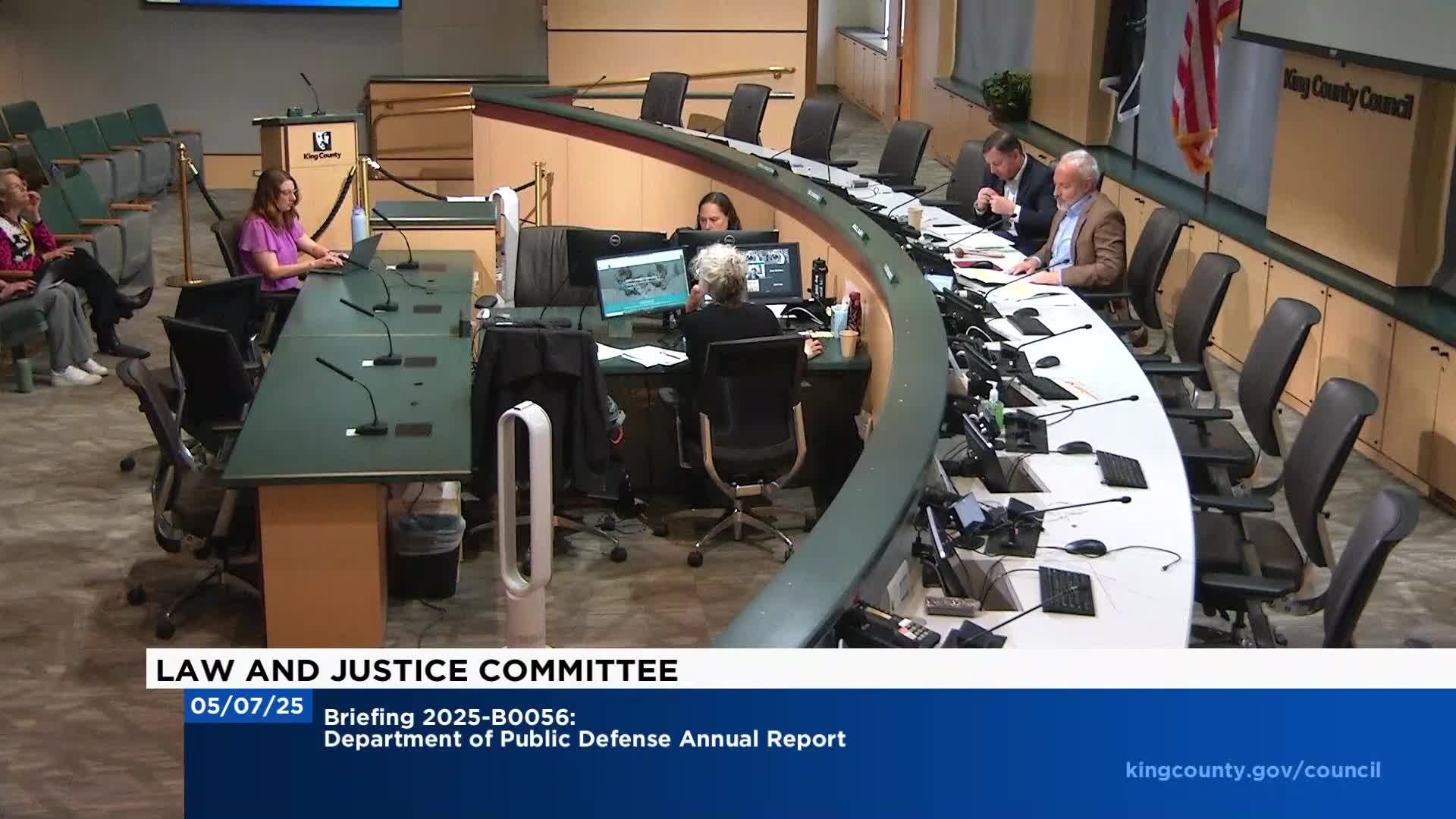
Department of Public Defense reports rising assignments and aggressive hiring effort as caseload standards approach
Summary
King County’s Department of Public Defense told the Law and Justice Committee it has increased felony attorney hiring and plans to add staff to meet pending caseload standards, but said recent spikes in assignments — particularly in district and juvenile courts — create ongoing staffing and budget uncertainty.
The King County Department of Public Defense reported to the Law and Justice Committee that it has accelerated hiring to meet pending caseload standards, but that recent increases in assignments across district and juvenile courts have created uncertainty that may require additional staff and budget authority.
Interim DPD Director Matthew Sanders told the committee the department has pursued lateral hires and new classes of attorneys and had increased felony attorney counts from about 74 to 93 by March; he said the department expects to reach roughly 100 felony attorneys after a June lateral class and to expand further in the fall when new law school graduates join after passing the bar. Sanders said the department received 34 FTE authority in the executive’s proposed budget and an additional 10 FTEs approved during the county budget process.
Why it matters: The department said implementation of caseload standards (phase 1 of WSBA-related standards) requires capacity sufficient to accept all incoming cases without refusing representation. Sanders said the department measures success by avoiding refused cases and by keeping attorneys within caseload limits.
Numbers and trends: DPD presented internal "tachometer" charts showing district court filings and assignments rising above historical projections, with Kent District Court singled out as an example where assignments have risen substantially and where the department projects a need to increase staffing from 10 to 20 attorneys. Juvenile court assignments also showed sudden spikes, and Sanders said the department frequently saw month-to-month surges that outpaced staffing plans. Audits of attrition indicate the most pronounced departures have been among felony attorneys; exit interviews show workload pressures as the primary reason attorneys leave.
Recruiting and retention: Sanders said DPD’s targeted national recruiting, advertising and outreach have produced substantially more applicants year over year, with a 100% increase in applicants and a 250% increase in applicants from other states for the January–May comparison. The department reported 24 lateral attorneys committed to start (13 already onboard; nine slated for June and two in September) and said recent outreach has attracted applicants from federal defender offices and other federal positions.
Budget and next steps: Sanders and Deputy Director Matt Pang said the department plans an omnibus request for additional FTE authority because consecutive months of assignment thresholds have unlocked authority for more positions. The department urged continued coordination with the Prosecuting Attorney’s Office on filing trends because PAO caseloads and filing rates directly affect DPD assignments. Sanders said DPD leadership is drafting a credit policy tied to the Washington State Bar Association standards and working with Personnel and Staffing Budget (PSB) to refine staffing allocation before the next budget cycle.
Committee response: Chair Jorge Baron thanked DPD for hiring progress and said the committee will request additional time to review the department’s numbers and any omnibus request. Members emphasized uncertainty in predicting future filings and the need for detailed staffing and budget analysis as the department implements new caseload standards.