Get Full Government Meeting Transcripts, Videos, & Alerts Forever!
Get email alerts on the Zoning A1 Min Lot Size topic
No spam. Unsubscribe anytime.
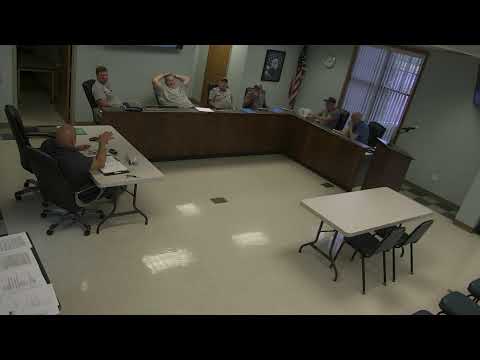
Morgan Township board debates raising A-1 minimum lot size, directs staff to draft language
Summary
Trustees debated raising minimum lot sizes and road-frontage standards in the township's A-1 agricultural district to reduce multiple driveway cuts and steer larger developments toward RE or conservation subdivisions. Zoning administrator Dale Marshall will rewrite the ordinance language for a vote next month.
Trustees of the Morgan Township zoning board debated raising the minimum lot size and road-frontage requirements for the A-1 agricultural district and directed Zoning Administrator Dale Marshall to rewrite the ordinance language and present it for a vote next month.
The discussion centered on whether the current A-1 standard (3-acre minimum lots with 200 feet of road frontage, as noted in the meeting) allows too many single-lot driveway cuts onto public roads and whether increasing lot-size and frontage minimums would push developers toward established subdivision standards such as RE (Residential Estate) or conservation subdivisions. "It's not something we have to decide tonight, but we need to start really thinking and discussing on it," Marshall said as the board considered wording changes to Article 7 of the township zoning code.
Board members repeatedly raised two goals: to reduce the number of driveways onto public roads and to better align township practice with the land-use plan. Several trustees argued that increasing minimum lot size to 5 acres and raising frontage requirements would reduce so-called "shotgun lots" with many narrow driveways, and would preserve more green space. Other trustees warned that setting minimums too high (e.g., 10 acres) could put land out of reach for typical buyers and would unfairly limit landowners' ability to sell tracts.
Trustees also discussed using the RE (Residential Estate) district and the conservation (PCD) district to manage smaller-lot subdivisions; members noted that an RE approval requires a dedicated public street and limits further subdivision once those streets are installed. The board agreed that, where a developer intends to build a street and multiple lots, applicants should be steered toward rezoning from A-1 to RE rather than attempting piecemeal lot sales within A-1.
After extended debate about exact frontage numbers (250 feet was proposed by some trustees while Dale Marshall referenced 200 feet in the current chart), the board did not adopt a final numeric standard at the meeting. Instead, Marshall said he would "rewrite this paragraph" of the ordinance language to reflect the board's direction and bring that draft back for formal action at the June meeting. Members said they would review comparable language from neighboring jurisdictions before voting.
The board also discussed conservation subdivision language (Article 7B) that allows smaller lots in exchange for preserved green space and homeowner association maintenance. Trustees asked for clearer language about ownership and maintenance of required green space (the board suggested HOA maintenance models) and signaled interest in using the conservation option where appropriate.
On routine business, the board approved amended minutes for the previous meeting after a motion and second; the record shows the motion passed but does not provide a roll-call tally or name of the mover.
Trustees scheduled further discussion and a formal vote next month after Marshall circulates the rewritten ordinance text.
Background: The A-1 agricultural district language under discussion (Article 7) in the township code currently describes A-1 as intended to "reserve land predominantly for agriculture" and to allow "very low density residential" development; the RE district text restricts further subdivision once a dedicated public street is installed.